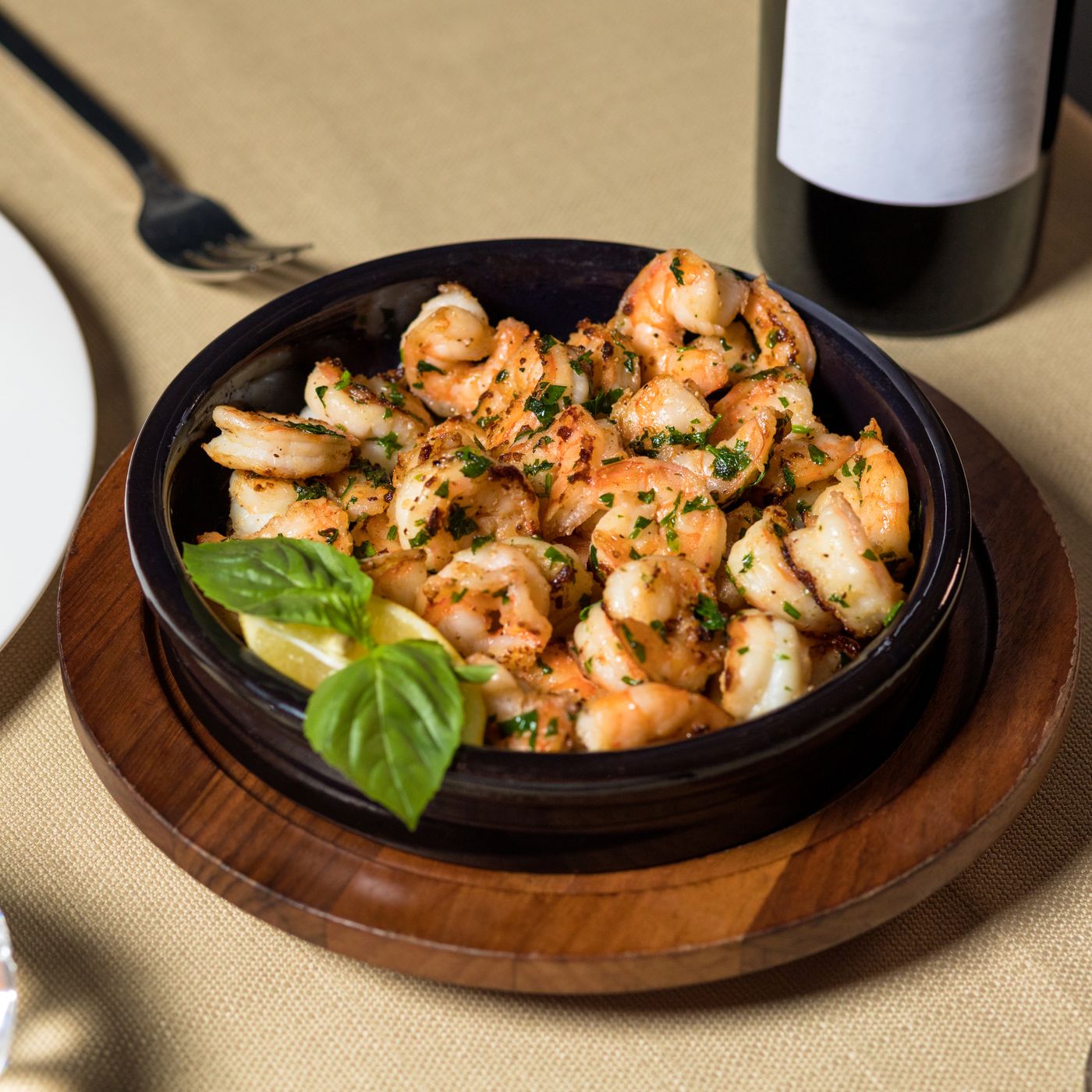
Shrimp cook quickly enough that ingredient preparation is part of the cooking technique. This four-serving recipe takes about 25 minutes and uses 600 g raw peeled, deveined shrimp, measured as edible weight. Olive oil starts the cooking; butter and garlic enter later, followed by lemon, water and herbs. That sequence gives the shrimp direct pan contact without asking finely chopped garlic to survive the entire high-heat stage.
Garlic-Herb Shrimp in Golden Butter makes 4 servings, with 25 min estimated total time. View the standalone recipe page.
Thaw and dry before heating the skillet
If starting with frozen shrimp, thaw them safely before cooking, preferably in the refrigerator, following any package handling instructions. The recipe assumes thawed shrimp, not a frozen block placed directly in hot oil. Inspect for remaining shell pieces and pat the shrimp very dry before mixing with the salt and pepper.
Measure garlic, lemon juice, water, parsley and basil in advance. Keep the chopped parsley separate from the whole basil leaves, since they finish the dish at different moments. Drying and organizing may take longer than the actual frying, but they prevent the two most awkward interruptions: a watery pan and garlic burning while you search for the lemon.
Choose a pan that gives each shrimp room
Heat the 25 g olive oil in a large skillet over medium-high heat. Arrange the shrimp in one layer and cook the first side for 1–2 minutes. Leave enough room to turn them without piling one shrimp over another. The objective is contact with the hot pan, not a crowded mound steaming in its own released moisture.
If two batches are necessary, divide the measured oil, butter, garlic, lemon juice and water between them and carry each batch through the full cooking sequence. Allow extra time and use a clean dish for finished shrimp. This is more controllable than partially cooking a crowded batch and repeatedly moving it between raw and cooked holding dishes.
Lower the heat for butter and garlic
Turn the shrimp, reduce the burner to medium and add the butter and finely chopped garlic. Cook for another 1–2 minutes, stirring the garlic through the butter. Keep it moving around the shrimp rather than leaving a mound of small garlic pieces stuck against one hot spot on the skillet.
Watch the garlic as closely as the shrimp. Pale golden pieces contribute flavor, but dark, bitter garlic cannot be repaired by covering it with lemon juice. A heavy pan retains heat after the dial is lowered, so move it briefly away from the burner if the butter and garlic are coloring much too fast.
Add lemon and water for a short finishing simmer
Pour in the 30 g lemon juice and 30 g water, then simmer for 30–60 seconds. These liquids loosen the pan mixture into a sauce that can be spooned over the shrimp. Turn the shrimp through it rather than continuing to fry them in one position after the liquid has arrived.
Check that the shrimp are opaque and firm throughout and reach 145°F / 63°C, continuing briefly if needed. Use a thermometer in the thickest part of a large shrimp when possible. Size affects cooking time, so a small shrimp's appearance does not prove every larger one is done. Avoid extending the simmer once the batch is properly cooked.
Finish off the heat and serve the sauce immediately
Remove the pan from the heat and fold in the chopped parsley. Spoon shrimp and sauce into a warmed dish, then lay the whole basil leaves over the top. Adding the herbs at this stage keeps their fresh character clear instead of cooking them for the same length of time as the garlic.
The sauce is a light butter-and-lemon pan sauce, not a cream sauce. A little separation is not a reason to keep boiling the shrimp until the pan dries out. Serve promptly, with any optional bread or rice prepared separately beforehand. Those accompaniments are not included in this four-serving ingredient list.
Common questions
Why did a lot of water collect in my skillet?
Shrimp may have been insufficiently thawed or dried, or the pan may have been crowded. Dry them thoroughly and use one layer, cooking complete batches if necessary.
Can I use already-cooked shrimp for the same timing?
The method is written for raw shrimp. Already-cooked shrimp would undergo unnecessary additional cooking, so they are not a direct replacement for this sequence.
Technique & food-safety references
These primary references support the technique, safety and storage guidance. The recipe and cooking explanations are original Recipe Pinboard content.