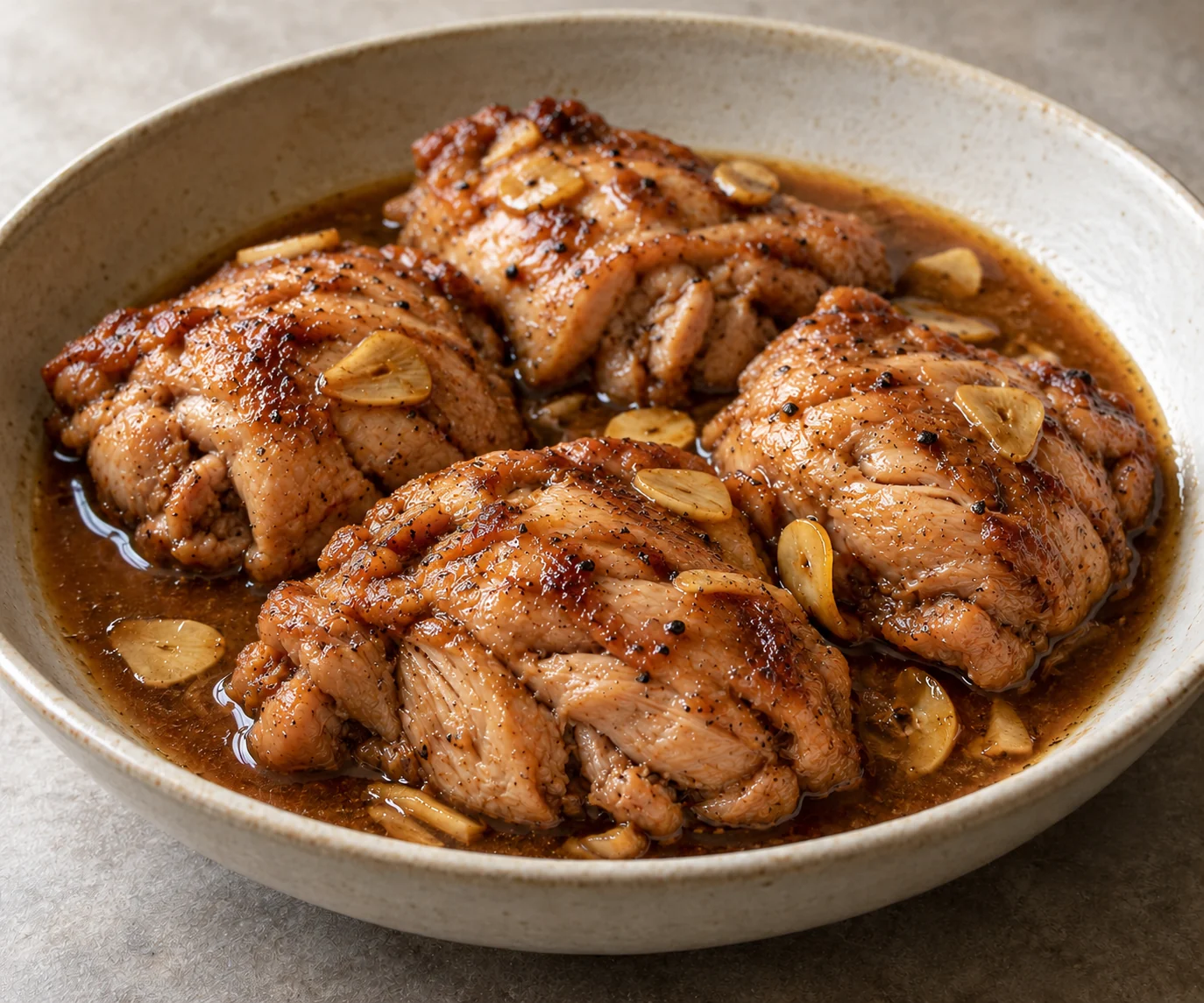
This original boneless-thigh variation uses the soy-and-vinegar braising approach associated with Filipino adobo without claiming to represent every household's version. The measured sauce includes sliced garlic, a little brown sugar and ground pepper. It should remain spoonable rather than become a sticky glaze. Browning, covered simmering and a short uncovered reduction serve different purposes, so keep those stages distinct and use a thermometer to confirm the chicken is cooked.
Garlic, soy & vinegar chicken braise makes 4 servings, with 1 hr 20 min estimated total time. View the standalone recipe page.
Match the meat and condiment states
The recipe starts with raw boneless skinless thigh meat. Bone-in or skin-on pieces have different edible weights and cooking behavior, so the listed mass is not a package-weight shortcut for either. Pat the meat dry before browning. Use the specified reduced-sodium soy sauce and ordinary food-grade distilled vinegar. A stronger vinegar is not an equivalent ingredient, and tamari is not the same nutrient profile as the wheat-containing shoyu used here. No additional salt is required in this formulation.
Brown in batches without burning the garlic
A crowded pan cools quickly and collects moisture, making browning harder. Work in the two batches described, then move the chicken to a plate while the garlic cooks briefly at reduced heat. Garlic slices can go from pale to bitter quickly, especially in a pan that has just seared meat. Have the measured water ready to loosen the browned residue before it scorches. The browned bits should dissolve into the sauce; black burned patches are not the intended flavor base.
Keep the covered simmer gentle
Return the chicken and all accumulated juices to the liquid, then reduce the heat once a simmer is established. The lid limits evaporation while the meat becomes tender. Turn the pieces so both sides spend time in the sauce, taking care around the steam. Check the thickest areas with a thermometer. Vinegar changes flavor and texture, but it does not replace the safe cooking endpoint. Do not assume the meat is done merely because its outside has darkened with soy.
Reduce only as far as needed
The uncovered stage concentrates the sauce after the covered cooking has done its work. Pan width and burner strength affect how quickly the liquid shrinks. Keep a visible spoonable pool rather than boiling until nearly dry. If the meat is ready first, hold it briefly on a clean plate while adjusting the sauce, then return every drop of juice. Excess reduction concentrates salt as well as flavor, so a thicker sauce is not automatically a better one for this dish.
Divide the sauce along with the meat
Four portions means an equal share of the chicken and the full sauce, including garlic slices. Rice and vegetables are useful accompaniments but are outside this recipe's ingredient estimate. Let the dish rest briefly before serving, then refrigerate leftovers in shallow containers within the stated time. Its acidity does not make it a preserved food. Reheat thoroughly before eating. If a portion of sauce is left behind, actual intake will be lower than an estimate that intentionally counts it all.
Common questions
Why does the sauce taste too strong after reducing?
Too much evaporation can concentrate both soy and vinegar. Stop at a spoonable consistency and watch the pan rather than forcing the full reduction time. If adjustment is needed, a small measured addition of water can loosen it; record the change and do not add more soy.
Can I marinate the chicken overnight first?
This version does not require a marinade or include its waiting time. Long exposure to an acidic mixture can change the meat's texture. Follow the direct browning-and-braising sequence for this formulation instead of assuming an overnight soak is an automatic improvement.
Technique & food-safety references
These primary references support the technique, safety and storage guidance. The recipe and cooking explanations are original Recipe Pinboard content.


