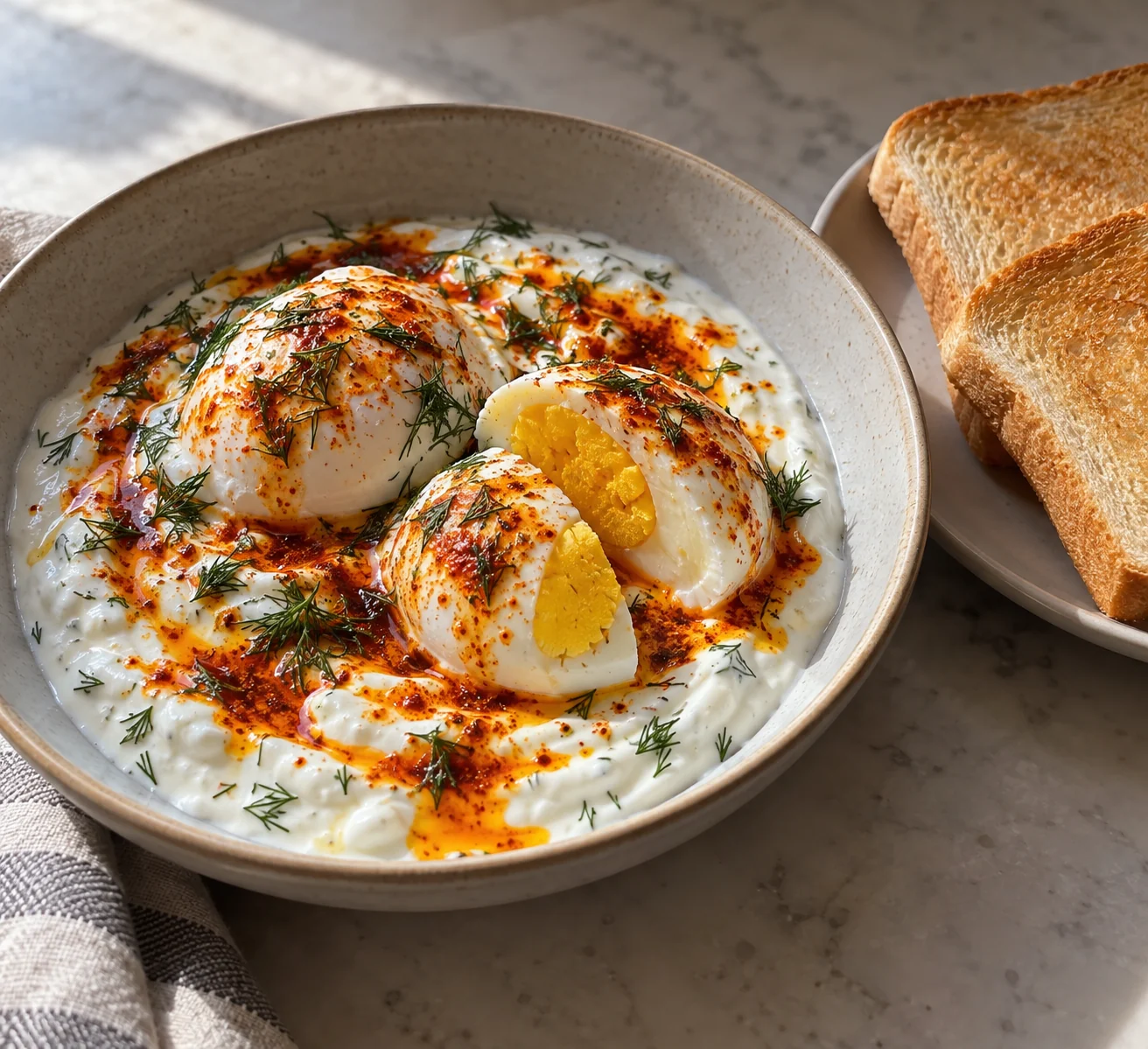
This breakfast pairs poached eggs with garlic yogurt, paprika butter and toast. It is inspired by the combination used in Turkish eggs, while deliberately specifying fully set whites and yolks rather than a runny center. The contrast comes from warm eggs and butter over cool yogurt, not from leaving dairy on the counter for a long time. Each serving includes two eggs and two measured bread slices. Coordinate the final few minutes so the toast is ready and the butter is fragrant when the eggs finish.
Garlic-yogurt poached eggs with paprika butter makes 2 servings, with 35 min estimated total time. View the standalone recipe page.
Prepare the yogurt and keep it refrigerated
Grate the small measured amount of garlic finely so it disperses instead of leaving sharp chunks in one bite. Stir it with the yogurt and salt, then divide between the two serving bowls. Whole-milk Greek yogurt provides a thick base that supports the eggs. A thinner yogurt would spread more and change the nutrient assumptions. Keep the bowls refrigerated while preparing the other components, taking them out shortly before serving. There is no need to heat the yogurt or leave it out until it reaches room temperature.
Use calm water and give the eggs room
Bring the plain poaching water to a very gentle simmer. Crack each egg into a small cup first, checking for shell fragments, then slide it close to the surface rather than dropping it from a height. A rolling boil can scatter the whites and knock eggs into each other. Work in two batches if the pan is crowded. This method does not add vinegar or salt to the water. Some stray white may still be lost; the calculation conservatively counts the entire starting edible egg weight rather than inventing a retention percentage.
Cook to the stated endpoint, not a soft-yolk timer
The six-to-eight-minute window is a starting point, since egg size, water temperature and batch size affect cooking. Check that both white and yolk are firm and that the center reaches the card's 160°F target, extending cooking as needed. Use a thin thermometer probe carefully so the egg remains manageable. The finished yolk will be firm when cut, as shown in the illustration. Do not substitute a short restaurant-style poaching time and assume it meets this recipe's endpoint. Keep raw-egg cups separate from cooked-egg utensils.
Drain briefly before placing eggs on yogurt
Lift each egg with a slotted spoon and let excess water drain away. Water carried into the bowl can make a thin puddle around the yogurt and dilute the paprika butter. Avoid pressing the egg hard against a towel or spoon, which can split it unnecessarily. If cooking in batches, make the toast and prepare the butter during the second batch so the first eggs are not waiting for a long separate preparation. The bread is toasted without added fat; all recipe butter belongs in the paprika topping.
Bloom paprika gently and serve promptly
Melt the measured butter over low heat, remove the pan from the burner and stir in paprika briefly. The spice should color the butter without turning dark and bitter. Divide all the butter between the bowls, add the chopped dill and serve with the measured toast. There is no extra chili, oil or garnish in the calculation. Refrigerate assembled leftovers within two hours and use within one day, reheating eggs to 165°F. For the vegetarian tag, check the bread contains no animal shortening and that packaged ingredients suit your requirements.
Common questions
Why is there water around the yogurt?
The eggs may not have drained enough, or the yogurt may be thinner than the specified Greek style. Let the slotted spoon drip briefly before plating. Do not stir the poaching water into the yogurt as part of the sauce.
Can I prepare everything well in advance?
You can measure ingredients and mix the yogurt ahead while keeping it refrigerated. Cook the eggs, toast the bread and warm the butter close to serving for the intended temperature contrast and crisp toast. Avoid prolonged countertop holding.
Technique & food-safety references
These primary references support the technique, safety and storage guidance. The recipe and cooking explanations are original Recipe Pinboard content.


