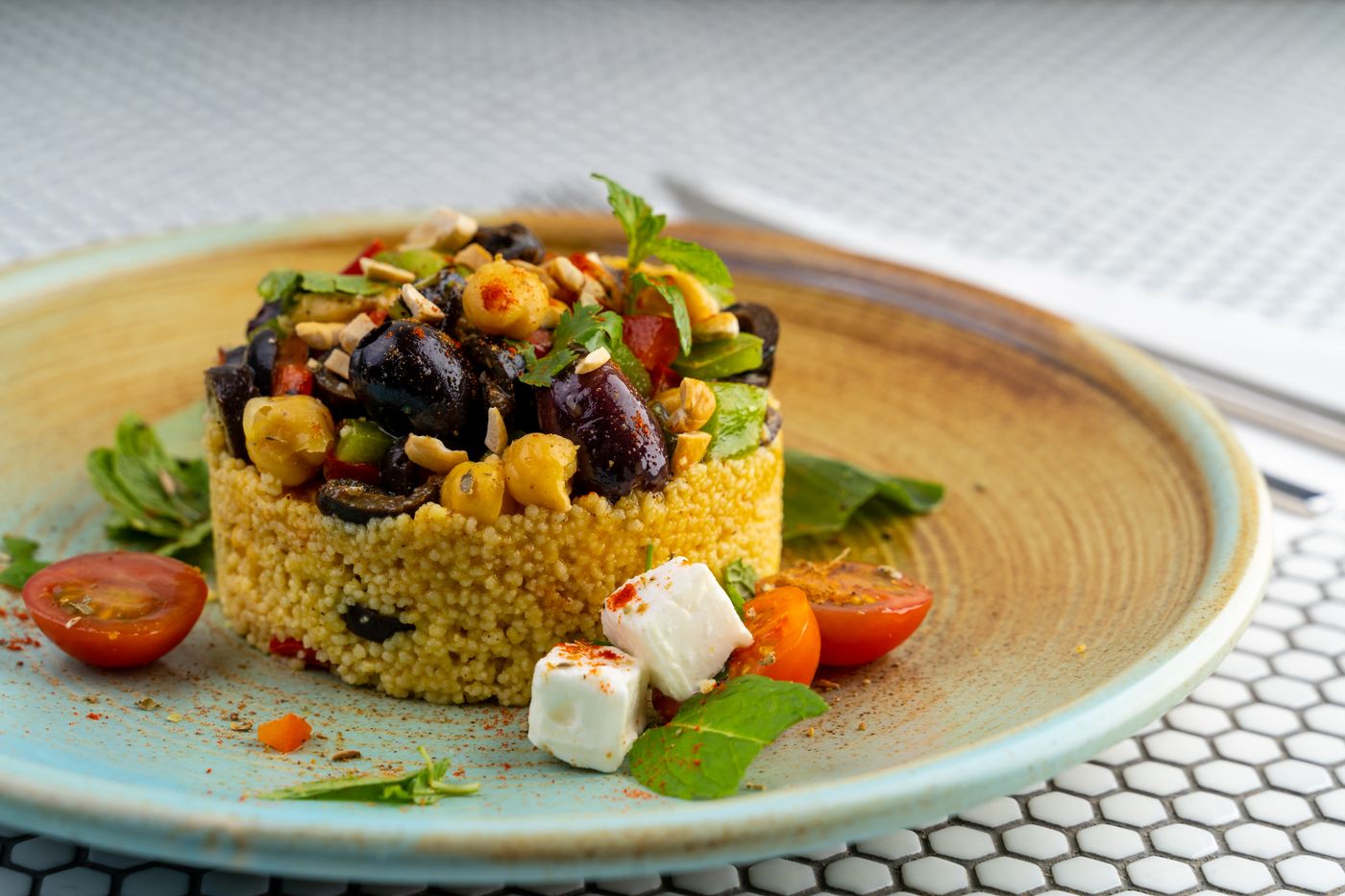
The photographed couscous mound is only one serving option; the recipe also permits neat spooned mounds. The more important cooking details are using instant couscous, letting it hydrate under a cover and separating the roasted vegetables from the fresh ingredients. That gives the plate contrast instead of turning every component into one soft mixture.
Golden Couscous with Roasted Vegetables and Feta makes 4 servings, with 45 min estimated total time. View the standalone recipe page.
Start the vegetables and identify the couscous
Heat the oven to 425°F (220°C). Cut the red pepper, yellow pepper and zucchini into similarly small cubes, using 200 g of each. Toss with 20 g of the olive oil, 2 g salt and the pepper. Spread them out for a twenty-to-twenty-five-minute roast, turning once, until tender and lightly browned.
Check that the 240 g dry couscous is the instant fine-grained type specified. Pearl couscous is a different product with a different cooking method, so it is not a drop-in replacement for this five-minute covered soak. Keep the remaining 15 g oil, 1 g salt and lemon juice separate for finishing the hydrated couscous.
Cover promptly after adding the boiling stock
Put the couscous and turmeric in a heatproof bowl large enough to hold the hydrated grains and later additions. Pour over the 300 ml boiling vegetable stock, stir once and cover immediately. A lid or heatproof plate should fit securely enough to keep the brief hydration stage enclosed. Leave it for the stated five minutes.
Uncover and use a fork to lift and separate the grains throughout the bowl. Work down to the bottom instead of fluffing only the top layer. The goal is loosened couscous rather than a compressed block. Do not confuse gentle fluffing with beating the mixture vigorously; rough stirring makes the later vegetable pieces harder to preserve.
Fold in one half of the roasted vegetables
Drain and rinse the chickpeas before measuring their 240 g prepared weight. Fold them into the couscous with half the roasted vegetables, the reserved olive oil, lemon juice and remaining salt. Scrape from the bottom and turn the mixture over gently so the flavor is distributed through the whole bowl.
Set the other half of the roast vegetables aside for the tops. This division is intentional: some vegetables are mixed through the couscous and some remain visible on each portion. Adding them all at the first fold would still make a bowl of food, but it would not follow the intended arrangement or give you the specified topping share.
Shape lightly or choose the spooned option
For the pictured shape, lightly dampen a small bowl and fill it with one-quarter of the warm couscous mixture. Press enough to bring it together without crushing it into a dense plug. Invert onto a plate and lift the bowl carefully. Repeat with the other portions, keeping their size comparable.
If the mound loosens on unmolding, use the spooned-mound option rather than trying to bind it with an unlisted ingredient. The dish does not depend on a restaurant-perfect dome. Avoid packing so forcefully that the soft roasted vegetables break down; their pieces should remain recognizable within the golden grains.
Arrange the fresh ingredients after the warm base
Top the four mounds with the reserved vegetables and black olives. Arrange the halved cherry tomatoes, feta cubes and baby spinach around each base, then add basil. The feta must be made with vegetarian rennet for the stated ingredient criterion; verify the product rather than inferring it from the cheese’s appearance.
Serve the complete plates promptly. For preparation ahead, keep fresh greens and tomatoes separate from the cooked mixture and chill perishable components within two hours, or one hour above 90°F (32°C). Use refrigerated leftovers within three to four days. Reheat the cooked base thoroughly if serving warm again, then add appropriately stored fresh components just before eating.
Common questions
Can I use pearl couscous for the same five-minute soak?
No. This recipe uses instant fine-grained couscous. Pearl couscous requires its own cooking directions, so changing to it means changing the method rather than following this card unchanged.
Must I mold the couscous in a bowl?
No. Neat spooned mounds are an explicit alternative. The divided vegetables, olives, tomatoes, feta and greens supply the intended dish even when you choose a simpler shape.
Technique & food-safety references
These primary references support the technique, safety and storage guidance. The recipe and cooking explanations are original Recipe Pinboard content.