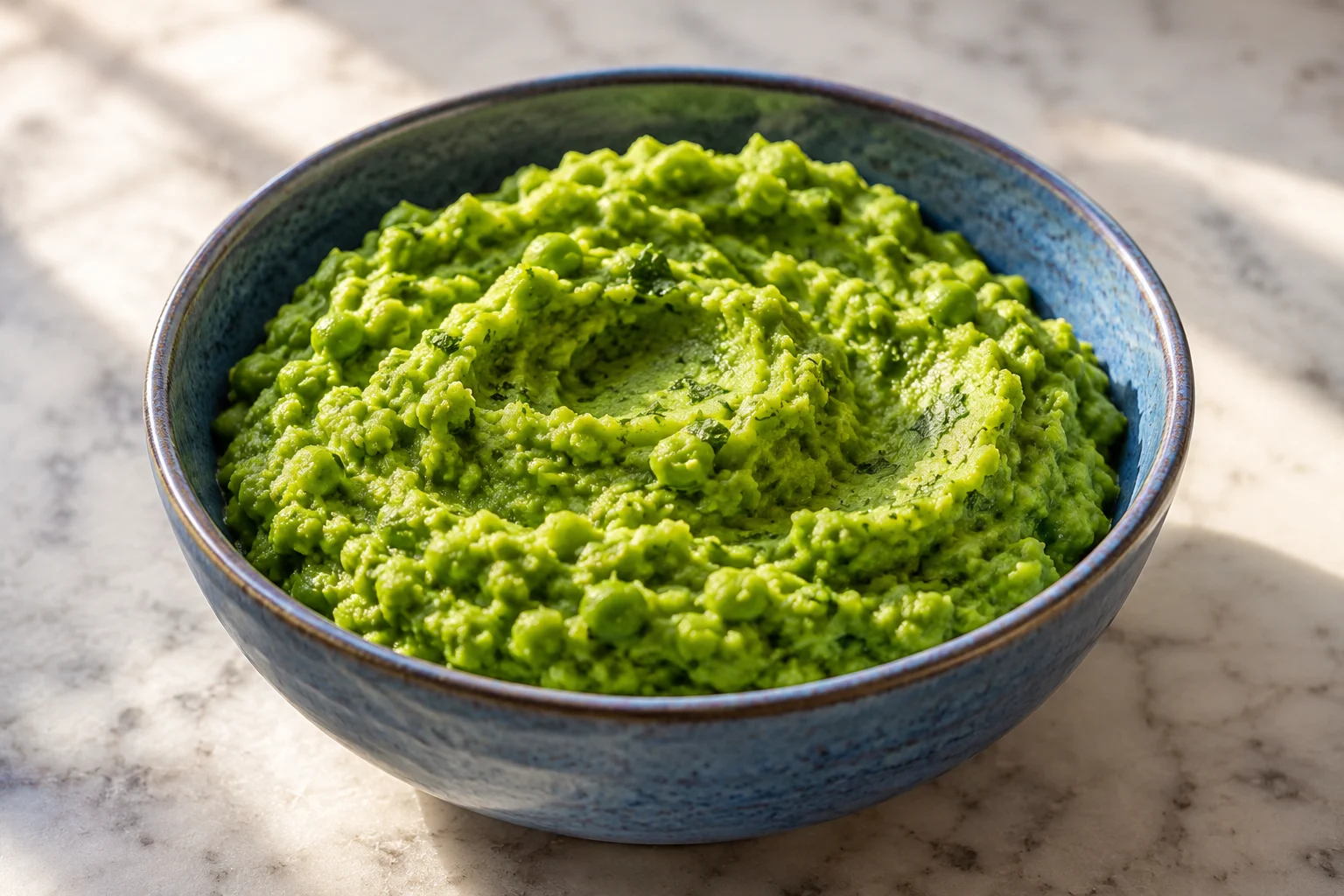
This spread relies on cooked green peas rather than chickpeas, giving it a different texture from hummus. Olive oil smooths the mixture, lemon provides a bright finish, and 10 g spearmint supplies a clear but measured herbal note. Plan on 25 minutes from freezer to a warm spread, with six portions ready for serving or prompt refrigeration.
Green pea & mint spread makes 6 servings, with 25 min estimated total time. View the standalone recipe page.
Start with frozen peas that are meant to be cooked
Use plain frozen green peas and read their package before starting. Frozen does not necessarily mean ready to eat. The written saucepan method uses 60 g water and 6–8 minutes at a gentle simmer, but any longer cooking requirement on your particular package takes priority. The peas should be hot throughout and tender enough to crush readily.
Keep the pan covered between occasional stirs so that the modest amount of water can do its job. The method retains the small amount of cooking liquid rather than boiling the peas in a large pot and draining them. If the pan is boiling rapidly, turn down the burner instead of allowing the base to dry out.
Cool briefly and keep the liquid under control
Spread the cooked peas and remaining liquid in a shallow bowl for the five-minute cooling pause. This makes them easier to handle and limits the heat the fresh mint encounters. It is not an instruction to wait for complete room-temperature cooling, particularly when the batch will be stored.
The 60 g cooking water is already accounted for in the recipe. Do not add another cup of liquid just because a blender has trouble circulating. A food processor handles this small, thick mixture more effectively; stopping and scraping is preferable to turning the spread into a pourable sauce.
Pulse for a texture that holds on a spoon
Add the measured oil, lemon juice, mint leaves, grated garlic, salt and pepper to the processor with the peas. Start with short pulses, scrape the bowl, then process briefly. Small pieces of pea are welcome. Stop when the mixture gathers into a soft mound and the mint is evenly dispersed.
Long blending can make the result completely smooth, but that is not necessary for this spread. Scrape under the blade assembly carefully with the machine switched off. A pocket of unblended garlic near the base will taste much stronger than the rest of the batch if it is left there.
Keep mint, lemon and garlic in proportion
Use spearmint leaves without the thicker stems. Ten grams may look generous before chopping, but it is distributed across 400 g peas and six servings. Peppermint and heavily flavored mint varieties can change the character substantially; they are not automatically interchangeable in an equal-weight swap.
Taste after the whole mixture is combined. Lemon should brighten the peas, while raw garlic remains a background accent. Adding extra lemon to make blending easier changes both the texture and the acidity. For a first batch, keep the listed quantities and use texture control rather than additional seasoning as the main adjustment.
Serve or chill in small portions
Divide the complete batch into six equal portions; a weighed portion will vary slightly with evaporation and food left in the processor. Toast, crackers and raw vegetables are optional accompaniments outside the recipe. A shallow bowl works well for serving because a spoon can reach the spread without compressing it into a narrow jar.
Refrigerate in a shallow covered container at 40°F (4°C) or colder within two hours of cooking, or one hour above 90°F (32°C). Use within three to four days. Stir before serving and keep the serving utensil clean. The green color may dull over time, so freshness of appearance should not be used to extend the storage window.
Common questions
Can I use thawed peas without cooking them?
Follow the package’s cooking requirement. This recipe cooks the frozen peas before blending; thawing alone is not the stated preparation.
Why is my spread loose?
The usual causes are excess cooking water or extra liquid added during blending. Retain only the recipe’s measured water, use a food processor, and scrape the bowl instead of repeatedly thinning it.
Technique & food-safety references
These primary references support the technique, safety and storage guidance. The recipe and cooking explanations are original Recipe Pinboard content.