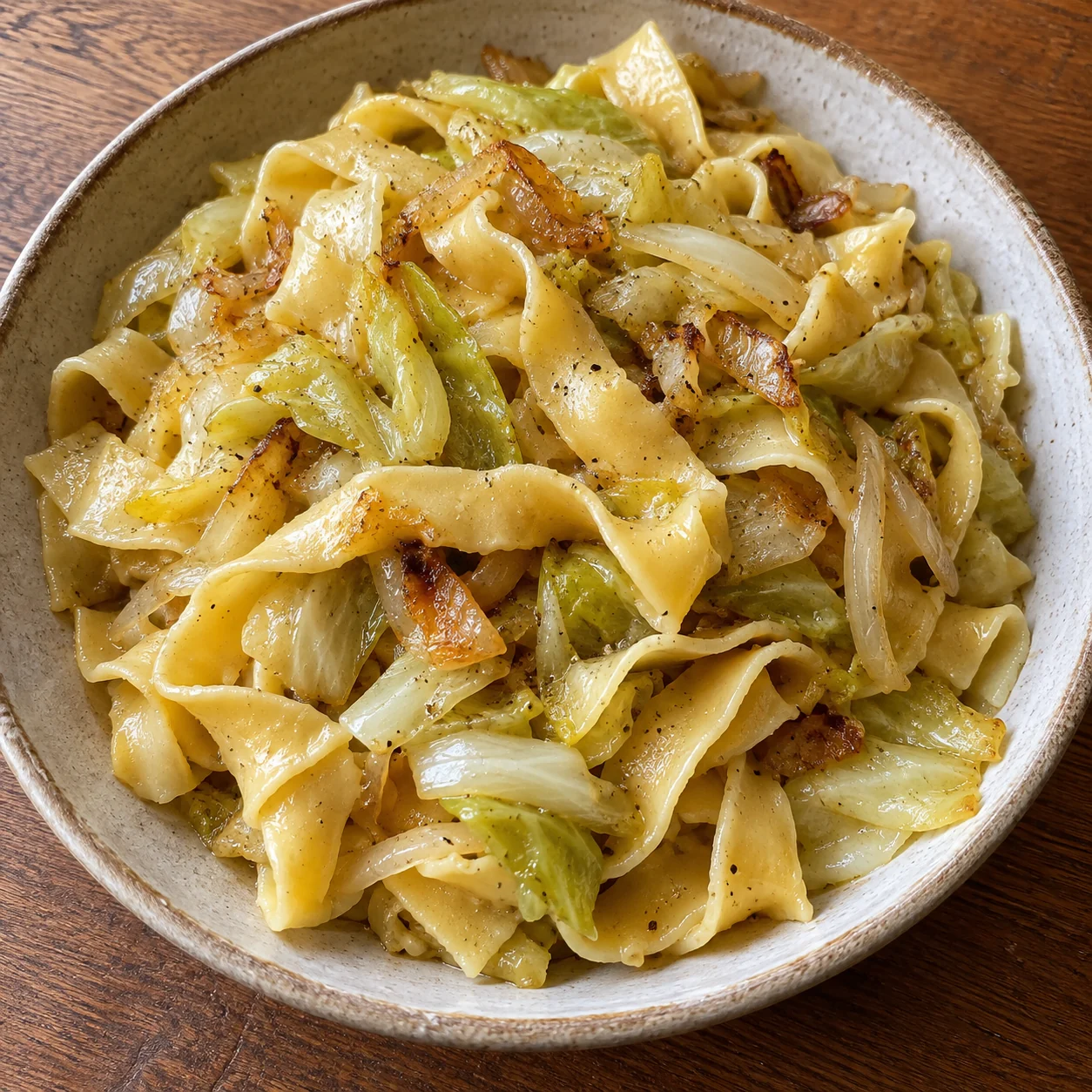
Making these noodles by hand gives the dish its character: broad ribbons with slight variations at their edges, tossed with tender cabbage and onion. The dough needs a covered rest before rolling, which creates a useful window for cooking the vegetables. The full card makes four portions and includes a measured allowance for dusting the board. Read the rolling stage before beginning so you have a clear work surface, a rolling pin and a tray ready when the dough has rested.
Hand-cut egg noodles with cabbage makes 4 servings, with 1 hr 40 min estimated total time. View the standalone recipe page.
Keep the dough flour and rolling flour separate
Measure the full flour amount, then set aside the rolling allowance before mixing. The dough receives only its specified share along with the eggs, water and salt. Stir until the loose pieces begin to gather, then knead patiently rather than judging the mixture at the first dry-looking stage. The dough should become firm and smoother as the moisture distributes. Keep hands and equipment clean and do not taste raw dough. The card uses whole eggs by edible weight, which is more consistent than assuming every pair of eggs has exactly the same mass.
Cover the rest so the surface stays pliable
Wrap the dough closely or cover it in a small bowl so its surface does not dry into a skin. Set a timer for the rest and begin the cabbage while you wait. This pause makes rolling more manageable; forcing freshly kneaded dough outward can lead to repeated springing back. If one piece resists later, cover it briefly while working on another. Avoid leaving all four pieces exposed together. A leathery outer layer creates cracks and makes it harder to obtain an even thin sheet.
Cook the cabbage slowly enough to soften
Use the wide skillet specified in the card so the sliced cabbage has room to soften and lose moisture. Stir often, moving pieces from the hotter center toward the sides. The aim is tender strips with some golden edges, not blackened fragments surrounding a raw middle. Lower the heat if browning outruns softening. Keep all the butter and vegetables in the skillet. When ready, cover off heat until the noodles are nearly cooked, then warm gently so cold cabbage does not cool the drained pasta immediately.
Check thickness before cutting ribbons
Roll one quarter of the dough at a time, turning it and using the reserved flour sparingly to prevent sticking. Work toward a consistent thinness across the sheet rather than leaving a thick central ridge. Cut ribbons of roughly equal width and loosen them as you go. A few irregular edges are normal, but substantially thicker pieces will require longer cooking. Spread the ribbons loosely on the tray instead of compressing them into tight nests. The full dusting allowance is counted in the estimate even though some may remain on the work surface.
Boil in batches and toss while warm
Use ample boiling water so the ribbons can move freely. Add one batch, separate any clinging strands gently and cook until the center no longer has a raw flour texture. Floating alone does not settle that question. Drain and transfer into the warm vegetables promptly, then repeat with the remaining noodles. Lift with two utensils to distribute the cabbage without shredding the ribbons. Divide the complete mixture into four servings. The nutrition uses flour and egg ingredients directly, not a packaged dry-pasta profile that would describe a different product.
Common questions
Why do the noodles stick together after cutting?
They may be stacked too tightly or still touching along damp cut edges. Separate each set promptly and use the measured dusting flour where needed. Do not press the ribbons into a dense bundle.
Can I roll the dough much thicker?
Thicker noodles change the texture and cooking time. Follow the card thickness for this dish and check the centers carefully; the short boiling range assumes thin ribbons rather than chunky dumpling-like strips.
Technique & food-safety references
These primary references support the technique, safety and storage guidance. The recipe and cooking explanations are original Recipe Pinboard content.


