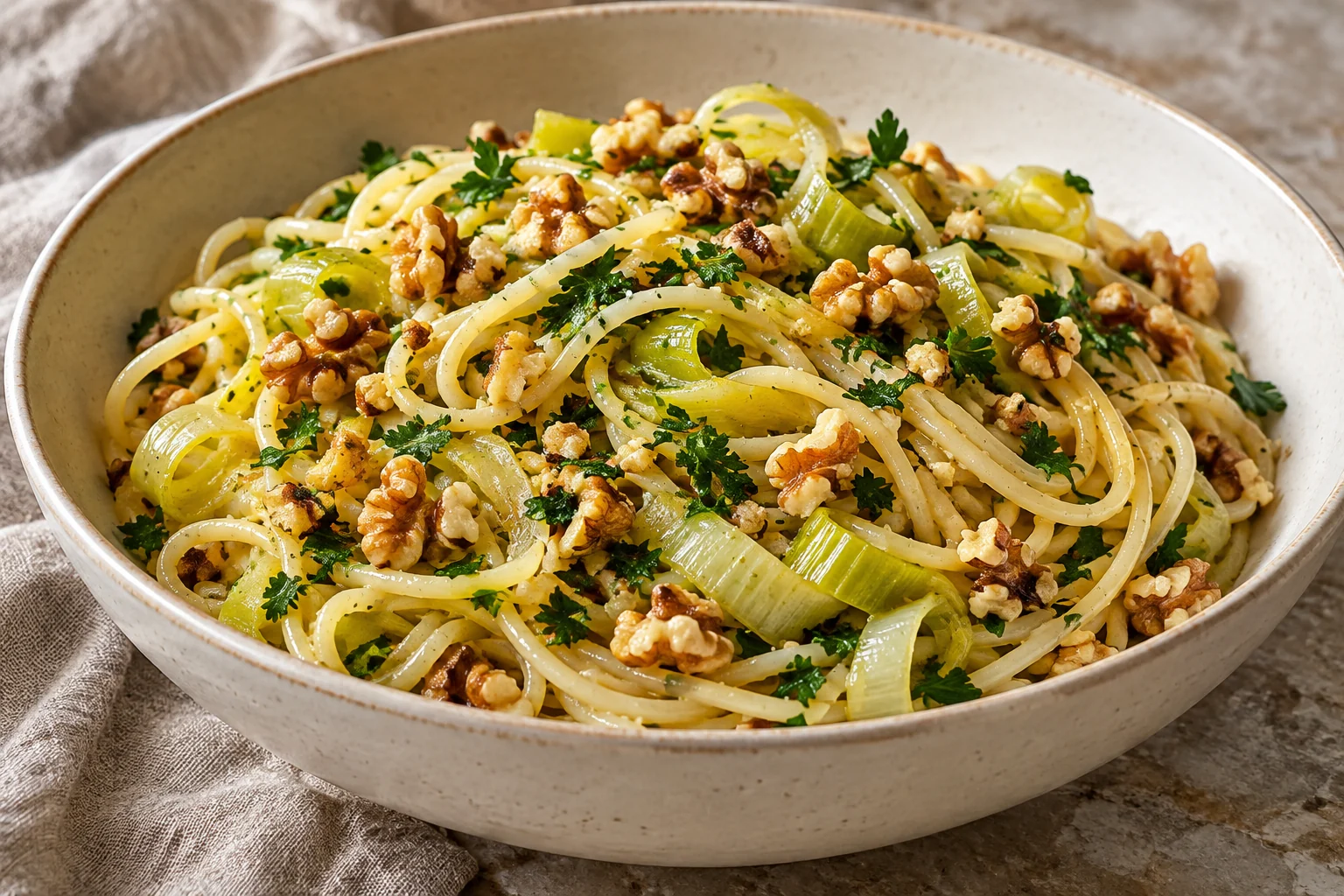
Leeks become the soft vegetable base of this pasta, while walnuts supply a contrasting bite. There is no cream or cheese sauce. Instead, olive oil, lemon and a controlled amount of pasta water coat the strands. The three useful tasks can overlap: soften the leeks, cook the spaghetti and keep the toasted walnuts ready away from the hot pan.
Lemon, leek & walnut spaghetti makes 4 servings, with 35 min estimated total time. View the standalone recipe page.
Wash between the leek layers
Leeks can hold grit between layers even when the outside looks clean. Trim to the white and pale-green edible sections, slice and wash thoroughly, separating the rings as needed. Drain well before weighing the prepared amount for the pan. Tough dark-green tops are outside this recipe quantity. Sand will not disappear during cooking, and trying to rinse a finished sauce would remove flavor. Take time at this stage; it has a greater effect on the final eating experience than an extra garnish would.
Toast walnuts before the pan gets wet
A dry skillet lets the chopped walnuts toast without competing with moisture from the leeks. Stir frequently and watch their cut surfaces rather than relying only on a clock. Once fragrant, transfer them to a plate so residual pan heat does not keep darkening them. Leaving them in the skillet throughout the leek cooking stage would soften their texture and make their browning harder to control. The complete measured amount is folded into the pasta later, rather than treated as an optional sprinkle.
Soften leeks gently without charring
Add the measured olive oil and cook the drained leeks over moderate heat. They should collapse into soft ribbons and become sweeter without acquiring black edges. Stir into the corners of the pan, where small rings can catch. If the pan is very hot, lower the heat rather than reaching automatically for extra oil. Add garlic near the end because finely minced garlic cooks much faster than the larger leek pieces. The softened leeks should be ready around the time the pasta finishes.
Reserve water before draining
Scoop and weigh the reserved cooking water while the pasta is still in the pot, then drain without rinsing. Start with only half the reserved amount when tossing the spaghetti with lemon, leeks and seasonings. Add more gradually as the strands absorb moisture. The aim is a glossy coating with no puddle at the bottom. Plain pasta water is a handling aid; the calculation already counts the dry pasta, and this recipe does not add salt to the boiling water.
Finish without crushing the texture
Fold in toasted walnuts and chopped parsley once the strands are coated. Use tongs or two broad utensils to lift and turn instead of stirring forcefully. Divide the leeks and walnuts evenly among four portions, not just the pasta strands. The vegan and dairy-free screens assume plain dry pasta without egg or milk additions; review the selected package. Refrigerated pasta absorbs sauce, so a little water can help loosen it during reheating, while additional oil or cheese would change the estimate.
Common questions
Why does the sauce look oily?
There may be too little cooking water for the oil to disperse through the strands, or the pasta may have cooled before tossing. Add reserved water gradually over low heat and toss; avoid pouring in all of it at once.
Can I use leek tops?
The tough dark-green sections need different preparation and longer cooking. The weighed amount here refers to trimmed white and pale-green leek. Substituting all tops would change texture and timing.
Technique & food-safety references
These primary references support the technique, safety and storage guidance. The recipe and cooking explanations are original Recipe Pinboard content.


