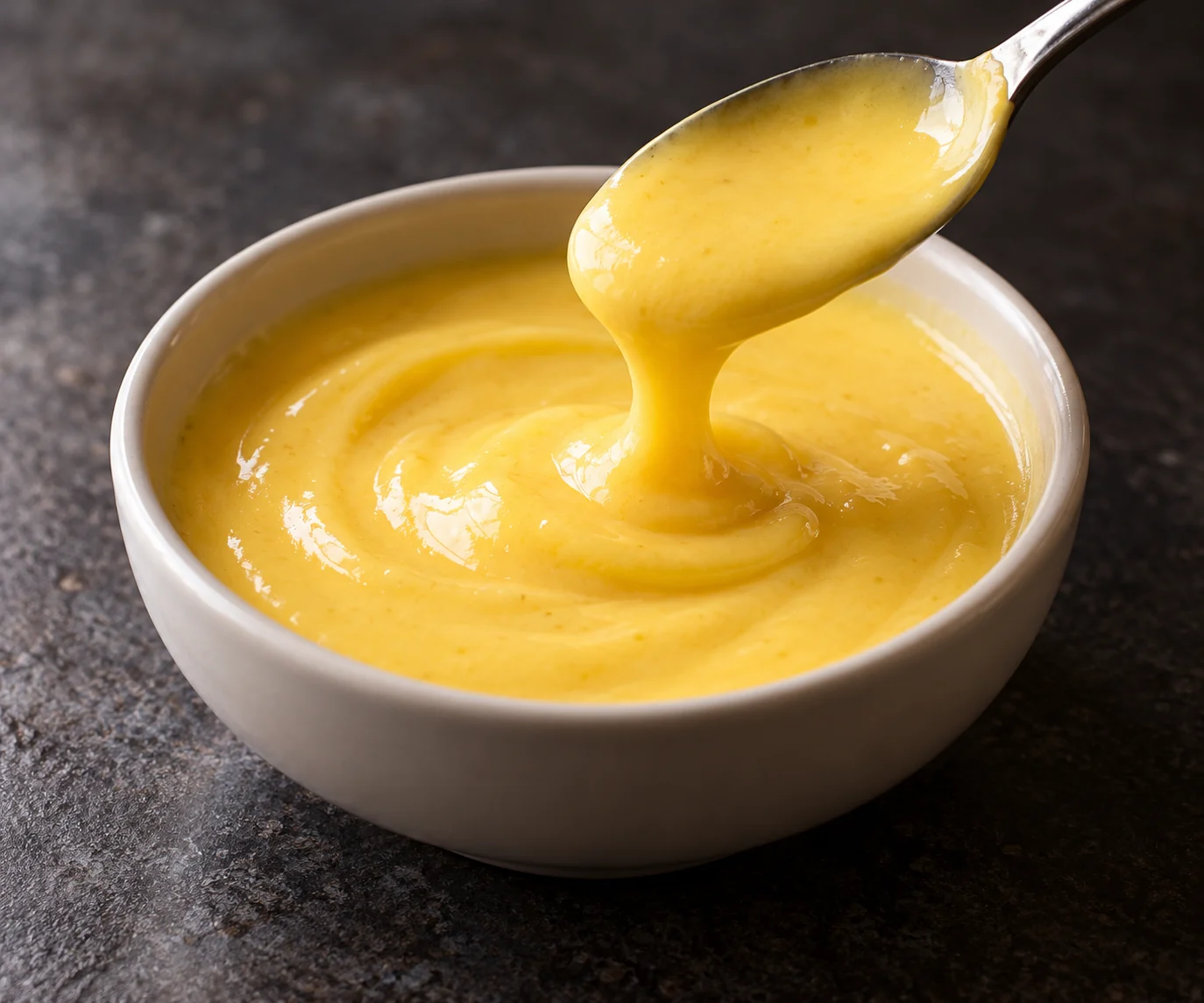
Hollandaise holds butter in a warm yolk-and-lemon mixture through whisking and careful temperature control. Unlike a flour-thickened sauce, it can separate if the butter enters too quickly or the bowl gets too hot. This small batch is designed for immediate service. The yolks must be commercially pasteurized, and the gentle cooking temperature in the card is a texture target, not a claim that a home process pasteurizes ordinary eggs.
Lemon hollandaise sauce makes 6 servings, with 25 min estimated total time. View the standalone recipe page.
Check the yolk label before starting
Use plain yolks labeled commercially pasteurized and without added salt or sugar. A carton of whole eggs or an unlabeled separated yolk is not the same specification. Follow the package's refrigerated storage instructions and measure the yolks by weight. The nutrition estimate uses a complete plain-yolk reference because brands vary, so a sweetened or salted commercial mixture would need different accounting. Set the serving dishes ready before heating; this sauce is easier to make last than to hold while other food finishes.
Keep the bowl above gentle steam
The bowl should sit securely over the saucepan with its base clear of the water. A rolling boil sends more heat toward the yolks than this method needs. Whisk across the base as well as around the sides, lifting the bowl off briefly if thickening becomes too rapid. Keep a dry towel or oven mitt nearby for the hot rim. Do not assume lemon juice makes raw yolks safe, and do not replace the pasteurized ingredient requirement with an improvised longer warming period.
Add all the butter slowly
Melt the butter gently and retain the pale milk solids. Clarifying it would remove part of an ingredient that this recipe counts in full. Let it become warm rather than scorching, then begin adding it very slowly while whisking the yolk mixture off the heat. Once the first additions are smoothly incorporated, a thin stream is easier to manage. A sudden large pour can leave visible fat sitting on the surface instead of forming a uniform glossy sauce.
Distinguish thickening from splitting
A cohesive sauce that feels too thick is different from one showing greasy droplets. The measured final water addition loosens the texture without requiring extra unrecorded butter or yolk. If you see early signs of separation, stop adding butter, take the bowl away from heat and whisk gently before continuing. Avoid chasing a thicker texture with more direct heat. This sauce should coat a spoon while still flowing, not stand up as firmly as a chilled spread or custard filling.
Serve promptly and divide fairly
The six portions each include one sixth of the entire batch, including butter solids. Spoon over the chosen food just before eating rather than leaving a bowl lukewarm for an extended meal. Bread, vegetables or eggs underneath are separate ingredients. This recipe is intentionally a small immediate-use sauce; it does not provide a reheating method for leftovers. Pasteurization reduces the concern associated with lightly cooked eggs, but it does not remove the need for clean utensils and sensible time and temperature handling.
Common questions
Can I use ordinary eggs if I heat them for a little longer?
Not for this formulation. Use commercially pasteurized yolks as specified. The gentle temperature and brief timing are chosen for the sauce texture, and this walkthrough does not validate a home pasteurization process. Extra heat can also curdle the yolks before the sauce comes together.
Why is there melted butter floating on top?
The emulsion may have separated, often after too much butter at once or excessive heat. Stop pouring and remove the bowl from the heat before whisking. Prevention is easier than repair: measure everything, keep the butter warm rather than hot, and begin with very small additions.
Technique & food-safety references
These primary references support the technique, safety and storage guidance. The recipe and cooking explanations are original Recipe Pinboard content.


