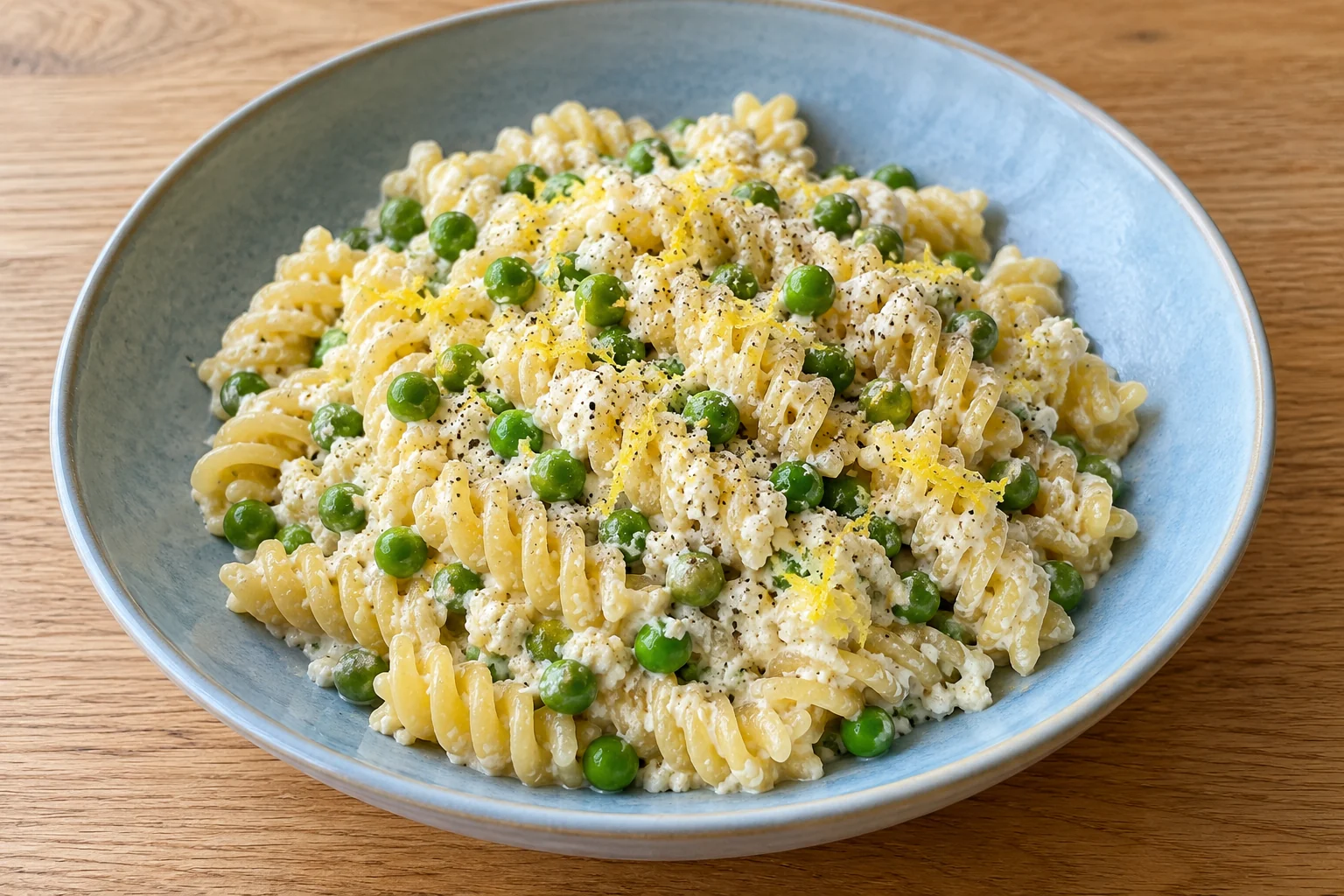
The sauce for this fusilli comes together in a bowl while the pasta boils. Hot cooking water loosens the ricotta, and the pasta carries the warmth into the final toss. Four portions take about 30 minutes, including 15 minutes of active work. Having the sauce bowl ready before draining is the key organizational step.
Lemon, pea & ricotta fusilli makes 4 servings, with 30 min estimated total time. View the standalone recipe page.
Prepare the lemon and sauce bowl before the pasta finishes
Use 240 g whole-milk ricotta made with pasteurized milk. Put it in a wide heatproof bowl with the 20 g olive oil, 25 g lemon juice, 4 g finely grated zest, 2 g salt and black pepper. A generous bowl gives the pasta and peas enough room to turn without spilling over the rim.
Whisk these ingredients together while the pasta cooks. Finely grated zest distributes more evenly than large strips, and measuring juice separately keeps the citrus balance consistent. Keep the extra 8 g salt for the pasta water distinct from the sauce salt. Neither the cheese bowl nor the pot should receive both allocations by accident.
Time the peas from the pasta packet
Bring 3 liters water and the 8 g pasta salt to a boil, then add 320 g dry fusilli. Follow its packet time for al dente pasta, usually ten to twelve minutes in this recipe's guide. Set your timing from the actual product rather than assuming all spiral pasta cooks at one fixed speed.
Add the 240 g frozen peas for the final three minutes. This places the peas in the same draining step without cooking them for the full pasta time. Stir to separate any clusters after adding them. Keep an eye on the boil so a sudden cooling of the pot does not go unnoticed while you prepare the sauce.
Reserve enough cooking water before draining
Scoop out 250 ml hot cooking water into a heatproof measuring container before draining the pasta and peas. This water is a sauce ingredient even though it is collected from the pot. If it goes down the sink, the measured loosening step is lost. Keep the container close to the bowl and away from its edge.
Whisk 100 ml of that hot water into the ricotta mixture first. Loosening the cheese before adding pasta helps it reach the spaces between the spirals instead of staying in large clumps. Ricotta naturally has a fine curd texture; a little visible grain is compatible with a light coating and does not mean the sauce is broken.
Toss promptly and add the remaining water gradually
Add the hot drained fusilli and peas to the loosened ricotta, then toss thoroughly in the heatproof bowl. Lift pasta from the bottom, where sauce can settle, until the coating is distributed. This is a bowl finish, not a simmering cheese sauce. Avoid transferring it to strong direct heat in pursuit of a smoother appearance.
Add more reserved cooking water a tablespoon at a time only if needed. Toss after each addition and inspect the coating before adding another. You may not need all 250 ml. The goal is pasta that moves easily with a light sauce, rather than liquid collecting in the bottom or thick ricotta staying in patches.
Serve four portions while the coating is loose
Divide the complete mixture into four equal portions, distributing peas as well as pasta. Serve promptly because the coating thickens as it stands. Have bowls and utensils ready before draining so the meal does not wait through table preparation. No extra grated cheese, herbs or lemon wedges are included in the stated ingredient list.
Refrigerate saved portions promptly in shallow containers at 40°F (4°C) or colder within two hours, or one hour above 90°F (32°C). Use within three to four days and reheat to 165°F (74°C). A stored portion will have a thicker coating than freshly tossed pasta, so judge reheating by temperature rather than expecting the original loose appearance.
Common questions
Why does the ricotta look slightly grainy?
Ricotta has a fine curd texture, unlike a fully smooth cream sauce. Whisking with the initial 100 ml hot pasta water helps distribute it. The intended result is an even, light coating; extended boiling is not part of the method.
Can I add the peas at the beginning?
Keep them to the final three minutes of the pasta’s packet-led cooking time. Adding frozen peas at the start gives them the whole pasta boil, changing their texture and making it harder to coordinate the intended quick finish.
Technique & food-safety references
These primary references support the technique, safety and storage guidance. The recipe and cooking explanations are original Recipe Pinboard content.