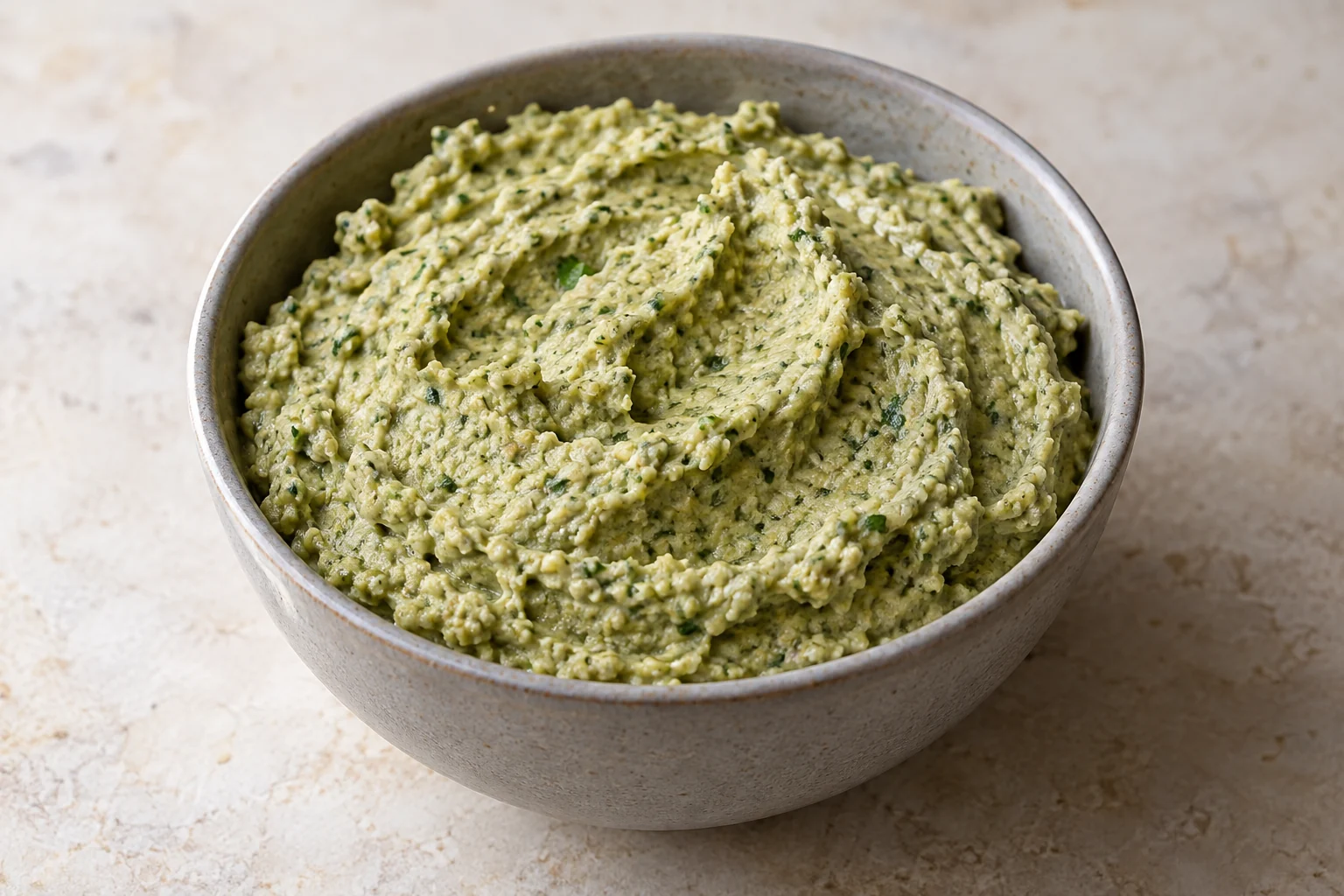
Pumpkin-seed spread needs a different approach from a bean dip. The seeds begin firm and relatively dry, so the processor must reduce them before water and oil can form a cohesive paste. This lemon and parsley version keeps a pleasant fine texture rather than promising the silkiness of a commercial seed butter.
Lemon & pumpkin-seed spread makes 8 servings, with 20 min estimated total time. View the standalone recipe page.
Choose green kernels, then toast gently
Look for raw, unsalted hulled pumpkin seeds, often labeled pepitas. The pale shells on seeds scooped from a carving pumpkin are not part of this formula. Weigh the edible green kernels. Salted snack seeds would change the seasoning, while heavily roasted seeds could make the spread darker and more bitter than intended.
Use a dry skillet over medium-low heat and stir frequently, including along the edges where seeds can linger. The target is a warmer aroma and a few lightly puffed kernels, not a uniformly brown batch. Move them onto a plate as soon as they are ready: the hot skillet would otherwise continue cooking them.
Grind the seeds before adding the liquids
Give the toasted seeds their five-minute cooling period, then pulse them alone in a small processor. Scrape the bowl and repeat until the pieces resemble fine crumbs. This first stage gives the blade direct access to larger kernels before the mixture becomes thick enough to collect in a sticky ring around the bowl.
A full-size processor may struggle with this modest batch because the seeds sit below its effective chopping zone. Stop and scrape between short runs.
Build a spreadable paste, not an oily puddle
Add the measured water, oil and lemon juice with the parsley, grated garlic and salt. Process until the mixture gathers into a cohesive spread. Tiny dark-green herb flecks are expected, and some fine seed texture is desirable. Scraping the sides matters more than letting the machine run continuously while its blade spins in an empty cavity.
Wait a minute before adjusting the consistency. A good spread holds a spooned ridge yet moves easily under a knife. If it remains unusually stiff, add a small spoonful of water and process again. More oil can make the surface greasy without adequately loosening a dry, densely packed paste, so use water for that correction.
Keep the lemon and garlic in proportion
Raw garlic can dominate a small batch, which is why this formula specifies a weighed amount rather than an unusually large clove. Grating distributes it more evenly. Parsley brings a fresh, green note without turning the spread into a leafy pesto. Tough parsley stalks are best removed before weighing the leaves and tender stems.
Taste with a plain cracker or small piece of bread rather than repeatedly tasting an intensely flavored spoonful alone. The lemon should brighten the seeds without making them disappear. Serving bread and vegetables are additions outside the eight-portion recipe. For an especially delicate topping, spread a thin layer rather than changing all the seasoning.
Pack small portions and keep them cold
Use the spread inside a vegetable sandwich, beneath sliced tomatoes or as a dip for sturdy raw vegetables. If you want a dressing, thin only a separate serving. Keeping the main batch thick gives you more options later and reduces repeated handling.
Refrigerate the covered spread promptly at 40°F or below and use it within three days. Return it to the refrigerator after serving; discard perishable food left out beyond two hours, or one hour above 90°F. The lemon amount has not been validated for preservation, and an oil layer is not a substitute for refrigeration.
Common questions
Can I use seeds with their white shells still on?
No. This spread uses edible green kernels. The fibrous shells will change both the texture and the weighed quantity; buy hulled pepitas or remove shells before weighing.
Does it need to become completely smooth?
No. Aim for a cohesive, finely textured paste with no large hard seed pieces. A slightly grainy finish is normal for this small-processor method and works well as a sandwich spread.
Technique & food-safety references
These primary references support the technique, safety and storage guidance. The recipe and cooking explanations are original Recipe Pinboard content.