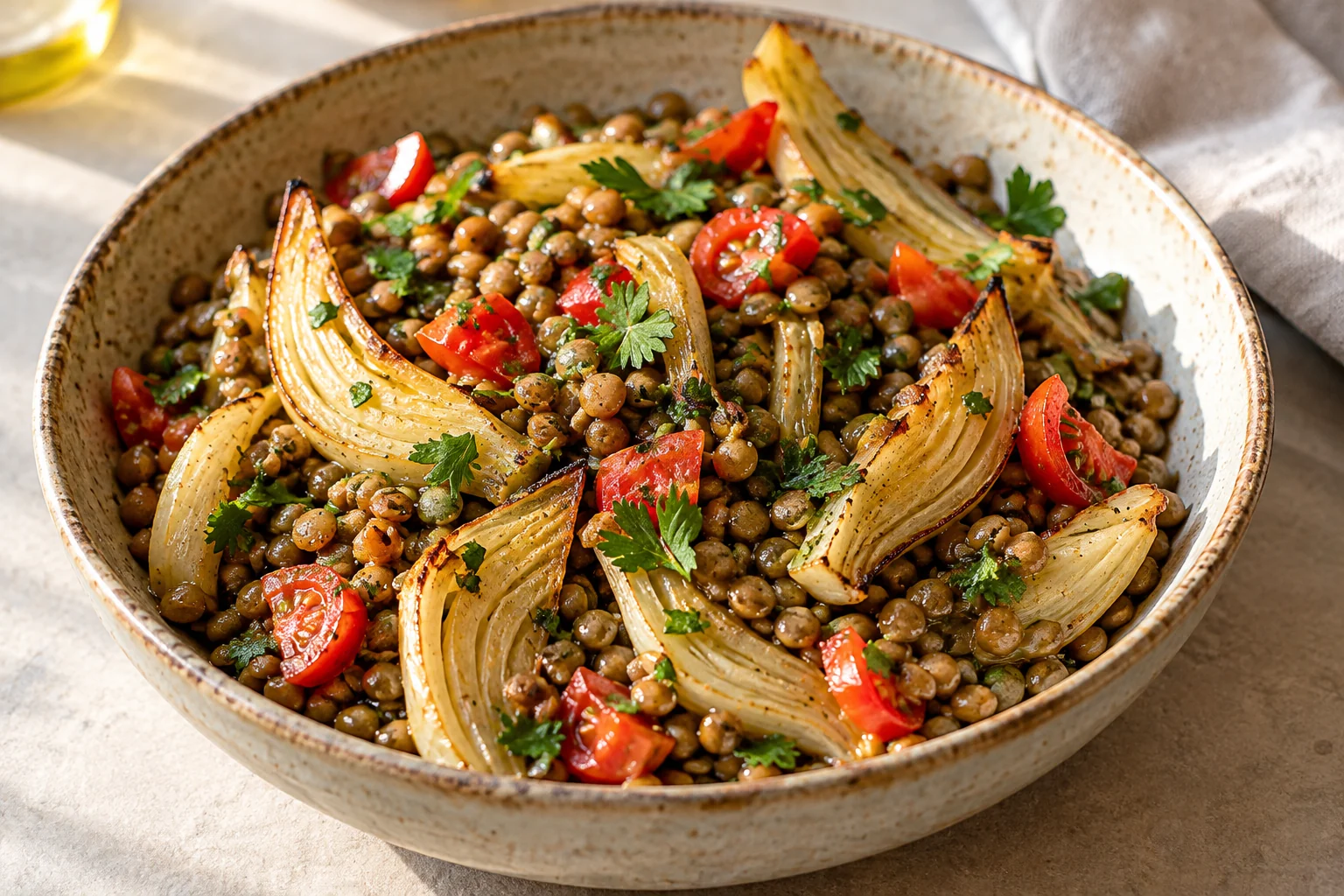
The contrast in this warm salad comes from intact lentils, caramelized fennel edges and fresh tomato. Brown or green lentils suit that goal; split red lentils are designed to soften much more readily. Roasting and simmering happen alongside each other, then the warm lentils meet the dressing before the delicate finishing ingredients.
Warm lentil & roasted fennel salad makes 4 servings, with 50 min estimated total time. View the standalone recipe page.
Choose and inspect the lentils
Pick through the dry lentils for small stones or other debris and rinse them before cooking. Whole brown or green lentils are the intended ingredient, not a pre-seasoned pouch or split red variety. Age and storage conditions affect how quickly they soften, so the recipe gives a range rather than promising an exact minute. The 240 g quantity is dry weight. A cooked weight includes absorbed water and cannot be exchanged for it without changing the portion calculation.
Simmer gently and taste for tenderness
Cover the lentils generously with water and reduce the boil to gentle bubbling. Vigorous agitation knocks softened skins apart. Begin checking within the stated range, sampling more than one lentil. The center should no longer feel chalky, but the lentil should remain recognizable when stirred. Add boiling water if the pot becomes dry before tenderness is reached. Cooking water is drained in this recipe; no broth flavorings or extra fat are included in the estimate.
Give fennel room to brown
Trim away the tough base while leaving enough structure for wedges to hold together. Toss with the measured first half of the oil and spread on a rimmed tray. Crowded wedges shed moisture into each other and steam. Turn once so a second surface contacts the tray, and look for a knife-tender center rather than judging by dark tips alone. If the thin ends brown early, rotate the tray or move those pieces toward a cooler area.
Dress while warm, fold while gentle
Drain the lentils thoroughly before adding them to the lemon, oil and garlic mixture. Excess cooking water dilutes the dressing and collects at the bottom of the bowl. Toss warm lentils gently rather than stirring hard enough to crush them. Fold in roasted fennel, tomato and parsley afterward. Fresh tomato releases juice as it stands, so the short rest is for the flavors to combine, not an invitation to leave the salad out all afternoon.
Keep the nutrition portion consistent
Divide the complete salad into four equal portions, including the dressing remaining in the bowl. The estimate starts with weighed dry lentils and includes all oil; it does not invent a correction for nutrients lost into drained water. That limitation is retained in the calculation notes. Added cheese, nuts or bread would need their own accounting. Refrigerate promptly in shallow containers within two hours and use within three to four days, whether serving leftovers cold or reheated.
Common questions
Why are some lentils still hard while others split?
Mixed ages or varieties, uneven simmering and aggressive boiling can all contribute. Use one type from one package and maintain a quiet simmer, checking several lentils before draining.
Does Mediterranean-style mean a medical benefit is guaranteed?
No. The tag describes the reviewed legume, vegetable and olive-oil ingredient pattern. It is not a clinical diet score, a treatment claim or a guarantee about an individual meal’s effects.
Technique & food-safety references
These primary references support the technique, safety and storage guidance. The recipe and cooking explanations are original Recipe Pinboard content.