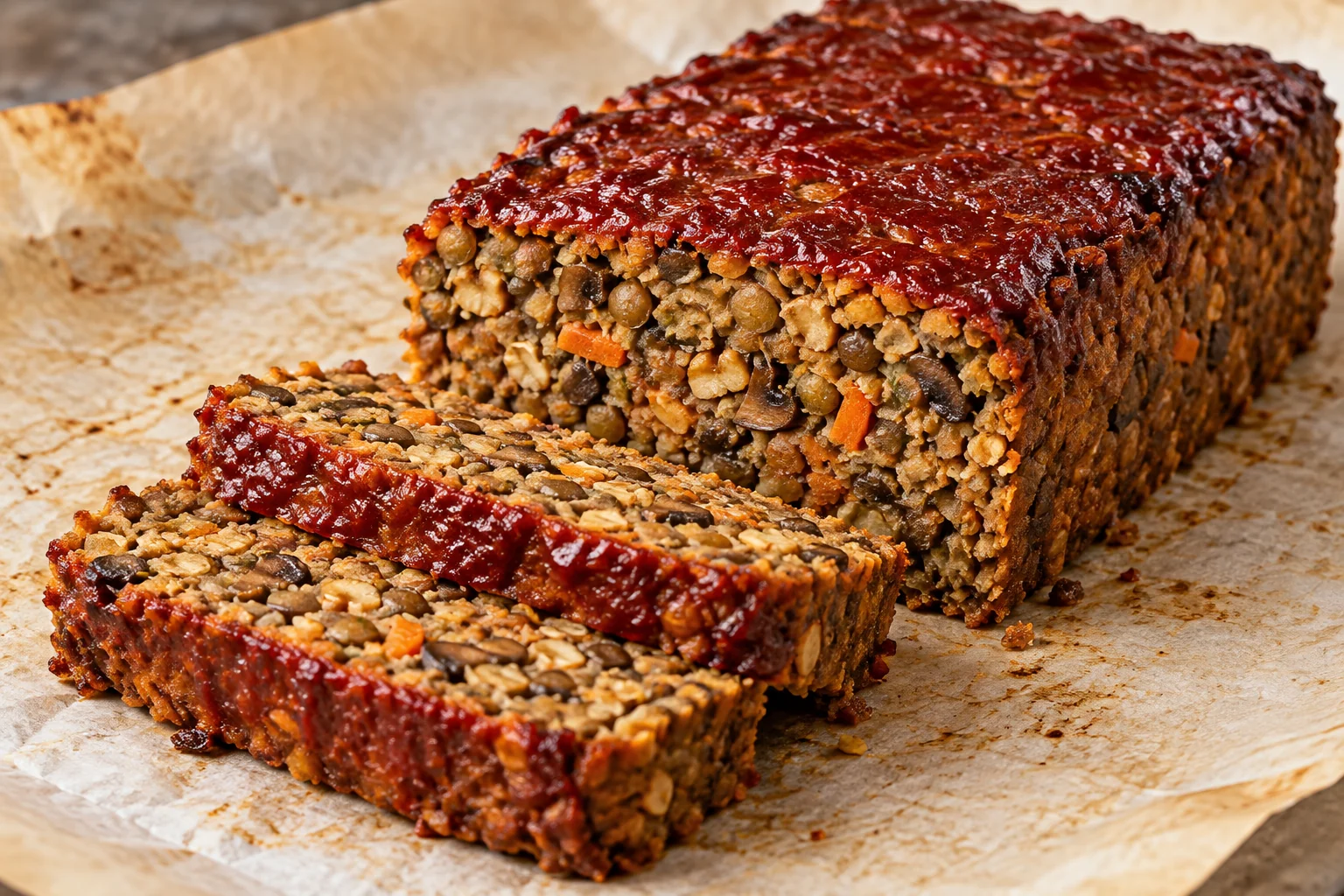
Lentil loaf needs a balance of moist cooked ingredients and a firm enough structure to slice. This version uses mashed lentils, oats and egg as the binding system, with finely chopped mushrooms and walnuts for texture. The preparation stages deliberately remove free liquid before the mixture enters the pan, and the rest after baking is part of the recipe.
Mushroom, walnut & lentil loaf makes 6 servings, with 1 hr 50 min estimated total time. View the standalone recipe page.
Cook lentils until they can be mashed
Begin with the stated dry weight of brown or green lentils. Simmer until a lentil crushes easily between a fork and the side of the pan, then drain thoroughly. Red lentils break down differently and are not a direct swap. Let steam escape from the drained lentils while the vegetables finish. The nutrition estimate begins with the dry mass; it does not pretend that unmeasured losses in the discarded cooking water are exactly known. Keep the separate glaze water out of the lentil cooking calculation.
Dry the mushroom mixture in a wide pan
Mushrooms release liquid as they heat. Cook them with the softened onion, carrot and thyme until the pan looks moist but no puddle flows into a cleared space. A crowded small pan can take longer because it holds steam. Chop the mushrooms finely before cooking so large slippery pieces do not form weak spots in a slice. Move the cooked mixture to a bowl and cool briefly; mixing raw beaten egg directly into a very hot skillet risks setting it in isolated strands.
Create both paste and texture
Mash about two thirds of the cooked lentils and leave the rest recognizable. The mashed portion helps the loaf hold together, while the whole lentils and chopped walnuts keep it from becoming a uniform paste. Mix in oats, measured egg and the loaf portion of tomato paste thoroughly, scraping the bowl so there are no dry oat pockets. Do not replace the egg with extra liquid and assume the same structure. A vegan version would need a separately developed binder rather than an unchanged label.
Pack the corners and spread a thin glaze
Line the pan with parchment that leaves enough overhang for lifting. Press the mixture firmly into the corners and level the top, eliminating large air gaps without grinding the ingredients. Combine the reserved tomato paste with the small measured amount of water and spread it in a thin layer. A thick ketchup topping is a different ingredient with different sugar and salt. The specified pan size controls loaf depth; a much smaller pan can brown outside while the center still needs time.
Use temperature and the full resting time
Check the center for 165°F (74°C), using the casserole guidance for this mixed baked loaf. The top should look set, but color alone cannot show what is happening in the middle. Rest in the pan for fifteen minutes before lifting out. Use a sharp knife and a broad spatula to support each of six thick slices. Cutting immediately can make a properly formulated loaf crumble. Refrigerate promptly and reheat leftovers thoroughly. For the gluten-free ingredient screen, use labeled gluten-free oats and verify every packaged addition.
Common questions
Why does the loaf fall apart?
Common causes are wet lentils, mushrooms with free liquid, insufficient mashing, large air gaps or slicing before the rest. Review those stages before adding more oats, which changes the formula and can make the loaf dry.
Can I form individual patties instead?
Smaller shapes have a different surface area and baking time. They still need the egg-safe center temperature, but the loaf timing and six-slice serving description would no longer apply without a separate portion and cooking review.
Technique & food-safety references
These primary references support the technique, safety and storage guidance. The recipe and cooking explanations are original Recipe Pinboard content.


