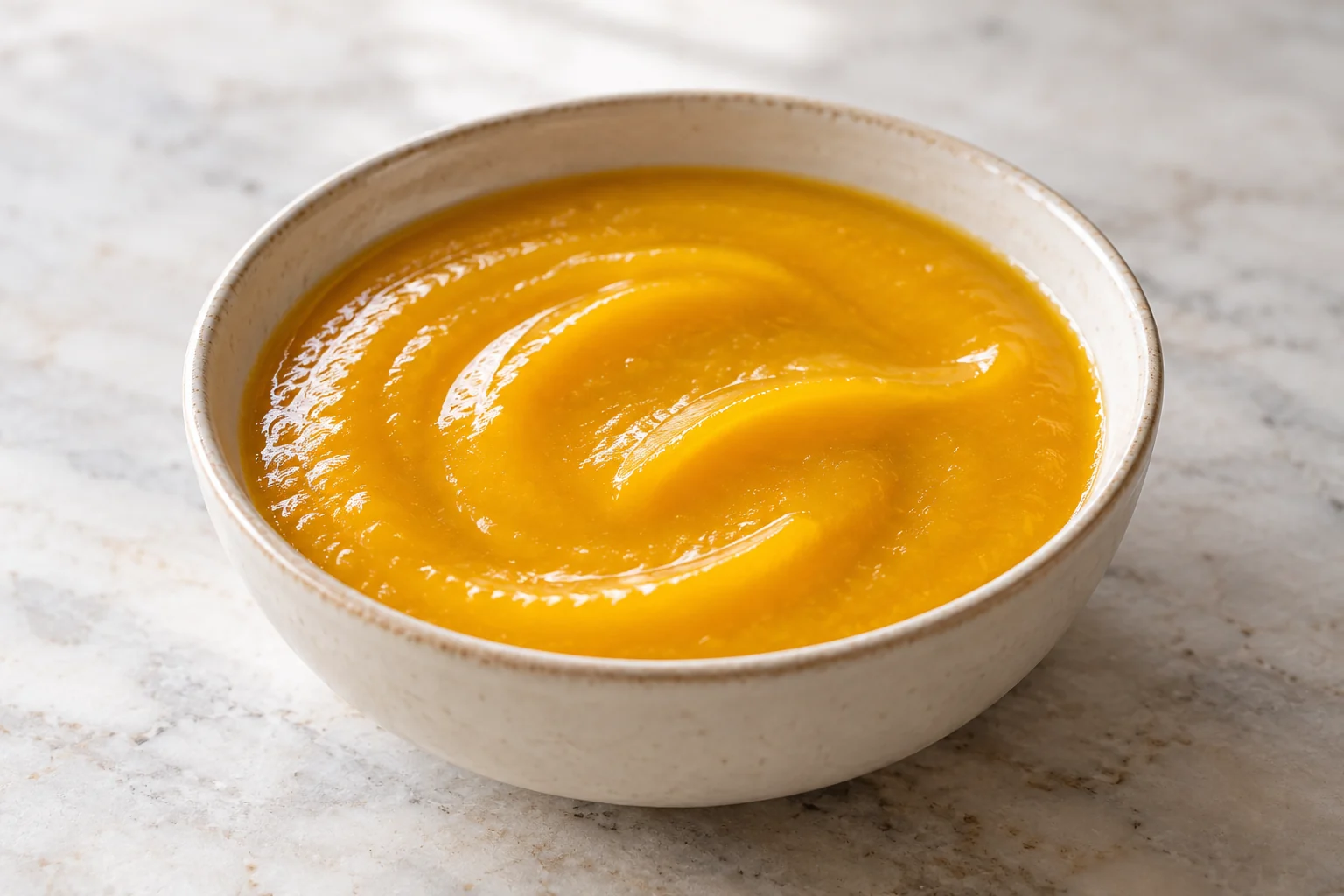
This mango sauce uses gentle cooking to soften the fruit before blending it into a smooth spoonable topping. Lime goes in after the simmer, keeping the citrus easy to control. The recipe makes eight modest portions and includes the whole cooked fruit mixture, without straining away pulp. Choose ripe mango and allow the cooling interval: both decisions matter more than trying to force a thick sauce through prolonged boiling.
Mango & lime cooked sauce makes 8 servings, with 35 min estimated total time. View the standalone recipe page.
Weigh edible mango rather than whole fruit
The four hundred grams refers to peeled, pitted flesh. Mango pits and skins vary too much for a whole-fruit weight to describe the same quantity reliably. Cut around the flat central stone, remove the peel and weigh the usable flesh. Dice it evenly so the pieces soften at a similar rate. A ripe mango gives slightly under gentle pressure and has developed its characteristic aroma. Very firm fruit will behave differently and may remain fibrous or tart even after extended cooking. Do not include damaged or spoiled areas to reach the stated weight.
Start with the complete measured liquid
Put the diced fruit, water and sugar into the saucepan together. The water protects the fruit during the early heating stage while its own juices begin to move. Keep the heat low enough for a quiet simmer rather than rapid splashing. Stir across the base regularly, paying attention to corners where fruit can stick. A loose lid limits evaporation without trapping every drop of steam. The purpose is to soften the mango, not caramelize the sugar or boil the mixture to a jam-setting temperature.
Check tenderness before reaching for the blender
Press a piece against the pan with the back of a spoon. It should yield easily, with no firm core resisting the pressure. If the pieces are still hard, continue gently and check again rather than relying on the first timer alone. Avoid reducing the sauce until it becomes a sticky paste; blending will change its apparent consistency substantially. Once the fruit is tender, remove the pan from the burner and add the lime juice. Retain every part of the cooking liquid and fruit for the final sauce.
Blend without spraying hot puree
Give the mixture its ten-minute cooling interval, then transfer it to a tall heatproof container suited to an immersion blender. Keep the blade head below the surface before switching it on. Stop the motor before lifting the head out, and avoid moving it so vigorously that hot droplets escape. Blend until the texture is even, scraping the container if needed. This recipe does not call for pushing the sauce through a sieve. Removing fibers or pulp would change the retained batch and require a different estimate of what reaches the plate.
Cool and portion a refrigerator sauce
Divide the completed sauce into eight equal shares, or weigh the whole batch and divide that weight by eight. Water evaporation means the final gram weight can vary while the ingredient totals remain the same. Chill promptly within two hours and use within three to four days, or freeze portions for longer keeping. The small amount of sugar and lime does not establish a tested canning process. Store it as a refrigerated sauce even if it looks glossy and thick. Any cake, yogurt or breakfast food served with it is additional.
Common questions
Why is the sauce stringy?
Mango varieties differ in fiber, and underripe fruit can be harder to blend smoothly. Check that the pieces softened fully and blend with the head submerged. For this measured recipe, retain the pulp instead of silently straining part of the fruit away.
Will it thicken as it cools?
It may become slightly more cohesive, but this is a fruit sauce rather than a firm preserve. Judge it after cooling before deciding it needs more cooking. A long extra boil can darken the flavor and concentrate sweetness without removing fibrous texture.
Technique & food-safety references
These primary references support the technique, safety and storage guidance. The recipe and cooking explanations are original Recipe Pinboard content.


