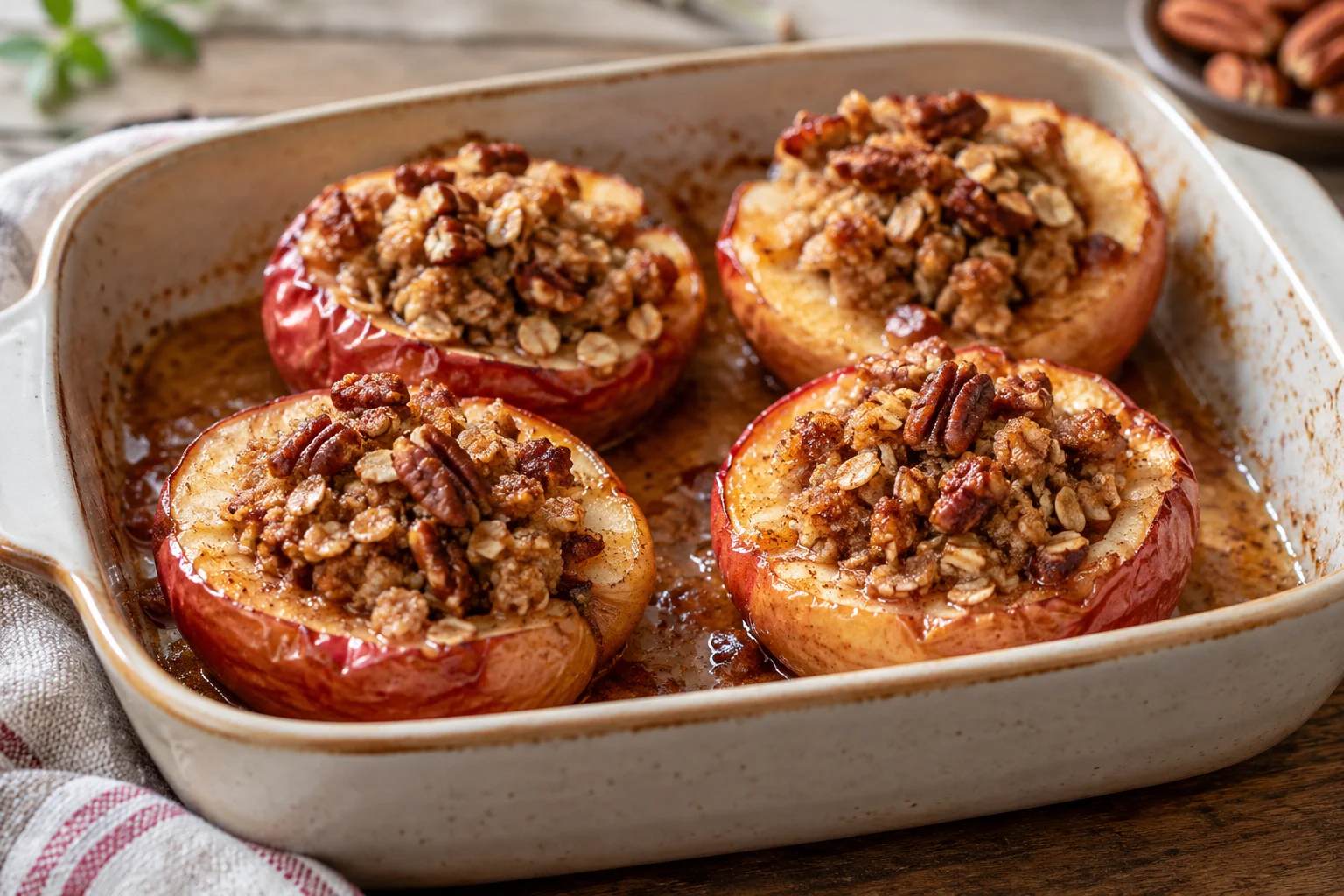
These baked apple halves have a small pecan-and-oat filling rather than a full crumble topping. Their success depends on coordinating two textures: the fruit must soften while the nuts and oats become golden. The recipe is planned for about 65 minutes and four servings, including preparation and a five-minute rest before the pan juices are spooned over the fruit.
Maple-pecan baked apples makes 4 servings, with 1 hr 5 min estimated total time. View the standalone recipe page.
Choose similar apples and weigh after coring
Use firm apples suited to baking, and choose fruit of similar size so one half does not collapse while another remains hard. Apple varieties differ in firmness, sweetness and how well they retain shape; no single baking time fits every cultivar. A mixed bag can still work, but expect to check and remove individual halves separately.
Wash the fruit before cutting. Halve crosswise and remove the core with a small spoon or melon baller, leaving the curved underside intact. The 720 g amount is edible apple after coring. It is approximately eight halves, but weighing matters more than assuming every apple has the same size.
Make a pocket rather than hollowing out a bowl
Remove the seed cavity and tough core, then leave most of the flesh in place. A thin-walled apple cup softens much faster and holds less fruit than this recipe intends. Keep the skin on to help each half retain its shape and to match the stated ingredient preparation.
Arrange the halves cut-side up in a baking dish that fits them in a single layer. A snug arrangement helps keep rounded halves upright. If one rocks badly, settle it against a neighboring half rather than slicing away a large amount of its underside and creating a hole for the filling to escape.
Moisten the filling evenly before portioning
Combine roughly chopped pecans, rolled oats, maple syrup, melted butter, cinnamon and salt. Keep most nut pieces small enough to sit in the cavities, with a few larger pieces for texture. Stir until the oats look lightly coated, then distribute all of the mixture across the apples, spreading any excess onto the cut surfaces.
The filling is intentionally modest; it should not form a towering dry pile. Pour the 100 g water into the dish around the fruit, not over the topping. That distinction keeps the maple-butter coating on the nuts and oats while giving the pan a little moisture to combine with released apple juice.
Judge the fruit and filling independently
Bake at 375°F (190°C) and begin checking at thirty minutes. The planned window is thirty-five to forty minutes, but a firm variety or larger halves may need longer. Insert a small knife into the apple flesh beside the filling: it should slide in easily without the fruit having collapsed.
If the nuts are golden before the apple is tender, loosely cover the dish with foil and continue baking. Raising the oven temperature would make that mismatch worse. If the fruit is ready but the topping is only lightly colored, it is reasonable to accept a paler filling rather than dry the apples in pursuit of a dark crust.
Use the rest and the pan juices
Allow five minutes before serving; the center and syrup can be much hotter than the exposed skin suggests. Spoon the pan juices back over the fruit so the measured butter and syrup are served with the recipe. Divide into four equal portions, approximately two halves each. Ice cream, cream or yogurt would be separate additions.
Refrigerate leftovers promptly in a shallow covered container at 40°F (4°C) or colder, within two hours or one hour above 90°F (32°C). Use within three to four days. Reheat covered to 165°F (74°C), checking the filling as well as the fruit. The topping will soften somewhat in storage; that is a texture change rather than a reason to extend its storage time.
Common questions
Why did my apples fall apart?
Very soft varieties, small halves or excessive baking can cause collapse. Choose firm fruit of similar size and check tenderness before the full estimated time has elapsed.
Can I leave out the pan water?
The written method includes 100 g water around the apples to keep the dish from drying immediately and to form pan juices. Omitting it changes how the fruit and filling bake.
Technique & food-safety references
These primary references support the technique, safety and storage guidance. The recipe and cooking explanations are original Recipe Pinboard content.