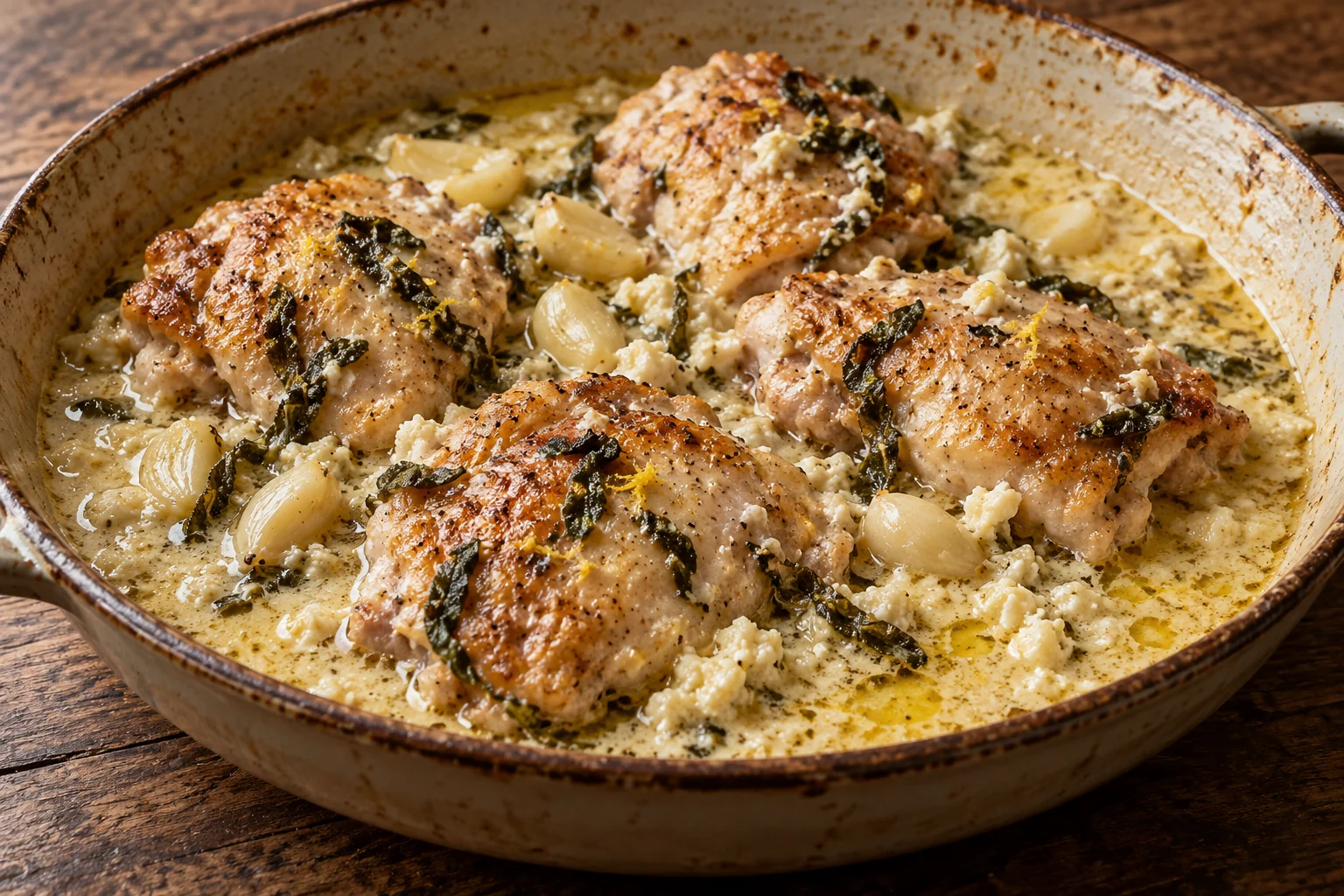
Milk braising produces a different sauce from cream thickened with flour. As the chicken cooks, the milk may separate into small soft curds and a pale golden liquid. Both belong in this rustic dish. This original version uses boneless skinless thighs, finely sliced sage, garlic and grated lemon zest, with no added lemon juice. Four servings include the complete pan contents rather than strained chicken with discarded sauce.
Milk-braised sage chicken makes 4 servings, with 1 hr 15 min estimated total time. View the standalone recipe page.
Start with the correct chicken state
Weigh raw edible thigh meat after bones and skin have been removed. The recipe's amount is not a whole-package weight that includes those parts. Keep portions similar in thickness so the simmering stage can finish them evenly. Pat the meat dry without rinsing and keep its utensils separate from foods that will not be cooked. Season before browning. The chicken will not be safe to eat after a few minutes of surface coloring; it still needs the covered braise and a thermometer check in its thickest areas.
Brown without scorching the pan
Use the measured oil and cook the chicken in two batches, leaving space around the pieces. Transfer them to a plate while the garlic warms briefly in the pan. Keep the browned bits and all the oil for the sauce, but avoid blackening the base. Milk added to a badly scorched pan will pick up that bitter flavor. Lower the heat before adding it and scrape gently as the liquid loosens the cooked particles. Return every collected chicken juice from the plate because it is part of the braise.
Keep the milk at a gentle simmer
Add the sage and finely grated yellow zest, avoiding the bitter white pith. The recipe uses zest for fragrance and does not require squeezing lemon into the milk. Partially cover the pan and keep the bubbling quiet. Stir along the base occasionally, where milk solids can stick even when the surface looks calm. Turning the chicken halfway helps expose it evenly to the liquid. A rolling boil can reduce the sauce too quickly and make scorching more likely, so patience is more useful than a high burner setting.
Accept curds while checking meat safety
Small soft curds and a separated liquid are compatible with this style of sauce; they are not a reason to strain or throw it away. Appearance cannot tell you whether the chicken is cooked safely. Insert a clean thermometer into the thickest part of each portion and continue cooking until all reach 165°F / 74°C. If the chicken is ready but the sauce is thin, use the short uncovered finishing stage while stirring. Do not keep boiling merely to force the milk into a smooth cream sauce it was never designed to become.
Serve and store the complete sauce
Rest the finished pan briefly, then divide the chicken, garlic, curds and liquid into four comparable portions. Spoon the sauce across the servings rather than leaving its solids behind in the pan. The estimate counts every gram of starting milk and all the oil, even though water evaporates during cooking. Refrigerate leftovers within two hours in shallow containers, use within three to four days and reheat to 165°F / 74°C. Stir during reheating to protect the milk solids from catching. Vegetables, bread or potatoes served alongside are separate foods.
Common questions
Does separated milk mean I used spoiled milk?
Not necessarily: heat and the cooking environment can separate fresh milk during this braise. Start with properly refrigerated milk within its usable date and discard milk that already seems spoiled before cooking. The expected cooked curds are different from ignoring questionable ingredients.
Can I use chicken breasts instead?
Breasts cook differently and can dry out during the thigh schedule. This formulation and estimate are for boneless skinless thighs. A breast version needs its own timing and quantity review rather than assuming the same long simmer will give the same result.
Technique & food-safety references
These primary references support the technique, safety and storage guidance. The recipe and cooking explanations are original Recipe Pinboard content.


