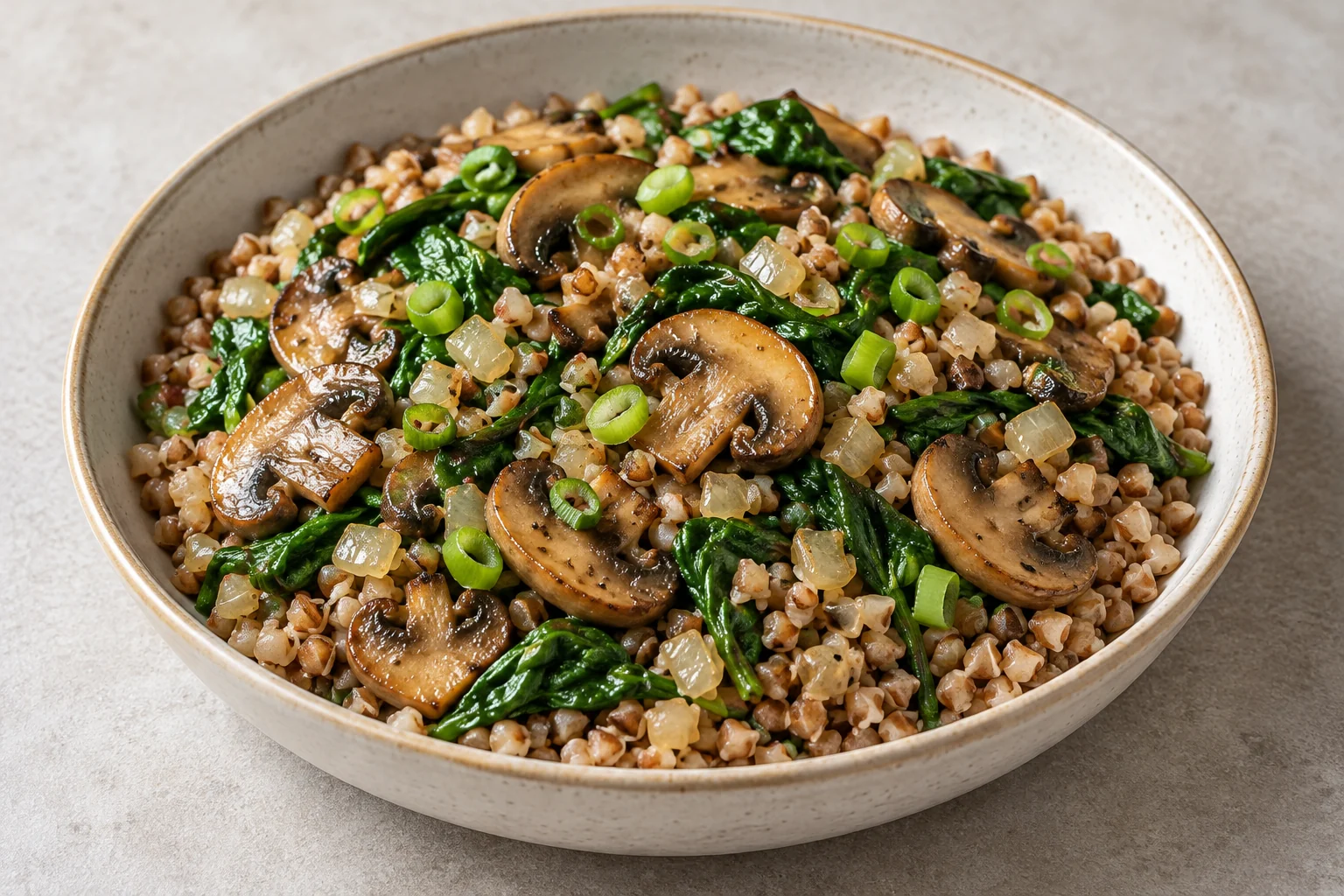
A savory buckwheat breakfast works best when the grains and mushrooms keep different textures. The groats form a tender base, while the cremini slices bring browned edges and the spinach supplies a softer green layer. This four-bowl recipe uses two pans so the grain cooking can overlap with the vegetables. Allow around forty minutes, including the covered rest that helps the buckwheat settle before serving.
Mushroom buckwheat breakfast bowls makes 4 servings, with 40 min estimated total time. View the standalone recipe page.
Check the buckwheat label before cooking
Use whole, raw hulled buckwheat groats for the measured 200 g. Flour, flakes and roasted kasha are different products with different behavior in the saucepan. Groats should look like small angular grains. Sorting out the product before you begin is more useful than trying to rescue a saucepan of quick-cooking flakes on a whole-grain schedule.
Rinse briefly in a fine sieve and drain. Bring the measured water to a boil before adding the groats, then reduce to a gentle covered simmer. Check the package as well as the recipe's fifteen-to-twenty-minute range. Start tasting early if the package gives a shorter time, since processing and grain size vary between products.
Protect the cooked grains from unnecessary stirring
Look for tender centers and absorbed water, then move the saucepan off the heat for its five-minute covered rest. Stirring continuously is unnecessary here and can break softened grains apart. Use a fork or broad spoon to loosen the finished buckwheat gently rather than beating it into the texture of porridge.
If tender groats remain slightly wet, briefly uncover over low heat to evaporate excess moisture, then rest. If the pan dries before the centers soften, add the optional water in 10 g increments, up to 50 g. Avoid draining away cooking liquid. The intended bowl has soft but identifiable grains; a different brand may need a modest timing adjustment.
Give the mushrooms the widest cooking surface
Slice the cleaned cremini mushrooms about 5 mm thick. Very thin slices can shrink before larger ones release their moisture, making an uneven topping. Heat the first share of olive oil in a wide skillet, add the mushrooms loosely, and let them contact the surface between occasional turns.
There is usually a wet stage before the surfaces brown. Let that released liquid evaporate rather than immediately adding the onion and spinach. If the skillet is small, work in batches using the same measured oil divided between them and allow extra time. Move browned mushrooms to a bowl so the onion gets its own controlled cooking stage.
Soften the onion, then briefly wilt the greens
Reduce the heat to medium before adding the remaining oil and diced onion. Stir until the onion is softened, scraping gently across the bottom to pick up brown mushroom residue. Add the minced garlic only for the brief final interval before the spinach; small pieces can scorch if they enter with the mushrooms.
Dry the washed spinach well and add it in two handfuls. Fold it through the onions until just wilted, then return the mushrooms and their collected juices. This sequence leaves the mushrooms distinct instead of simmering them throughout in leafy-green moisture. Half the scallions warm in the skillet; the remaining half finish the bowls.
Assemble breakfast and plan another morning
Divide the buckwheat among four shallow bowls and spoon the vegetables over the top, including any small amount of seasoned pan juice. Topping rather than vigorously mixing keeps the slices and grains visible. The mushrooms, spinach and scallions supply the complete finish; an egg or cheese would be an optional addition outside this card.
For another morning, refrigerate promptly in shallow covered containers within two hours, or one hour above 90°F (32°C). Store at 40°F (4°C) or below and use within three to four days. Reheat with a small splash of water and stir so the middle reaches 165°F (74°C). The fresh bowl has the clearest contrast in textures.
Common questions
Can I use roasted kasha instead?
Use its package cooking instructions if you choose it, because it can cook faster than raw groats. The published recipe and nutrient estimate specify raw buckwheat, so the exact card is best followed with that product.
Why are the mushrooms pale?
They may still be releasing water, or the pan may be crowded. Wait for moisture to evaporate and give the slices some uninterrupted contact with the skillet. Increasing heat aggressively can burn smaller pieces without solving a crowded pan.
Technique & food-safety references
These primary references support the technique, safety and storage guidance. The recipe and cooking explanations are original Recipe Pinboard content.