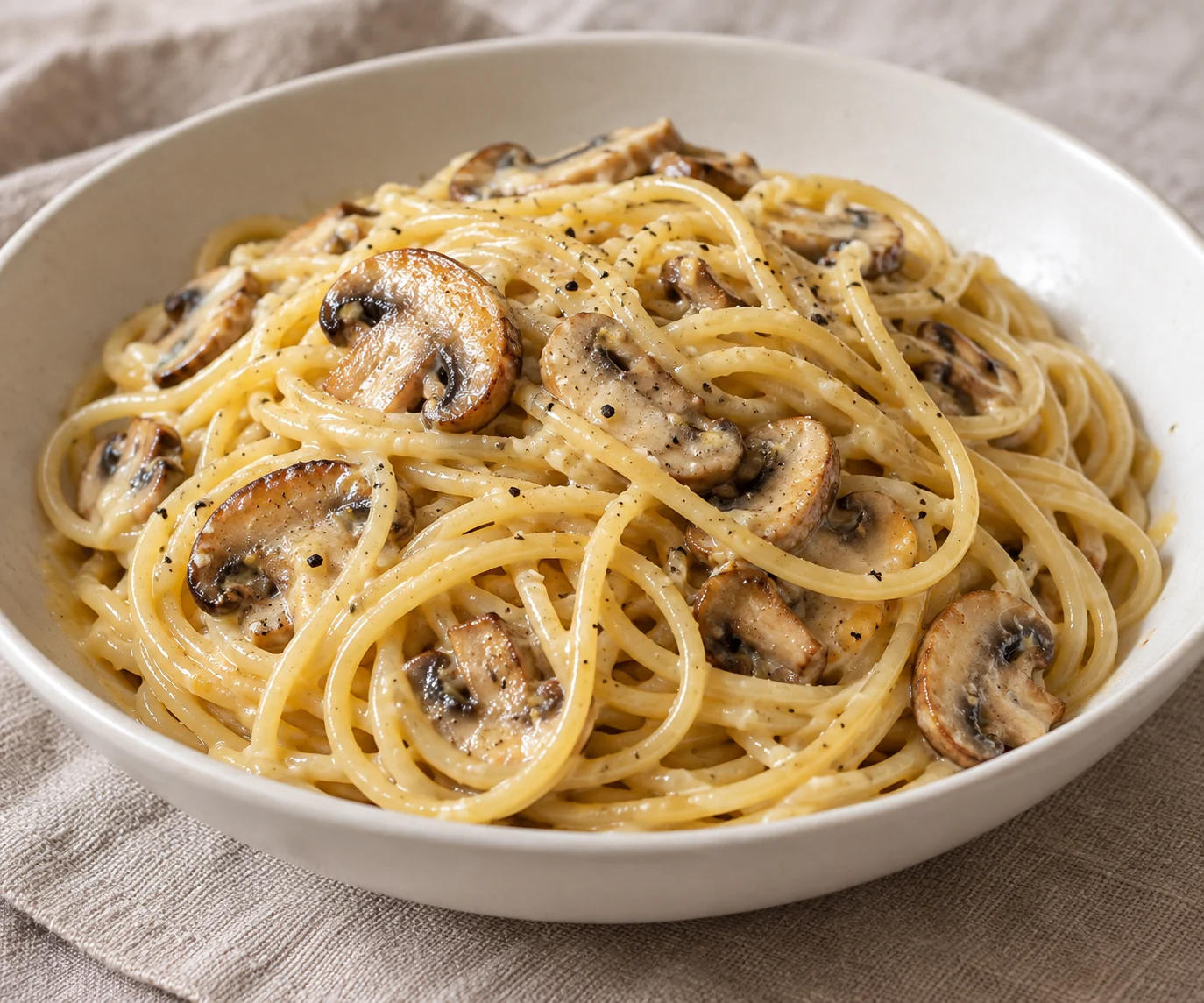
This spaghetti uses browned mushrooms and an egg-and-cheese coating rather than cream or cured meat. The sauce is heated over simmering water while the pasta is continuously moved through it. That arrangement gives more control than placing the egg mixture directly against a hot skillet, but it still needs attention and a thermometer. The card's endpoint is 160°F in the sauce, not merely a glossy appearance. Prepare the bowl, tongs and thermometer before boiling the spaghetti so the finishing stage can proceed without interruptions.
Mushroom & egg spaghetti makes 4 servings, with 45 min estimated total time. View the standalone recipe page.
Check the bowl fit before any food goes in
Choose a heatproof metal bowl that sits securely over the pot while its base stays above the water. Test the fit before cooking, when everything is cool and easy to handle. A bowl that slips sideways or touches boiling water makes gentle control harder. Keep dry mitts within reach because steam heats the bowl and its rim. The pot should maintain a quiet simmer during finishing; a violent boil is unnecessary. Leave enough working space beside it to lift the bowl off heat briefly when required.
Brown the mushrooms until their released water evaporates
Slice the mushrooms reasonably evenly and use a wide skillet with the measured oil. They will release liquid before their edges can brown. Keep cooking through that wet stage instead of pouring the liquid away and adding extra oil. Once the liquid has evaporated, turn the slices to color some surfaces without burning them. All mushrooms and skillet oil go into the finished pasta. Large pools of mushroom water would make the sauce harder to assess, so this preparation is worth completing before the egg mixture is heated.
Measure whole egg and additional yolk separately
The card counts whole eggs and a separate quantity of yolks. Weigh the edible ingredients without shells, and do not include unused separated whites in that second amount. Finely grate the hard cheese so it disperses more readily through the egg mixture than thick shavings would. The vegetarian tag requires a cheese labeled for vegetarian or microbial rennet; ordinary Parmesan is not automatically suitable. Eggs themselves are vegetarian. The pasta should contain no meat ingredients, and the dish still contains wheat, milk and egg allergens.
Use the stated water and keep the sauce moving
The sauce receives the measured hot plain water, rather than an assumed quantity of starchy pasta water. Add the drained spaghetti and all mushrooms as directed, then move the strands continuously over gentle steam. Scrape the bowl sides where sauce can heat faster than it does in the center. Lift the bowl briefly if the coating thickens abruptly, then resume controlled heating. Check the sauce temperature in several places without touching the metal with the thermometer. Residual heat alone is not the method specified by this recipe.
Stop heating promptly at the endpoint
Once the sauce reaches the stated temperature and coats the strands, remove the bowl and portion the pasta immediately. Continued heating can turn a glossy coating into small curds. If that happens, cooling the bowl can stop further thickening, but it does not reverse cooked egg into its original smooth state. Do not disguise a missed temperature check by assuming that curds prove every part was heated evenly. Leftovers should be refrigerated promptly and reheated thoroughly; expect a firmer sauce rather than the same freshly made texture.
Common questions
Can I leave out the double-boiler stage?
Not while following this recipe's safety method. The card uses controlled steam and a measured 160°F endpoint for the egg sauce. Hot noodles vary in temperature and quantity of retained heat, so they are not a substitute for that verification.
Why did the sauce become grainy?
Heat may have been too strong, movement too slow, or the bowl left over steam after the endpoint. Prepare everything first, keep the water gently simmering and lift the bowl when necessary. Finely grated cheese also disperses better than coarse pieces.
Technique & food-safety references
These primary references support the technique, safety and storage guidance. The recipe and cooking explanations are original Recipe Pinboard content.


