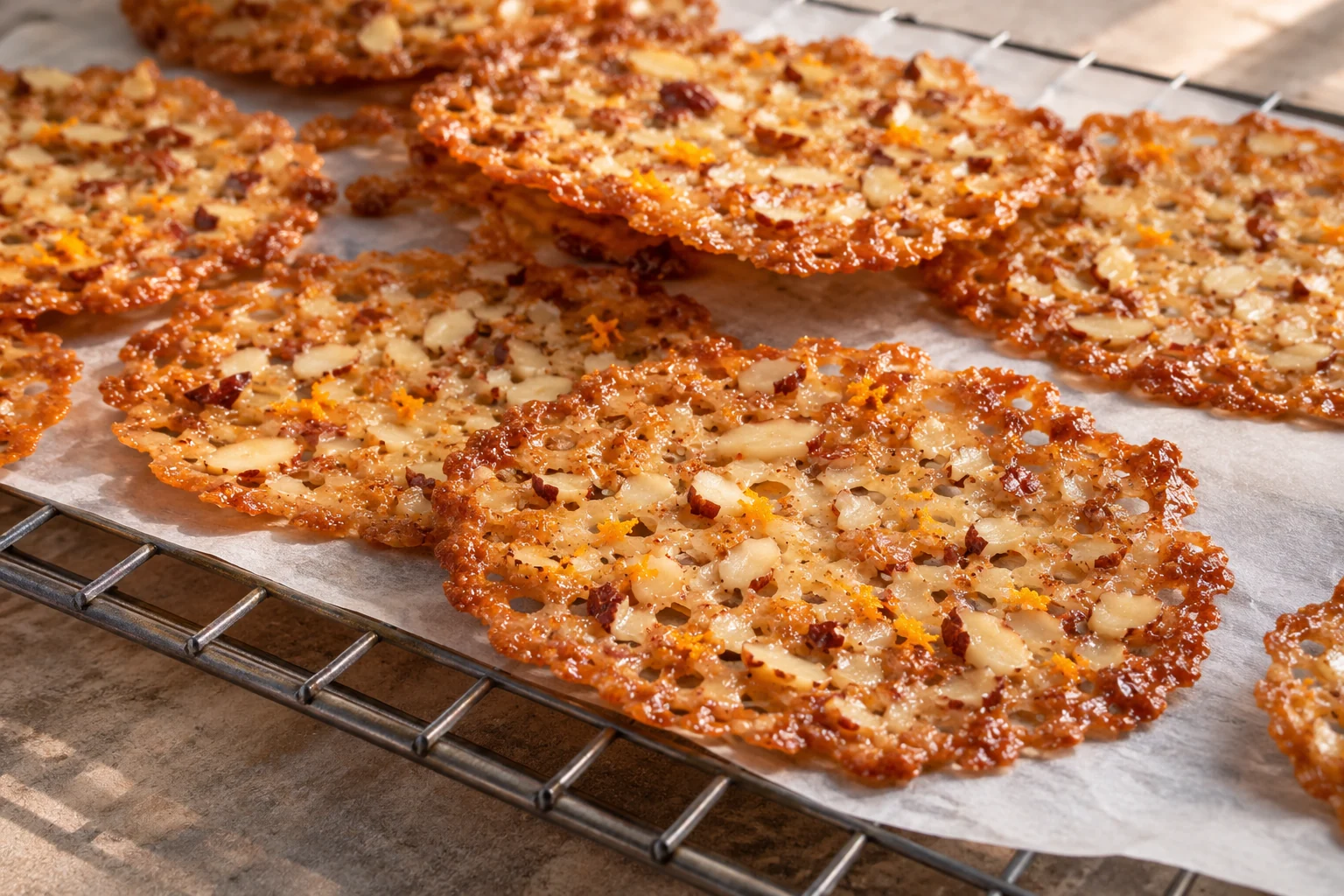
Florentines are thin cookies held together by a bubbling sugar mixture rather than a thick dough. Their delicate structure depends on small nut pieces, generous spacing and enough cooling time. This version uses chopped skin-on almonds and a measured amount of fresh orange peel, with no chocolate coating. Three baking batches make it possible to watch the changing color without overcrowding the sheets.
Orange and almond Florentines makes 12 servings, with 1 hr 50 min estimated total time. View the standalone recipe page.
Chop the almonds and weigh the peel
Finely chopped almonds spread through the mixture more evenly than large chunks. Keep their skins, which create small brown flecks and match the raw almond ingredient used in the estimate. Avoid reducing everything to nut powder; some texture should remain. Wash and dry the orange before grating, then take only the colored outer peel and weigh the specified amount. Large pieces of bitter white pith would be conspicuous in such a thin cookie. Combine the nuts, flour, peel and salt before heating the sugar mixture.
Prepare the baking surface first
Line the sheets before turning on the stove so the hot mixture has somewhere ready to go. Baking parchment or a suitable silicone mat allows the cooled cookies to release; a bare sheet is much less forgiving. Heat the oven fully and arrange a clear landing space for hot trays. This recipe divides the batter into twenty-four portions, baked eight at a time. Plan for the sheets to cool between batches if reusing them. A very hot sheet starts melting a fresh portion before it reaches the oven.
Handle the hot mixture carefully
Melt the butter with sugar, cream and honey over gentle heat, stirring until combined, then allow the specified brief bubbling boil. Remove the pan from heat before adding the dry mixture. The contents remain hot enough to burn even after bubbling stops, so use utensils and keep fingers away. The short cooling interval makes portioning more manageable. Scrape the pan thoroughly and divide the complete mixture among the cookies. Do not add extra cream to loosen a thickening batch; that would alter how it spreads and sets.
Leave room for the lace to develop
Spread each measured portion into a small round and maintain the generous distance between centers. The mixture expands as it bubbles, creating thin areas and holes around the almond pieces. Start checking early in the baking range because a minute can separate amber edges from bitterness. Look at the center as well as the perimeter: a pale, wet-looking middle needs more time. Rotate the sheet if your oven colors one side faster, working carefully so the still-fluid cookies do not slide together. Let color guide the final minute.
Cool completely before storing
Freshly baked Florentines are soft and fragile. Leave them on the sheet for ten minutes so the sugar structure can firm, then slide a thin spatula underneath and transfer them gently to a rack. Give them the full final cooling period before stacking. Trapping residual warmth in a container encourages condensation and softness. Store the cooled cookies airtight with parchment between layers, and keep them away from a steamy cooking area. The recipe's two-cookie serving is based on twenty-four evenly divided pieces, not on their final diameter.
Common questions
Why did my Florentines merge into one sheet?
The portions were too close together, too large or placed on an already hot tray. Use the measured portions and spacing, and cool reused sheets. Minor joined edges can be separated carefully once firm enough to handle.
Why did crisp cookies become sticky overnight?
These thin sugar-rich cookies readily pick up moisture from humid air. Cool them completely before sealing, use an airtight container and avoid storing them beside moist cakes or fruit. Their texture is best protected by dry storage.
Technique & food-safety references
These primary references support the technique, safety and storage guidance. The recipe and cooking explanations are original Recipe Pinboard content.


