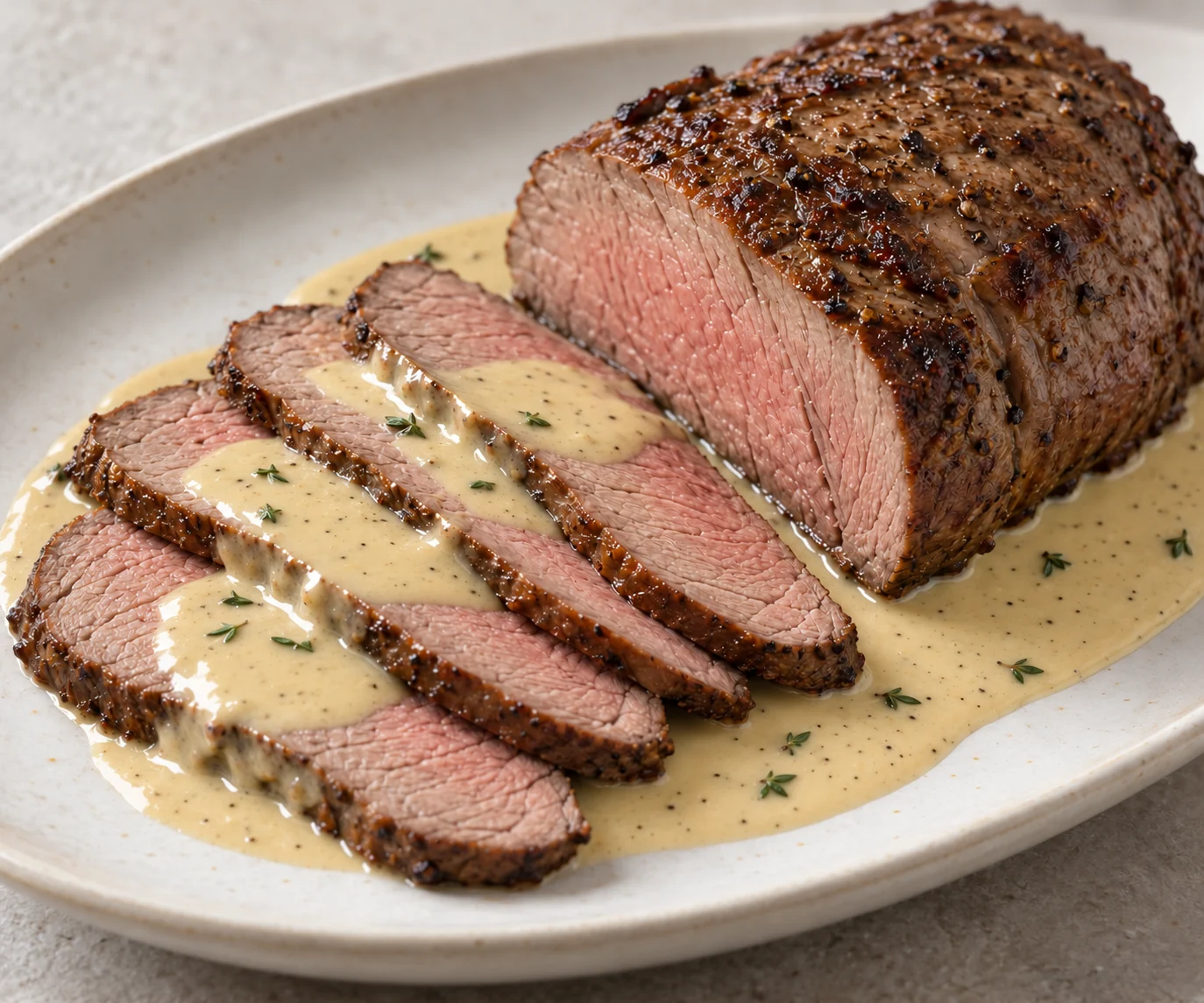
This recipe uses the lean muscle of a boneless top sirloin cap, with external separable fat removed before weighing. It is not a fat-capped picanha preparation or a pot roast simmered until shreddable. The compact piece roasts uncovered, rests, then is sliced thinly across its grain. A mustard cream sauce gathers the cooking and resting juices so the measured meat, oil and sauce remain part of the meal.
Oven-roasted sirloin cap with mustard cream makes 4 servings, with 2 hr 30 min estimated total time. View the standalone recipe page.
Match the cut and trimming to the recipe
Ask for top sirloin cap rather than an unspecified sirloin joint. Remove external separable fat before measuring the eight hundred grams of lean meat. The retained primary nutrition reference describes this same anatomical muscle as a raw lean-only steak; slicing it into steak portions is not a different muscle, but the reference is still an estimate rather than a laboratory analysis of this roast. A large fat cap changes that accounting. Look at the grain direction while the meat is raw, before browning makes the fibers harder to see.
Position the roast and thermometer carefully
Use a shallow pan and a rack so air can circulate around the meat. The piece's thickness matters more than its weight alone: a long flat piece can cook faster than a compact one of equal mass. Place the thermometer tip in the thickest center and check its position from more than one angle if necessary. Do not let it rest against the rack. Start checking before the upper cooking range, but keep the roast in the oven until it reaches the stated endpoint rather than relying on a pink or brown appearance.
Rest after reaching the safe endpoint
This formulation calls for the center to reach 145 F /63 C before leaving the oven. The fifteen-minute rest exceeds the minimum three-minute rest for whole beef cuts. Cover loosely so the exterior does not steam under a tight wrapping. Use a board or platter that catches juices and keep those juices for the sauce. If roasting takes longer than expected, extend dinner preparation rather than shortening the safety step. The listed elapsed time is a realistic planning allowance, not a guarantee for every oven or roast shape.
Turn the pan juices into a complete sauce
Use the measured water to loosen the browned deposits in the roasting pan and transfer everything to a small saucepan. A separate saucepan is useful when the roasting pan cannot safely sit on a burner. Add the cream, mustard and thyme, then simmer until the sauce lightly coats a spoon. It should remain pourable rather than reduce into a thick paste. Stir in the resting juices and return it to a full simmer. Do not skim away oil or strain out solids while still claiming all of those ingredients were served.
Slice across the grain and portion the sauce
Use a sharp knife and cut thin slices perpendicular to the muscle fibers you noted earlier. Turn the roast as needed if the grain curves. Long parallel fibers make lean beef feel chewier even when its temperature is correct. Divide the sliced meat and all sauce into four equal portions; a plate without sauce does not have the same estimated nutrient share. Refrigerate leftovers in shallow containers promptly, including the sauce, and reheat to the leftover endpoint. Extra vegetables, bread or potatoes are outside the recipe card.
Common questions
Can I use a roast with its fat cap attached?
Not as an unchanged substitution. The ingredient mass and primary profile refer to lean meat after external fat removal. Retaining a fat cap changes the quantity of edible fat and drippings. Trim before weighing for this formulation, or treat the alternative as a separately calculated recipe rather than silently discarding or ignoring the fat.
Why is the meat firm even though the temperature was correct?
Lean sirloin cap will not become shreddable like a long-braised chuck roast. Thick slices, cutting along the grain or cooking well beyond the target can make it seem tougher. Use thin cross-grain slices and the accompanying sauce. A thermometer establishes the endpoint; tenderness also depends on cut, slicing and individual meat variation.
Technique & food-safety references
These primary references support the technique, safety and storage guidance. The recipe and cooking explanations are original Recipe Pinboard content.


