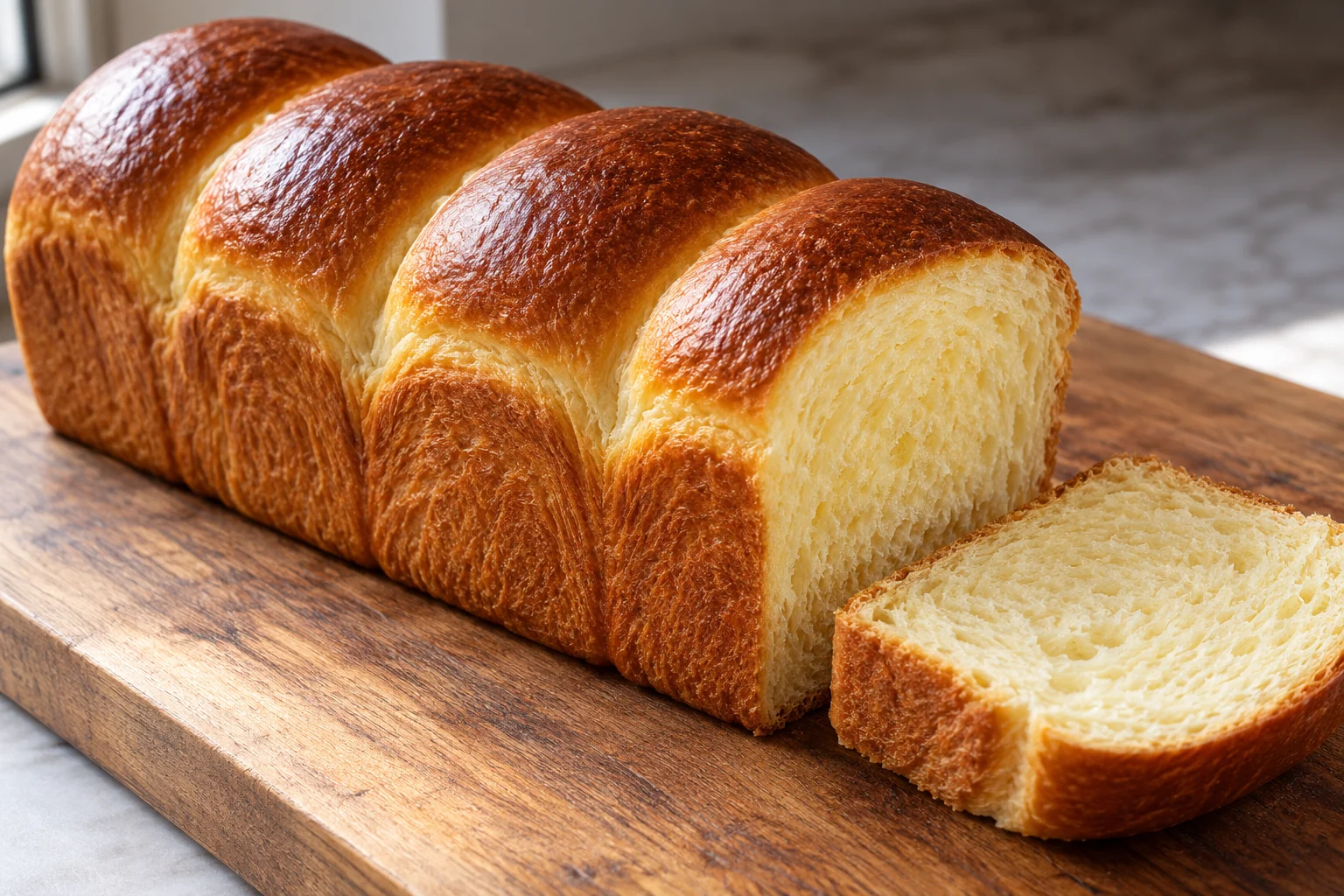
Brioche asks the dough to support a generous amount of butter and egg. This method develops an elastic dough first, works the butter in gradually and then chills it overnight before shaping. The refrigerator stage makes the enriched dough easier to handle, while the long morning proof gives the cold pieces time to expand. Four connected domes create a simple pan loaf without braiding, scoring or an unmeasured egg wash.
Overnight brioche loaf makes 10 servings, with 20 hr estimated total time. View the standalone recipe page.
Develop the dough before adding its butter
Measure the flour allocation carefully, reserving the small handling portion. Mix the yeast milk, eggs and other dough ingredients first, then knead until the mass becomes elastic. At this stage the dough needs enough structure to accept the butter that follows. The stand mixer is part of the method; simply stirring everything together in a bowl is not an equivalent shortcut. Check that the dough hook is actually working the mass rather than spinning through a wet center while dry flour remains on the sides.
Add pliable butter in small portions
The dough butter should bend or indent while remaining cool and opaque. Add one portion and let it disappear into the dough before adding another. The mixture can look messy briefly as fat enters, so stop and scrape rather than panicking and adding flour. If the bowl warms enough that the dough looks oily, use the short chilling pause in the card. That pause adds time but protects the intended texture. The separate small butter allocation is for the bowl and pan, not extra dough enrichment.
Use the refrigerator stage as part of the recipe
After its short first rise, cover the dough and refrigerate within the stated temperature limit. The overnight window slows the yeast and firms the butter, making next-day division more manageable. It is not interchangeable with leaving the egg-and-milk dough on a warm counter overnight. Prepare the loaf pan before taking out the chilled dough. Work with the cold pieces while they still hold their shape, and keep the handling flour within its measured allowance rather than repeatedly dusting a sticky board from an open bag.
Shape four equal balls and proof patiently
Equal pieces help the four domes rise and bake at similar rates. Place them in a row with their seams underneath, then cover without pressing the cover against the dough. Cold brioche can take several hours to become very puffy. A warm radiator or hot oven shelf may melt the butter before the yeast has done its work, so use a moderate room instead. Watch the expansion and position relative to the pan rim. If the dough is still dense and cold at the end of the range, allow more time.
Check the center before trusting the brown crust
Egg and sugar help the exterior color, so an attractive brown top can appear before the middle has baked through. Tent the loaf if necessary and use the center temperature given in the card. The brief pan rest lets the loaf settle before unmolding, and the longer rack cooling period completes that process before slicing. Cutting too early can compress the soft crumb. Ten servings means ten equal slices of the whole loaf, with no decorative glaze, butter pat or other food added to its estimate.
Common questions
Why does the dough look greasy during mixing?
Butter that is too warm, a hot bowl or adding the fat too quickly can overwhelm the developing dough. Stop, scrape and chill briefly if needed, then resume gradually. More flour may hide the stickiness but also changes the dough ratio; do not use it as an unlimited correction.
Can I skip the overnight chill?
Not within this version's method and timing. The chill is used to make the enriched dough manageable and to organize preparation across two days. A same-day brioche would need a different schedule. Even with overnight preparation, the final proof and cooling period remain substantial and should not be omitted.
Technique & food-safety references
These primary references support the technique, safety and storage guidance. The recipe and cooking explanations are original Recipe Pinboard content.


