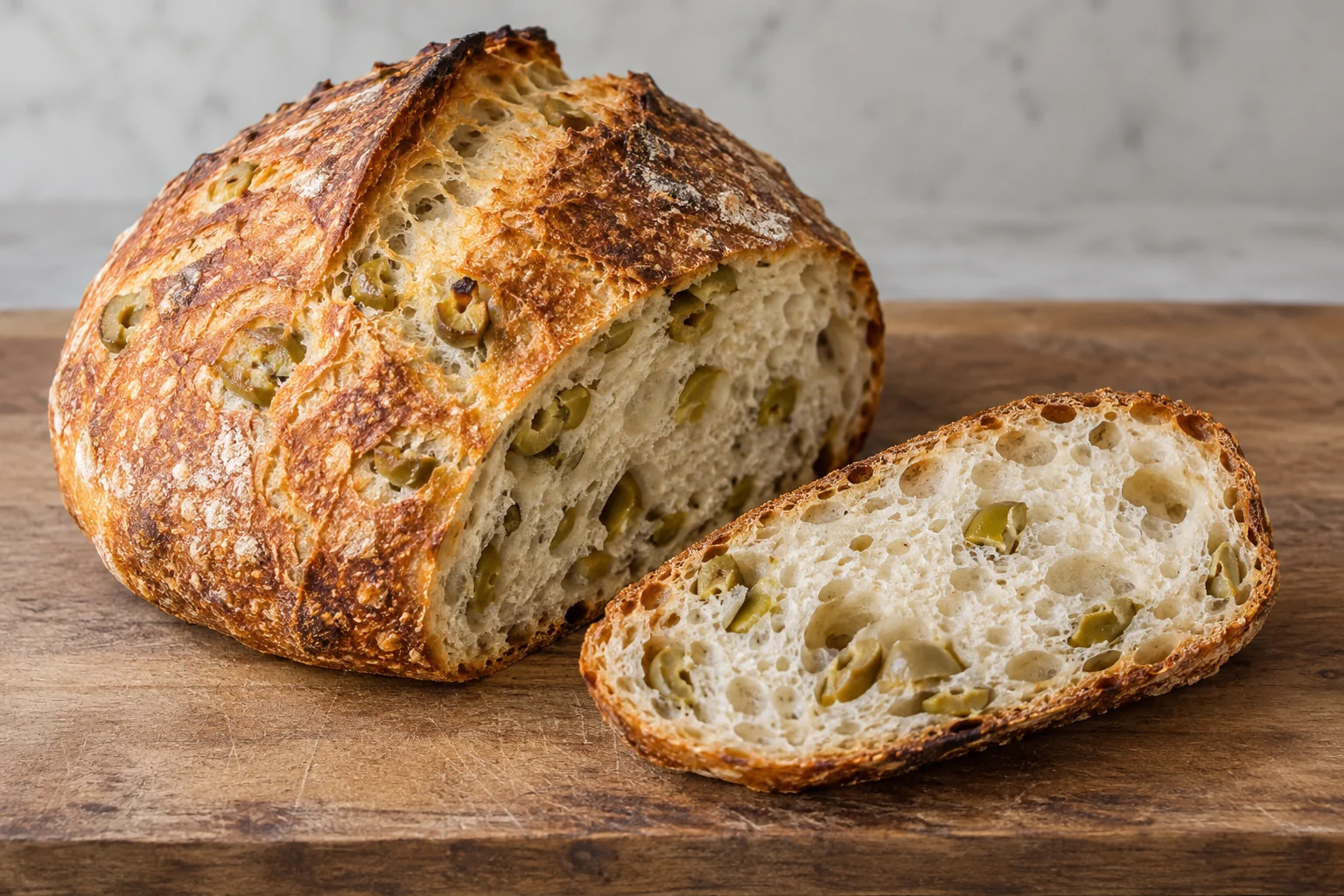
This loaf develops through a long yeast fermentation rather than a kneading session or a sourdough starter. Green olives are folded into a wet dough before its overnight rise. The twenty-three-hour allowance includes the longest first rise, shaping, proofing, baking and a full cooling period. Most of that time is unattended, but the dough's appearance and the room temperature still guide the next step.
Overnight no-knead olive boule makes 12 servings, with 23 hr estimated total time. View the standalone recipe page.
Drain olives before weighing
Use pitted green olives and drain their packing liquid before measuring the edible amount. Pat them dry and chop them so they distribute without making large wet pockets. The dough contains a modest amount of added salt because olives already contribute seasoning. Their brine is not part of the measured water. Keep the shaping flour separate from the main flour portion at the beginning so it is not accidentally mixed into the bowl and then replaced with another unmeasured handful at shaping time.
Mix a deliberately sticky dough
Stir the small yeast quantity through the room-temperature water, then mix in the dough flour and salt until there are no dry pockets. Fold in the olives. The mixture will look much wetter and rougher than a kneaded sandwich dough; do not add flour simply to make it easy to handle. Cover the bowl so the surface does not form a dry skin. The long rest supplies time for the dough to develop, so vigorous kneading at this stage is unnecessary and does not shorten the stated schedule reliably.
Watch expansion during the overnight rest
Keep the bowl in the specified cool room-temperature range, away from a radiator or strong sunlight. After the long rise, the dough should be expanded and visibly bubbly. A much warmer room can accelerate fermentation, while a colder room may require more time. The upper time limit is not a demand to keep fermenting a dough that has already expanded and started collapsing. Plan the mixing time so you can inspect it during the stated window rather than leaving it unattended far beyond that window.
Shape gently and prepare the hot pot
Use the reserved flour to help fold the dough inward and form a loose round. Avoid punching out every bubble or kneading it into a tight dry ball. Proof on parchment in a supporting bowl, then preheat the Dutch oven during the final part of that rest. Check the temperature ratings of the pot, lid handle and paper beforehand. Use thick dry mitts and a stable heatproof surface when moving the hot lid. The parchment is a lifting aid, not protection from the heated metal.
Bake, cool and divide the loaf
The covered stage traps steam around the dough; uncovering lets the crust color and dry. Check the interior temperature as well as the crust before removing the loaf. Transfer it to a rack and give it at least ninety minutes before cutting. Early slicing can compress the moist crumb and make a properly baked loaf seem gummy. Divide into twelve equal portions. Store fully cooled bread airtight for two days or freeze. All the olives and flour remain in the recipe; no invented fermentation nutrient-loss factor is applied.
Common questions
Why did the loaf spread sideways?
A wet dough needs gentle shaping and adequate proof support. Excessive fermentation or rough handling can weaken its shape. Check room temperature and the dough's expansion instead of relying only on an overnight clock.
Is this sourdough?
No. It uses a measured amount of commercial active dry yeast and contains no maintained starter. The long fermentation develops the dough, but it does not turn this formula into a sourdough recipe.
Technique & food-safety references
These primary references support the technique, safety and storage guidance. The recipe and cooking explanations are original Recipe Pinboard content.


