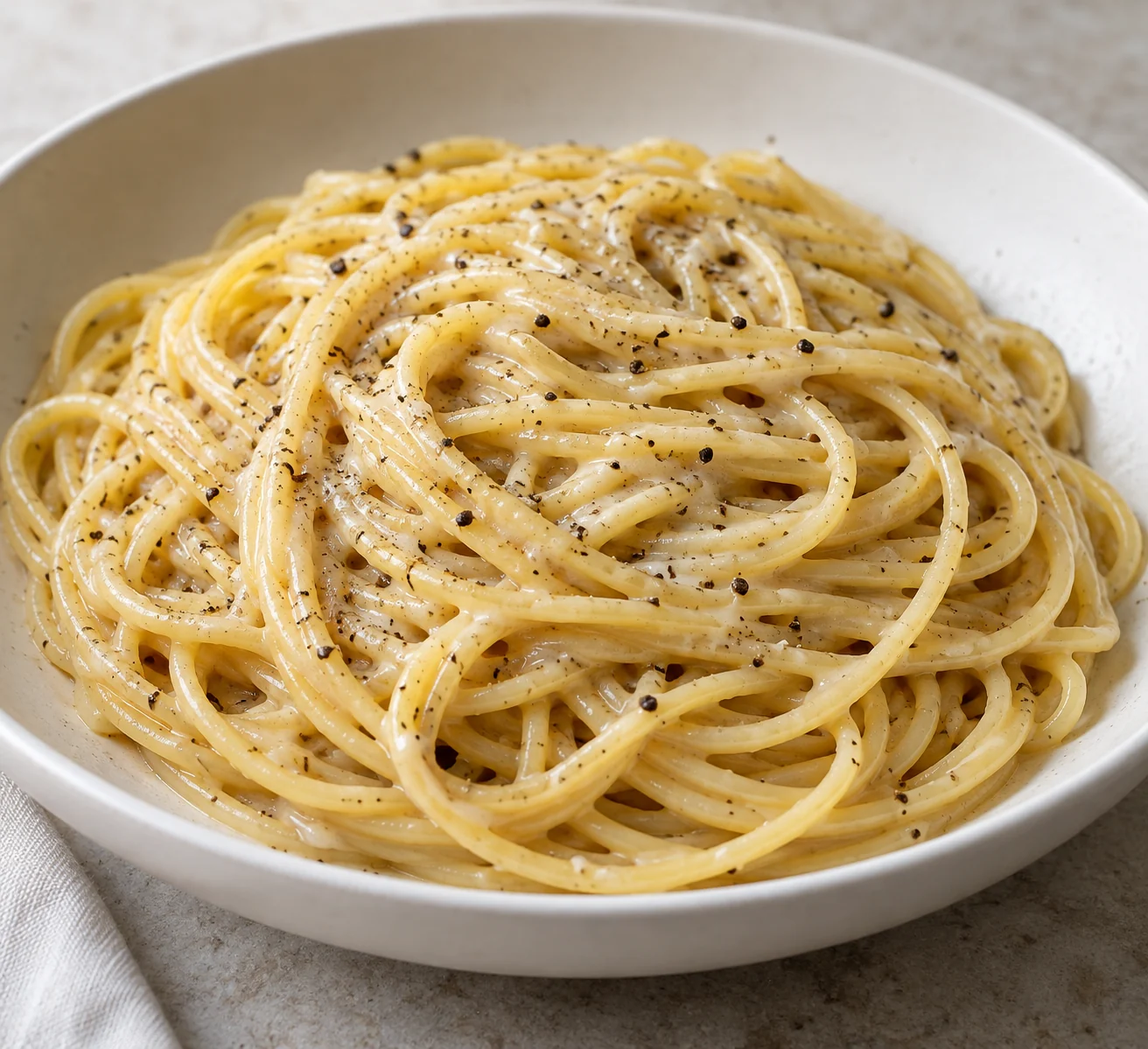
This spaghetti is inspired by cacio e pepe but uses hard Parmesan-style cheese rather than Pecorino Romano. The distinction matters for flavor and for the nutrition profile. There is no butter or cream in the sauce: finely grated cheese, pepper and a little starchy cooking water must come together around the hot pasta. Have the bowls ready before starting the final toss. This is a dish to serve immediately, while the coating is loose and glossy rather than waiting in a hot pan.
Parmesan & black pepper spaghetti makes 3 servings, with 30 min estimated total time. View the standalone recipe page.
Grate the cheese before the pasta cooks
Use a fine grater and collect the full measured amount before putting spaghetti into the water. Large cheese pieces take longer to disperse and can form clumps while the pasta cools. Packaged grated products may contain anti-caking ingredients and differ from the hard-cheese profile used here. The vegetarian tag also requires a Parmesan-style cheese made with vegetarian rennet. Do not assume every wedge meets that condition. The recipe's name deliberately avoids presenting this as a traditional Pecorino version, and changing cheeses would change the nutrient calculation.
Cook in unsalted water and reserve some before draining
The measured water quantity gives the spaghetti room to soften while keeping the cooking liquid useful for the sauce. Stir frequently, especially while the strands bend into the pot. Add plain boiling water if needed to prevent sticking or drying. Before draining, reserve the stated amount in a heatproof container. This recipe uses unsalted water because the cheese already contributes seasoning; no unmeasured salt addition is hidden in the method. Some cooking water enters the sauce and some is discarded, so exact dissolved starch losses are not claimed.
Toast pepper briefly and make a cheese paste
Warm the ground pepper in the dry skillet just until fragrant, then remove the skillet from the heat. If it smokes, the pan is too hot. In a separate bowl, let the first measured portion of reserved water cool briefly before mixing it gradually with the cheese. The aim is an evenly moistened paste, not a bowl of cheese floating in boiling water. Scrape the bowl as you stir so dry cheese does not remain around the rim. Keep the rest of the reserved water available for the final adjustment.
Toss off heat and add water in small amounts
Transfer the drained spaghetti and the next portion of cooking water to the pepper skillet off the burner. Toss until the most aggressive steaming subsides, then incorporate the cheese paste gradually. Keep moving the strands so the paste disperses instead of landing as one thick lump. Add more warm reserved water only when the sauce needs loosening. A small addition can change the texture noticeably. Returning the skillet to strong heat while adding cheese increases the risk of a grainy, clumped sauce; more heat is not the first fix.
Serve the complete sauce with three equal portions
Keep tossing until the coating clings to the spaghetti, then divide all the pasta and sauce among three bowls. Scrape the skillet so one portion is not missing its share of cheese. Do not add a final cheese mound or oil drizzle unless you intend to change the stated quantities. The estimate counts the complete dry pasta input without guessing how much starch was lost during draining. Leftovers can be refrigerated promptly and reheated safely, but the sauce may separate and the pasta soften. Fresh service gives the intended texture.
Common questions
Why did the cheese become stringy or grainy?
The mixture may have been too hot, the cheese too coarse or the paste added all at once. Work off direct heat with finely grated cheese and gradual additions. A little warm water and continued tossing may loosen it, but severely clumped cheese may not fully recover.
Can I replace Parmesan with Pecorino?
That would move the flavor closer to classic cacio e pepe, but it is a different cheese with different salt and nutrient values. This card is specifically formulated and estimated for the listed Parmesan-style cheese.
Technique & food-safety references
These primary references support the technique, safety and storage guidance. The recipe and cooking explanations are original Recipe Pinboard content.


