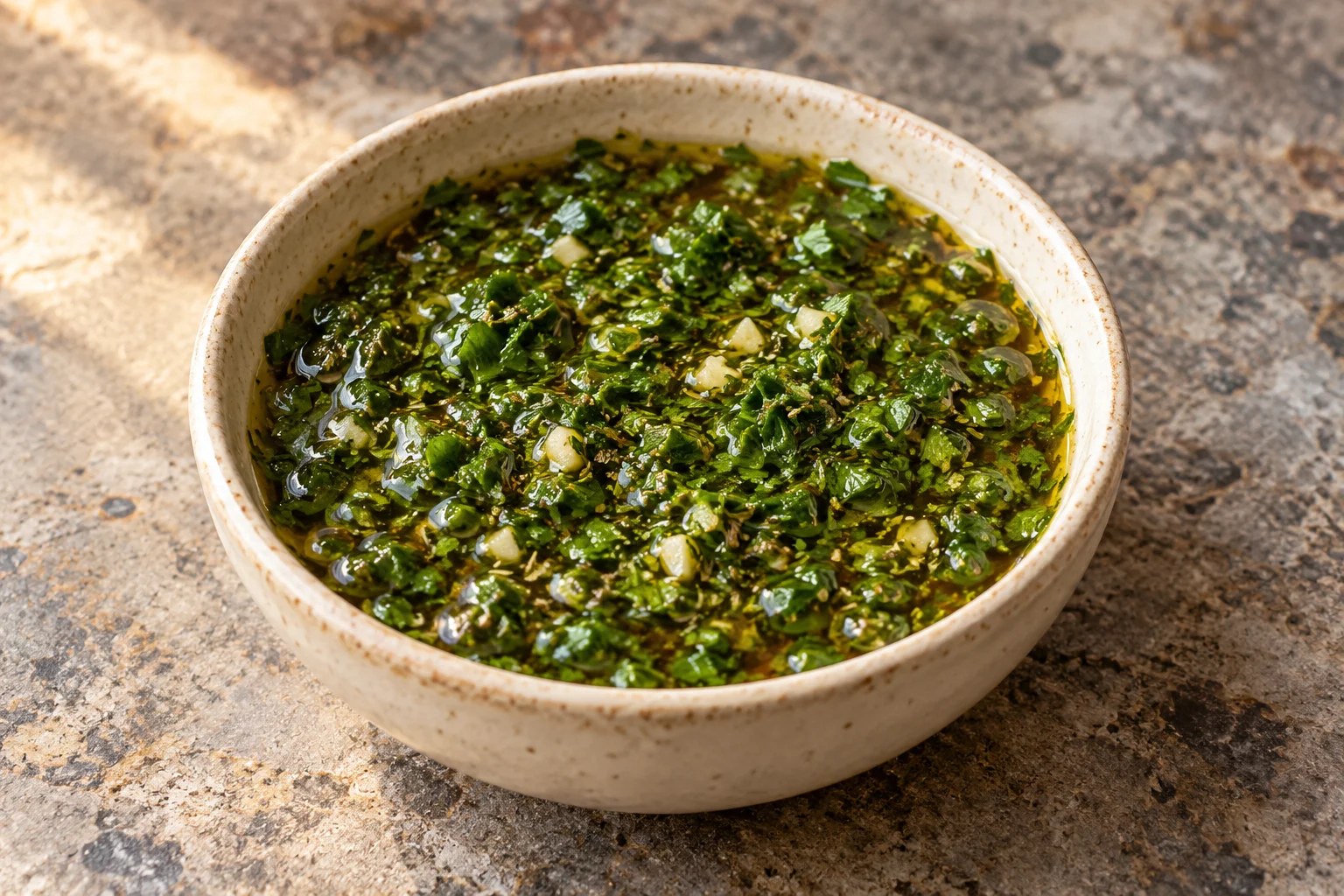
This parsley chimichurri is built around distinct pieces of herb suspended in olive oil and red-wine vinegar. It takes about 15 minutes to prepare plus a 10-minute rest, and makes eight small condiment portions. The useful decisions are how finely to cut the parsley, how to distribute the garlic and dried seasonings, and how to store a fresh herb-and-oil sauce safely.
Parsley chimichurri sauce makes 8 servings, with 25 min estimated total time. View the standalone recipe page.
Dry the parsley before reaching for the knife
Rinse the parsley under running water, then dry it thoroughly with a salad spinner or clean towel. Weigh 50 g of leaves and tender stems after discarding tough stalks. Water clinging to a wet bunch is not part of the measured recipe and can make the finished sauce thinner than intended. Set out a clean bowl and a sharp knife before chopping.
Gather a manageable handful, slice through it, then chop across the pile. Aim for small, recognizable flecks rather than a green paste. Thick stem sections remain wiry even after chopping; thin upper stems fit the sauce well. Scrape the board occasionally so herbs do not collect underneath the knife while the rest of the pile becomes increasingly fine.
Distribute the strongest ingredients evenly
The 8 g garlic should be minced much finer than the parsley. Large raw garlic pieces create sharp bursts instead of seasoning each spoonful. Combine the chopped herbs with the garlic, dried oregano, cayenne, salt and black pepper before adding the liquids. The cayenne is ground, so there are no large chili flakes to soften during the rest.
Stir in the measured vinegar and then the oil, scraping around the bottom of the bowl. You are mixing a spoonable sauce rather than trying to create a stable creamy emulsion. Some visible oil around the herbs is expected. Whisking harder or running everything in a blender changes the texture without solving a problem this recipe actually has.
Use the rest to settle the flavor, then stir again
Allow the written 10-minute rest before judging the sauce. The dried oregano becomes less papery, while the garlic and vinegar spread through the mixture. Do not immediately add more salt or acid after the first sharp taste. Try a small amount with the food it will accompany rather than assessing a large spoonful of condiment by itself.
If the bowl looks separated after resting, stir from the bottom immediately before portioning. The herbs should travel with the liquid onto the plate. If it feels unexpectedly watery, check whether the parsley was still wet or whether an unmeasured splash entered the bowl. Adding more herbs or oil would change the recipe and its per-portion estimate.
Keep it a finishing sauce
One serving is one-eighth of the complete batch, approximately 22 g before losses on the board and bowl. Spoon it over cooked vegetables, beans, fish or meat after those foods are ready. Those accompaniments are separate. Cooking the sauce for an extended time would soften its fresh-herb character and is not part of this method.
For a meal involving raw meat, reserve the serving sauce before any utensil touches that meat. A spoon used on raw food must not return to the clean condiment bowl. This recipe is written as a finishing sauce; using it as a marinade introduces a separate handling and cooking task.
Refrigerate the fresh garlic-and-oil mixture
Transfer leftovers promptly to a clean covered container at 40°F (4°C) or colder. Use within four days or freeze small portions. Label the preparation date, use a clean spoon, and avoid repeatedly leaving the full container on the table.
The red-wine vinegar here is a flavor ingredient, not evidence that the sauce is shelf-stable. It has not undergone a validated acidification or canning process. University of Georgia guidance explains why fresh herbs and garlic in oil require special care and why a casual vinegar addition should not be treated as a preservation method.
Common questions
Can I make this in a food processor?
A few short pulses can chop the parsley, but the written method uses a knife for more control. Stir in the liquids by hand and stop before the herbs become a smooth paste.
Why did the refrigerated oil become cloudy or firm?
Olive oil can cloud or thicken when chilled. Stir a small serving as it loses its refrigerator chill; this change is not a reason to store the whole batch at room temperature or extend its four-day limit.
Technique & food-safety references
These primary references support the technique, safety and storage guidance. The recipe and cooking explanations are original Recipe Pinboard content.