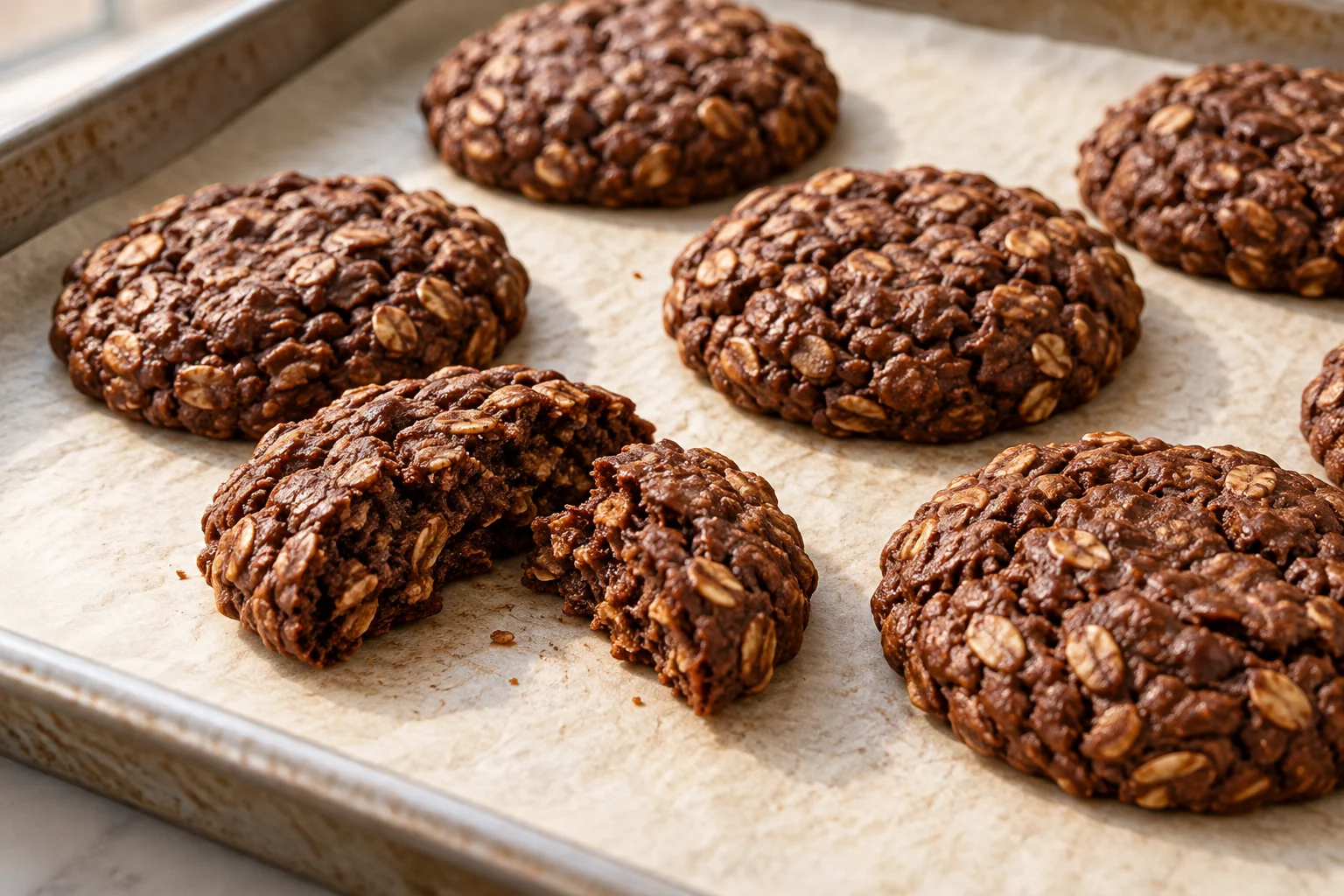
These dark cookies can be difficult to judge by browning alone. Oats absorb moisture during a short rest, peanut butter affects the dough’s consistency, and the cookies continue to firm as they cool. The complete recipe card above supplies the twelve-cookie formula. Use texture and surface cues below rather than waiting for a chocolate-colored cookie to become visibly brown at its edges.
Peanut butter, cocoa & oat cookies makes 12 servings, with 1 hr estimated total time. View the standalone recipe page.
Stir the peanut butter before weighing
Oil can separate in a jar of peanut butter. Stir the whole jar until its texture is consistent before taking the measured amount. Scooping only an oily top layer or a dense bottom layer changes the dough substantially. The estimate uses smooth salted peanut butter, and brands vary in added sugar and oil. Check labels for milk ingredients if using the dairy-free filter. Crunchy peanut butter would add a different texture and is not the specific ingredient photographed here.
Break up the dry cocoa pockets
Whisk oats, flour, cocoa, baking powder and salt separately before combining them with the wet mixture. Press out stubborn cocoa lumps with the back of a spoon or pass the cocoa through a small sieve. A dry cocoa pocket can remain bitter and powdery inside a baked cookie. Mixing the dry ingredients first also distributes the small amount of leavening more evenly, without requiring prolonged mixing once flour meets the egg and water.
Rest before judging the dough
Fold the dry mixture into the wet ingredients only until combined. The ten-minute rest gives the rolled oats time to take up moisture and makes portioning more consistent. Do not immediately correct a soft-looking dough with an unmeasured handful of flour. That can produce dry cookies once the oats finish hydrating. If the room is warm, keep the ingredients out only as long as needed for preparation; do not taste dough containing raw egg and flour.
Divide and flatten all twelve portions
Use the complete dough to make twelve equal portions, including material scraped from the bowl. A scale makes this easier than guessing from spoonfuls of different sizes. Arrange six cookies on each lined sheet and flatten to the specified thickness. These cookies are not expected to spread into thin wafers by themselves. Leaving some portions as tall balls creates underbaked centers while flatter cookies finish earlier. Keep enough space to lift each cookie without breaking its neighbors.
Look for set edges, then cool patiently
Rotate the sheets halfway through the bake to reduce differences between oven positions. Near the end of the range, look for edges that hold their shape and tops that have lost a wet sheen. The centers can remain soft; do not wait until the entire cookie feels hard in the oven. Leave them on the sheets for ten minutes before transferring to a rack. Complete the additional cooling interval before storage so trapped steam does not soften the whole container.
Common questions
Why did the cookies turn dry?
Overbaking, extra flour or poorly mixed peanut butter can all contribute. Weigh the ingredients and use the hydration rest before deciding the dough needs adjustment. Dark cocoa makes color a less useful endpoint than edge structure and surface sheen.
Can I make six larger cookies?
That changes the serving size and baking behavior. The published panel is for one of twelve equal cookies. If you reshape the same complete batch into six, each is two stated portions, and the thicker centers will need separate doneness checks.
Technique & food-safety references
These primary references support the technique, safety and storage guidance. The recipe and cooking explanations are original Recipe Pinboard content.


