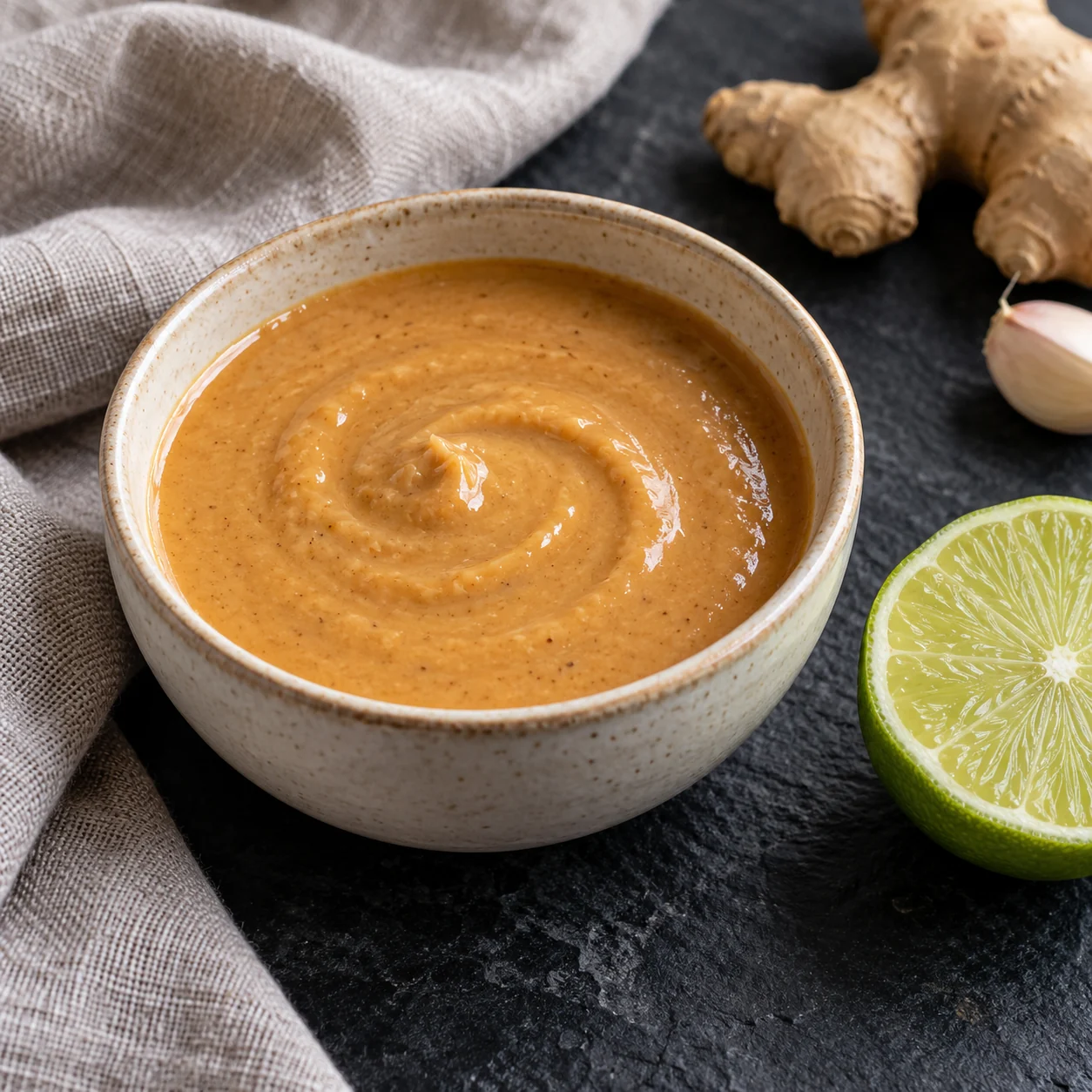
Peanut sauce becomes easier to control when the liquid goes in gradually and the peanut butter is uniform before measuring. This version uses lime and fresh ginger without soy sauce, honey or coconut milk. The full recipe card above fixes the ingredient amounts and eight-portion yield. The walkthrough explains the temporary thick stage, the final consistency and the storage limits of a sauce containing fresh garlic.
Peanut, lime & ginger sauce makes 8 servings, with 15 min estimated total time. View the standalone recipe page.
Start with evenly mixed peanut butter
Open the jar and check for a layer of oil. If present, stir right down to the bottom until the dense paste and oil become one consistent mixture before weighing. Scooping only the upper oily portion or lower dry portion changes both texture and the relationship between the measured amount and its nutrition estimate. Smooth peanut butter gives the intended finish; crunchy peanut butter deliberately leaves pieces. Read the label because sweetened, salted and flavored products vary, even when the front of the jar looks similar.
Prepare ginger for a sauce, not a stir-fry
Peel the ginger and grate it very finely over a small plate so its juice is retained. Long shreds remain noticeable in a spoonable sauce and can make it seem stringy even after vigorous whisking. Grate the garlic equally finely. Avoid substituting large chopped pieces and hoping the whisk will break them down. The sauce is mixed rather than cooked, so the fresh aromatics remain assertive. Measure the lime juice separately, keeping seeds out; adding whole wedges to the bowl makes the liquid quantity difficult to control.
Expect thickening before loosening
Begin by whisking the lime and aromatics into the peanut butter. The mixture may feel firmer than the original spread. Add roughly one-third of the warm water and work the whisk across the bottom until the paste is consistent, then repeat with the remaining additions. Do not assume the first stiff stage means it needs extra oil. The formula already contains the fat in the peanut butter. A flexible spatula helps collect material from the sides so no dense ring remains outside the whisk's reach.
Judge after the short rest
Allow the five-minute rest in the card, then whisk once more. The finished sauce should drop from a spoon in a thick ribbon and settle into itself slowly. It is a condiment rather than a beverage or a firm nut spread. Peanut butter brands differ in grind, stabilizers and sugar, so the exact flow can vary at the same weight. If you choose to make it thinner, record any extra water and keep the same eight equal portions; water changes the finished portion weight rather than adding calories.
Serve and store with the right expectations
Divide the complete sauce into eight equal portions after mixing, so each contains a similar share of peanut butter and aromatics. The estimate does not cover noodles, vegetables or chicken served with it. Refrigerate promptly in a clean covered container and use within three days. Lime supplies acidity for flavor, but this recipe is not a tested preservation process. Keep the jar cold and use clean utensils. The vegan and dairy-free tags depend on the actual peanut butter and other packaged ingredients; they are not a statement about allergen cross-contact.
Common questions
Why is the refrigerated sauce thicker?
Cold peanut butter sauce can feel denser than freshly mixed sauce. Stir a portion thoroughly before assessing it. If needed, loosen that portion with a measured small splash of water rather than repeatedly warming and chilling the entire container. Keep track of the eight-portion division when using the nutrition estimate.
Can a blender replace the whisk?
A small blender can combine the ingredients, but a large jug may need more volume than this batch provides. Scrape down with the motor stopped and follow the appliance instructions. Do not add an unmeasured amount of oil simply to make a large machine circulate.
Technique & food-safety references
These primary references support the technique, safety and storage guidance. The recipe and cooking explanations are original Recipe Pinboard content.


