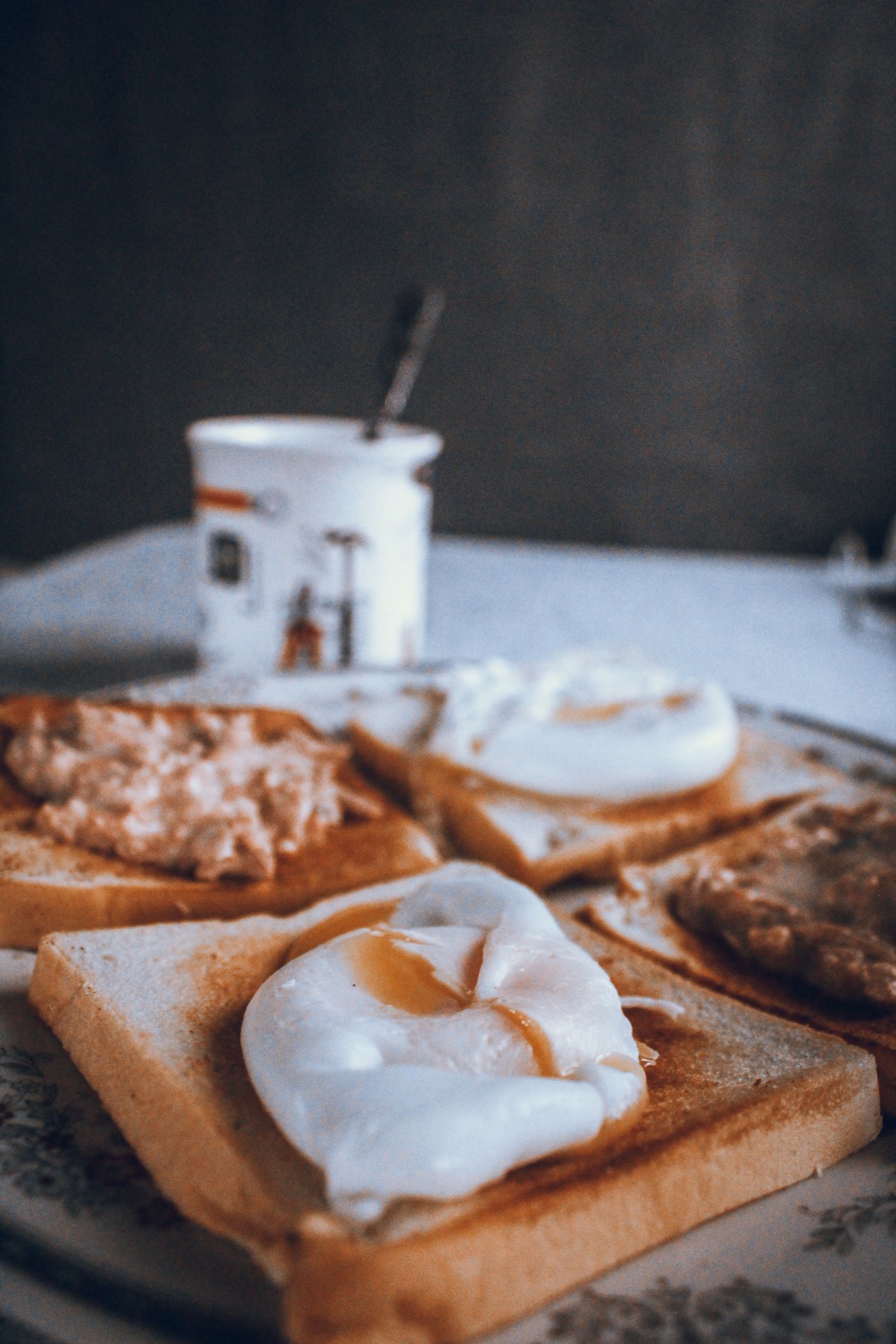
Four poached eggs and four slices of sturdy bread make two servings of this cream-cheese toast. The twenty-minute recipe is built around a gentle simmer, not a dramatic whirlpool, and it deliberately cooks both yolks and whites until firm. The photograph is illustrative and shows a softer yolk than the method recommends. Your useful checkpoints are intact whites, fully cooked eggs and toast that stays crisp beneath its topping.
Poached eggs on cream-cheese toast makes 2 servings, with 20 min estimated total time. View the standalone recipe page.
Prepare the landing place before poaching
Set out a deep saucepan, a small cup and a slotted spoon, plus a clean surface for briefly draining the eggs. Keep the four slices of bread and 80 g cream cheese ready. Divide the spread evenly across the toast later; with four slices, each receives a quarter of the measured cream cheese rather than an extra-large layer chosen by eye.
Bring the poaching water to a very gentle simmer and add the 1 tbsp white vinegar. The water should move quietly with small bubbles, not roll hard enough to toss an egg around. Save the listed ¼ tsp salt and ¼ tsp black pepper for seasoning the finished toast. They are not additional poaching-water ingredients in this method.
Slide each egg in close to the surface
Crack an egg into the cup first. This gives you a chance to remove a shell fragment and avoids dropping it into the pan from a height. Lower the cup close to the water and slide the egg in gently, then repeat with the others. Wash hands and any utensils that contacted raw egg before handling the ready-to-eat bread.
Work in two batches if four eggs crowd the saucepan. Leave enough space to lift each one without tearing its neighbor. Fresh, cold eggs often keep a more compact shape, but even then a few wisps may separate. Avoid stirring a vortex after several eggs are in the pan; moving water is more likely to bring them together than keep them neatly apart.
Watch the simmer and confirm firm yolks
Poach for five to seven minutes as the recipe directs, allowing longer when needed for both yolk and white to firm. Check that the water remains at a quiet simmer after the cold eggs enter. If heating stops completely, the timing becomes less useful; increase the burner gently without letting the pan reach a violent boil.
Lift an egg with the slotted spoon to inspect it rather than repeatedly poking at it in the water. Set whites alone are not the recipe’s endpoint. FDA consumer advice calls for firm whites and yolks, and the displayed photograph does not override that guidance. Do not sacrifice full cooking just to match the appearance of a runny-yolk brunch picture.
Toast, drain and assemble in sequence
Toast the bread during the poaching stage so it is ready near the end of cooking. Sturdy slices should support the cream cheese and egg without folding under their weight. Spread the measured cream cheese across the four slices, then lift and drain each egg briefly. Let water drip away before placing it on the topping.
Draining is a small step with a visible result: water carried on the spoon can seep through the cream cheese and soften the bread underneath. If needed, touch the spoon’s underside to a clean towel to draw off droplets without pressing the egg itself. Place one egg on each slice and distribute the salt and pepper across all four.
Serve two slices per person and handle extras promptly
Serve immediately, with two egg-topped slices on each plate. This recipe does not include hollandaise or an additional sauce; the cream cheese supplies its creamy layer. If poaching in batches makes exact simultaneous service difficult, have the plates ready and work steadily rather than letting the first toast sit beneath a wet egg while you begin the second batch.
For the best texture, prepare only the toast you will eat now. Refrigerate any cooked eggs promptly and use within three to four days; reheat cooked egg leftovers to 165°F (74°C). Keep bread and cream cheese separate when possible. Fully assembled toast will lose crispness in storage even when safely chilled, so it is not the strongest choice for advance meal preparation.
Common questions
Do I need a whirlpool to poach eggs?
No. This recipe uses gently simmering water, vinegar and a careful slide from a cup. A whirlpool is especially awkward with several eggs in one pan. Keep the water calm and leave enough room to lift each egg separately.
Why is the toast wet even though it was crisp?
The egg or slotted spoon may have carried excess poaching water onto the bread. Drain each egg briefly before assembly and avoid letting the finished toast wait. Toasting the bread harder does not solve water added afterward.
Technique & food-safety references
These primary references support the technique, safety and storage guidance. The recipe and cooking explanations are original Recipe Pinboard content.