Polenta fries begin as a cooked porridge, not as raw cornmeal pressed into a pan. The three distinct stages are cooking the grain until tender, chilling a level slab until firm, and drying its cut surfaces in the oven. Rushing the middle stage is the usual reason the batons collapse during turning.
Oven-baked parsley polenta fries makes 4 servings, with 3 hr 30 min estimated total time. View the standalone recipe page.
Use the specified cornmeal style
Choose plain medium-grind yellow cornmeal rather than instant polenta or a seasoned mix. Different grinds hydrate at different speeds, so tenderness matters alongside the stated cooking range. Sprinkle cornmeal into simmering water while whisking to disperse individual grains. Dumping it in one heap can form dry centers enclosed in wet lumps. Once thickened, stir with a sturdy spoon and keep heat low enough to avoid fierce bubbling and hot splashes.
Cook the porridge before chilling
The mixture should taste tender rather than gritty and pull together into a thick mass. Stir across the bottom and into the corners so a dry layer does not scorch underneath. Partial covering reduces evaporation without trapping every bubble. The measured water is part of the formula; a very wide pan or high burner can remove it too quickly. Turn the heat down before the porridge catches. The initial oil goes into the cooked mixture, while most is reserved for the cut surfaces.
Level the slab and give it time
Line the square pan so the parchment extends beyond two sides for lifting. Spread the hot polenta evenly; thick ridges become uneven fries. After a short initial cooling period, refrigerate for at least two hours and check that the center is firm. Pan material and refrigerator conditions affect the actual wait. Do not treat a cool surface as proof that the center has set. This passive chilling time is included in the recipe total and can be done ahead.
Cut and space the batons
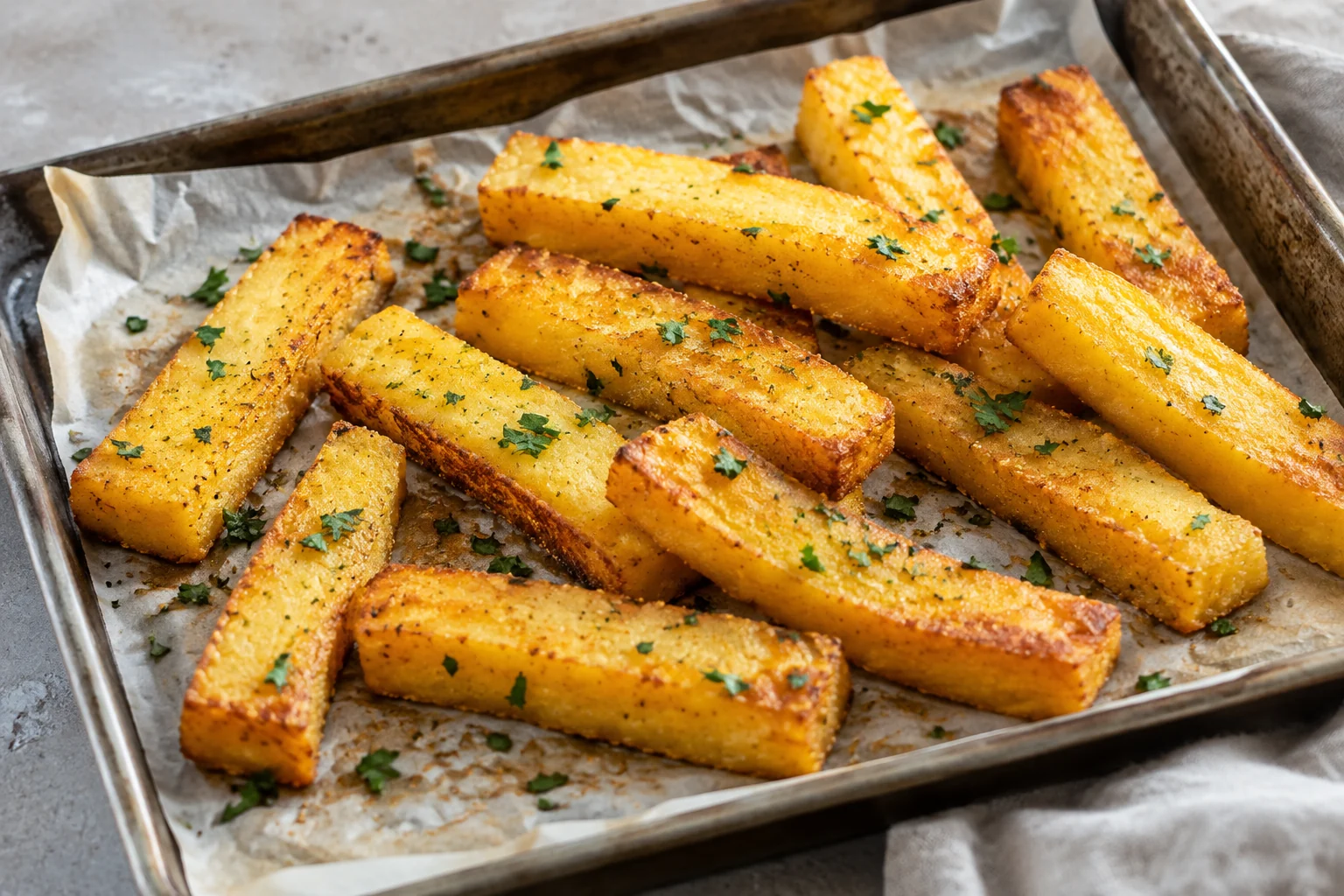
Lift out the chilled slab and cut sixteen similar pieces using a clean knife. Wipe the blade if dragging creates ragged edges. Arrange them with visible gaps, because close-packed pieces trap moisture between their sides. Brush the measured remaining oil over their surfaces rather than pouring a puddle onto the tray. Turn gently with a thin spatula after the first side has begun to dry and brown; forcing an early turn can tear the soft interior.
Expect a creamy center and serve promptly
These are oven-baked cornmeal batons, so they do not behave exactly like deep-fried potato chips. The desired contrast is a lightly crisp outer face and a tender middle. Sprinkle the parsley after baking so it stays recognizable rather than burning on the tray. Four equal batons make one portion. Cool leftovers promptly in a shallow container and refrigerate within two hours; use within three to four days and reheat to 165°F (74°C).
Common questions
Can the slab be made the day before?
Yes. Refrigerate it covered after the initial cooling period, keeping it within the stated storage window. Cut and bake when needed; the chilled slab should still be firm at the center.
Why did my fries bend when lifted?
The slab may have been too warm, too thick or insufficiently cooked before chilling. Let the remaining pieces firm up in the refrigerator. More oil cannot repair an unset interior.
Technique & food-safety references
These primary references support the technique, safety and storage guidance. The recipe and cooking explanations are original Recipe Pinboard content.