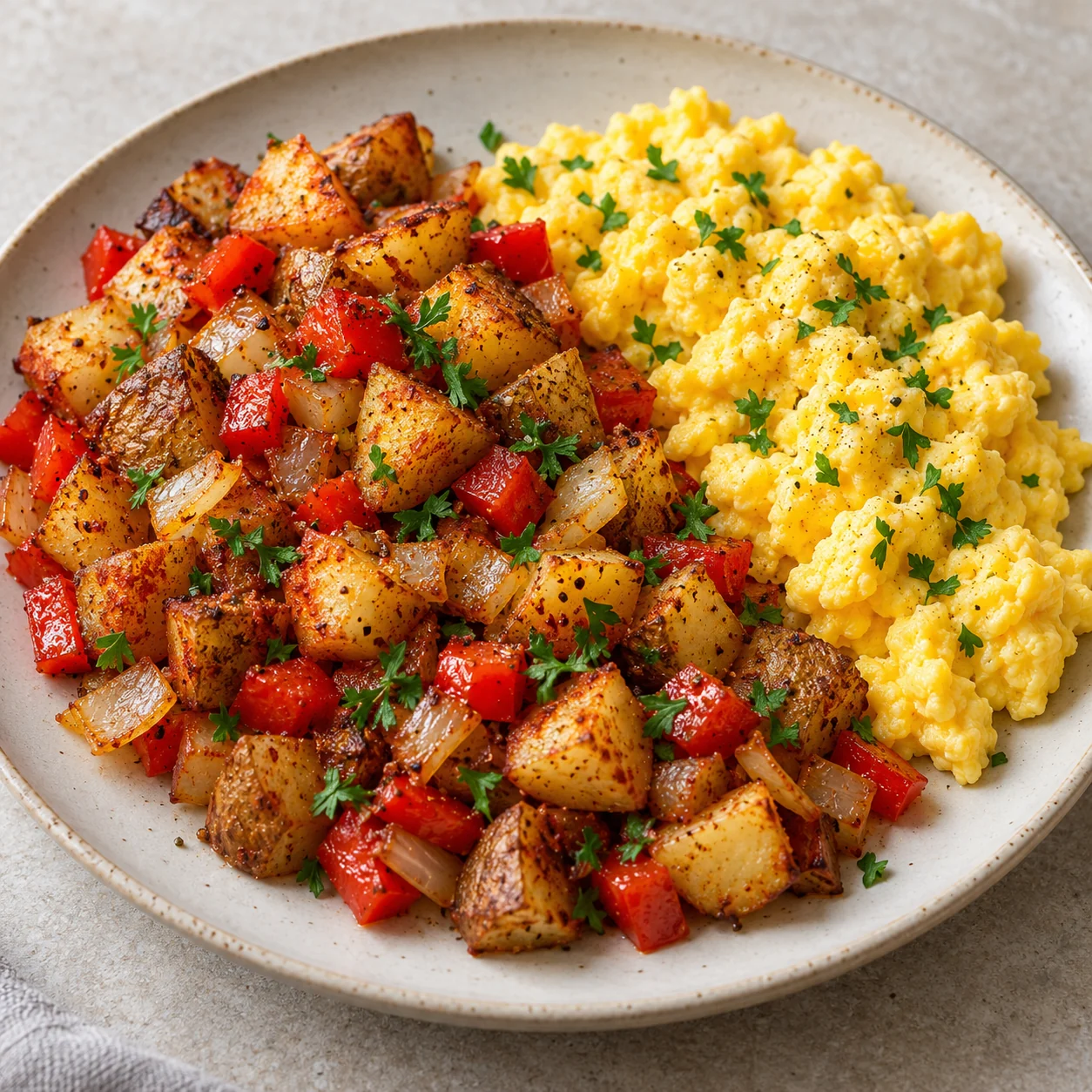
The potatoes in this breakfast hash receive two kinds of cooking: a brief simmer to start tenderizing their centers, followed by a skillet stage that builds golden patches. Peppers and onions join later so they do not burn while the potatoes brown. Eggs cook separately and are portioned alongside the hash. The full card makes four plates and uses two skillets. Set out both before starting so the finished vegetables can stay warm while the eggs receive their short final cooking stage.
Potato & pepper breakfast hash makes 4 servings, with 1 hr 5 min estimated total time. View the standalone recipe page.
Cut cubes that can cook at the same pace
Scrub the potatoes and leave their skins on, matching the edible state in the ingredient list. Cut roughly equal small cubes rather than combining large chunks and thin scraps. The parboiling stage should soften their edges without making them collapse when lifted. Start checking near the early end of the range because variety and cube size affect the result. Drain carefully, then give them the full steam-drying pause. Water left on the surface can make hot oil spit and delays the browning you want from the skillet.
Use a wide pan and let the cubes make contact
Heat the allocated hash oil in the specified broad skillet, then spread the potatoes into a shallow layer. They need contact with the cooking surface rather than sitting in a deep pile. Let them remain briefly between turns so golden areas can develop. Use a broad spatula to lift and turn sections instead of repeatedly crushing individual cubes. If the potatoes begin breaking down, handle them less and check that they were not overcooked in the saucepan. The aim is distinct pieces, not mashed potato with a crust.
Add pepper and onion after the potato stage
Dice the pepper and onion into pieces that fit comfortably among the cubes. They enter after the potatoes have begun browning, allowing their shorter cooking time to soften them without a long exposure to the hottest surface. Stir periodically and lower the heat as directed. Add paprika near the end so the powder coats the vegetables without spending the entire browning stage against hot metal. Keep all measured oil in the dish; the estimate does not pretend to know how much remains as a thin residue on the pan.
Scramble eggs in their own skillet
Whisk the eggs with the measured milk and remaining salt before they enter the second pan. Use the separate oil allocation and moderate heat. Fold the setting eggs gently so large tender curds form, continuing until no liquid egg remains and the card temperature is reached. Cooking them separately prevents raw egg from coating the potato surfaces and turning the entire hash into a frittata-like mixture. Have plates ready so the eggs do not sit over heat while you search for serving dishes.
Divide both components before adding parsley
Give each plate one quarter of the hash and one quarter of the eggs, then distribute the chopped parsley. Equal-looking plates are easier to achieve if you portion each component in rounds. Serve while the potato edges are still at their best; they soften during storage as moisture moves through the cooked food. Refrigerate leftovers promptly and reheat thoroughly. The gluten-free tag relies on suitable spices and preparation conditions. Eggs and milk remain present, so the recipe is not dairy-free or appropriate for someone avoiding those ingredients.
Common questions
Why are the potatoes pale instead of crisp?
They may still be wet after draining, or they may be crowded too deeply in the skillet. Allow the drying pause and give the cubes space and contact time before turning them.
Can I cook the eggs directly over the hash?
That changes this dish’s method and texture. The published card cooks eggs separately so their doneness can be checked while keeping potato surfaces from being coated in raw egg. Follow that sequence for the described result.
Technique & food-safety references
These primary references support the technique, safety and storage guidance. The recipe and cooking explanations are original Recipe Pinboard content.


