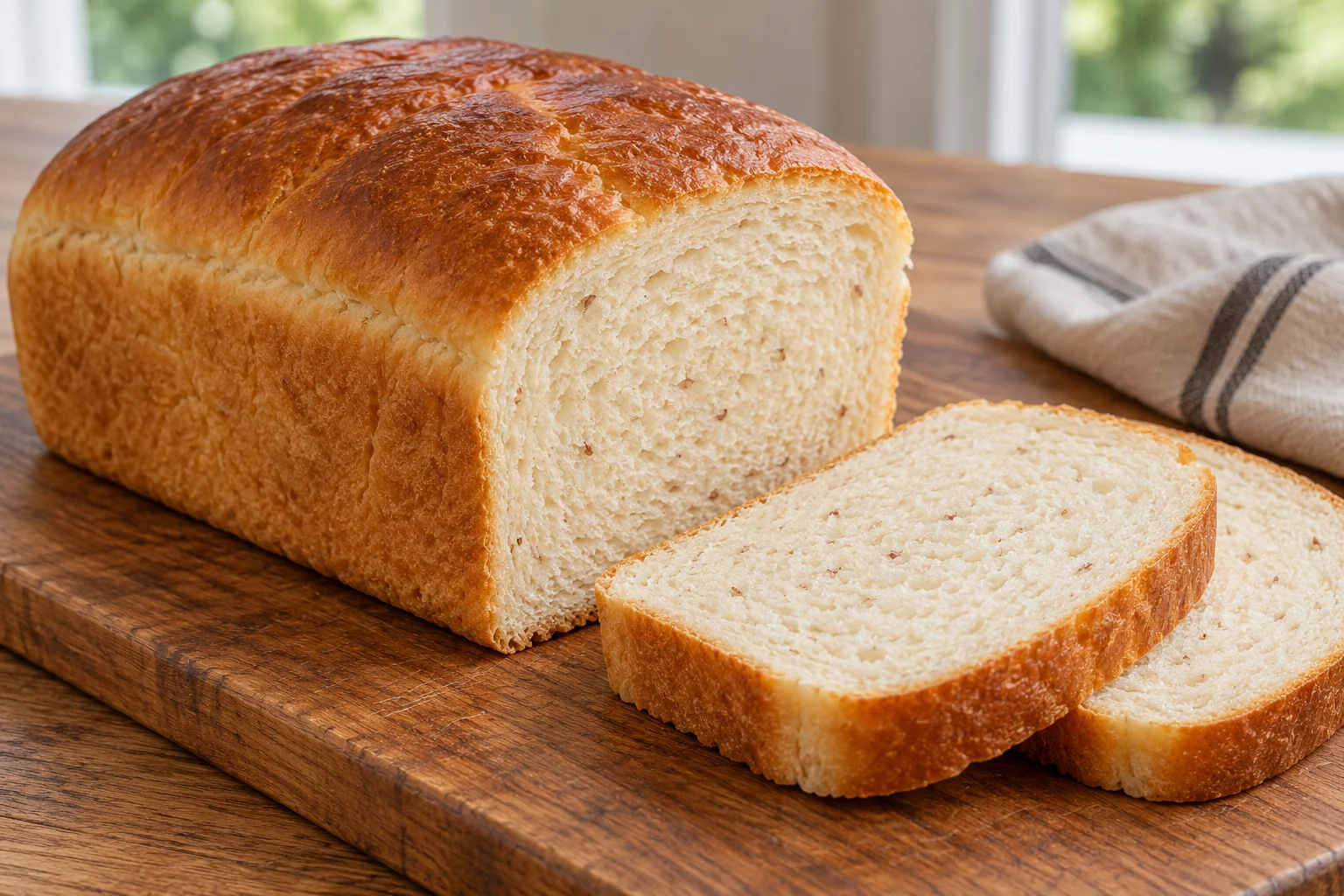
Mashed potato becomes part of the dough in this soft sandwich loaf. The potato is weighed raw with its edible skin, steamed until tender and mashed finely before mixing. That sequence keeps the ingredient state clear without relying on a guessed cooked-potato conversion. The recipe makes one pan loaf divided into twelve slices. Its generous schedule includes cooking and cooling the potato, two rises, baking and cooling the finished bread.
Skin-on potato sandwich loaf makes 12 servings, with 7 hr 20 min estimated total time. View the standalone recipe page.
Steam and retain the complete potato
Scrub the potato and weigh its usable flesh and skin before dicing. Steam it above the water rather than immersing it, and check that the centers are genuinely tender. Mash by hand, breaking up the skin as finely as possible. If a broad strip remains, lift it out, mince it and return it to the mash instead of discarding it. The fine flecks are expected in this loaf. Spread the mash on a plate for its cooling interval; hot potato should not go straight into the yeast mixture.
Build dough with fixed liquid quantities
Warm the milk and measured water within the stated range, then add sugar and active dry yeast. Wait for foam before combining the mixture with flour, cooled mash, butter and salt. Potato contributes moisture as well as starch, so the dough will not feel exactly like a plain white loaf. Knead patiently and use the small measured oil allowance on hands as needed. Avoid adding extra bench flour whenever the dough sticks briefly. That can create a much firmer dough than intended and makes the canonical quantities inaccurate.
Allow the first rise to develop
Cover the dough in its lightly oiled bowl and observe its expansion. It should approximately double before shaping. Room temperature affects that interval, and a cool kitchen may need longer than the suggested range. Do not put the bowl against direct strong heat to hurry one side of the dough while the other remains cool. The schedule provides room for a full rise, but the visual endpoint still matters. A dough that has barely expanded cannot be expected to become a light loaf merely because the timer has sounded.
Shape for an even pan loaf
Press the risen dough gently into a rectangle about the length of the pan, then roll it into a log. Seal the seam and place it underneath so the top can expand smoothly. Use the specified pan size: a much wider pan changes the height cue, while a smaller one can crowd the loaf. During the second proof, watch the center rise above the rim. Near the end, heat the oven fully. Bake until the interior reaches the stated bread temperature, tenting the top if it browns before the middle finishes.
Cool before cutting the soft crumb
Rest the loaf briefly in the pan, then move it to a rack so steam can escape from the bottom and sides. Allow at least an hour before slicing. A warm potato loaf can seem gummy if cut too early because its interior has not settled. Divide the completely baked loaf into twelve equal slices or portions; the actual gram weight depends on moisture loss. Store fully cooled bread airtight for up to two days or freeze slices for longer keeping. Do not seal the loaf while it is still releasing steam.
Common questions
Can leftover mashed potatoes replace the steamed potato?
Not directly. Leftovers may contain butter, milk, salt or a different water content. This formula starts with a measured raw skin-on potato and retains all of it. A leftover-mash version needs separate ingredient accounting and liquid adjustments.
Why are there dark flecks in the crumb?
Finely minced potato skin is intentionally retained. It should appear as small flecks rather than broad chewy strips. Mash and mince thoroughly before mixing; removing the skin afterward would change the food state and the measured recipe.
Technique & food-safety references
These primary references support the technique, safety and storage guidance. The recipe and cooking explanations are original Recipe Pinboard content.


