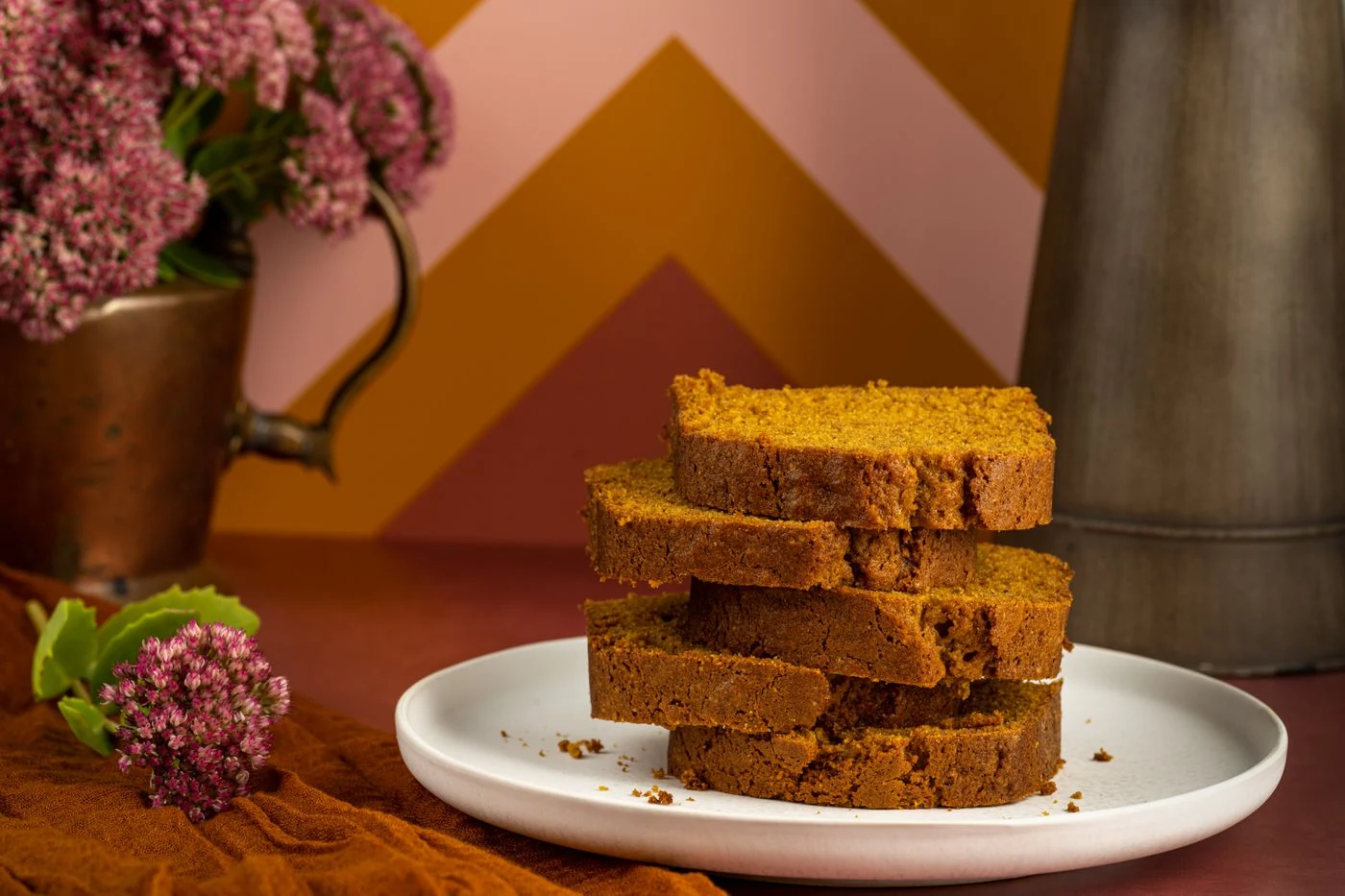
This pumpkin loaf makes 10 slices and takes 145 minutes in total, including 60 minutes of cooling. Active preparation is about 20 minutes. Its simple orange crumb depends on plain pumpkin purée, a measured flour-and-leavener mixture and restrained folding. Plan for the cooling period before deciding when the loaf will be ready to slice.
Cinnamon & ginger pumpkin loaf makes 10 servings, with 2 hr 25 min estimated total time. View the standalone recipe page.
Choose plain purée and the specified pan
Measure 250 g plain canned pumpkin purée, not pumpkin pie filling. Pie filling already contains added flavorings and sweeteners, so it would change a batter designed around 150 g light brown sugar and its own cinnamon, ginger and nutmeg. Watery homemade purée is also not automatically equivalent to the canned ingredient.
Heat the oven to 350°F (175°C). Brush a 23 × 13 cm, or 9 × 5 inch, loaf pan with the separate 5 ml oil and line its base and long sides with parchment. Keep that greasing oil distinct from the 100 ml neutral vegetable oil that belongs in the batter.
Distribute the dry ingredients thoroughly
Whisk 250 g all-purpose flour with 4 g baking powder, 2.5 g baking soda, 3 g cinnamon, 1 g ginger, 0.5 g nutmeg and 3 g salt. Thorough distribution matters because a pocket of leavener or spice can make an otherwise well-mixed loaf uneven.
Do not substitute baking powder for baking soda in equal amounts. They perform related but different jobs, and the original recipe deliberately includes both. Measuring by the stated gram weights helps keep small quantities consistent. Use the provided teaspoon equivalents only for the two leaveners, rather than inventing precise conversions for every spice.
Combine the wet mixture before adding flour
In a second bowl, whisk the pumpkin, brown sugar, two large eggs totaling about 100 g without shells, 100 ml oil, 60 ml whole milk and 5 ml vanilla until evenly blended. Break up brown-sugar lumps at this stage rather than trying to chase them after flour has entered the bowl.
Fold this mixture into the dry ingredients with a spatula only until there are no dry pockets. Scrape along the bottom and sides, then stop. This is a quick bread: it needs neither kneading nor prolonged beating. Do not taste the raw batter, since flour and eggs require cooking.
Bake until the center is set
Scrape the batter into the prepared pan and smooth the top. Bake for 55–65 minutes, checking the center with a skewer. It should emerge clean or with a few moist crumbs, with no wet batter attached. A browned top by itself does not establish that the deep center is cooked.
If the surface darkens before the middle sets, loosely tent it with foil as directed and continue checking. Do not press the foil onto the batter or assume covering makes an underbaked center ready. A central crack can appear as the loaf rises; inspect doneness beneath the surface instead of judging the loaf solely by that crack.
Treat cooling as part of the method
Cool the loaf in its pan for 15 minutes, then lift it out using the parchment and transfer it to a rack for at least another 45 minutes. This gives the crumb time to firm and allows moisture to escape around the loaf rather than collecting under it.
The 60-minute cooling allowance is a minimum before slicing; the loaf should be completely cool before you cover it for storage. Warm loaf sealed in a container can collect condensation. Divide into 10 equal slices once the structure is firm enough to cut cleanly, using a gentle sawing motion instead of pressing straight down.
Work through common problems and restrained variations
A gummy band can come from insufficient baking, an overly wet substitute for canned pumpkin or slicing before the crumb has settled. Those possibilities call for different fixes. Confirm the exact ingredient, pan dimensions and center check before deciding to add flour to a future batch.
For a flavor variation, adjust the balance of the existing spices modestly rather than changing pumpkin, flour and milk together. Add-ins such as chocolate chips, nuts or icing are not part of this plain loaf and would change its appearance and eating experience. For longer storage, wrap fully cooled slices individually and freeze; thaw covered so they do not dry out. Refrigerate any dairy-based topping separately if you later choose to serve one.
Common questions
Does pumpkin pie filling work instead of purée?
It is not a direct substitution. The recipe specifies plain purée because the sugar and spices are already measured separately.
Why is the total time much longer than the bake?
The 145-minute schedule includes 20 minutes of active preparation, up to 65 minutes baking and 60 minutes cooling. Cutting the cooling stage changes how neatly the loaf slices.
Technique & food-safety references
These primary references support the technique, safety and storage guidance. The recipe and cooking explanations are original Recipe Pinboard content.


