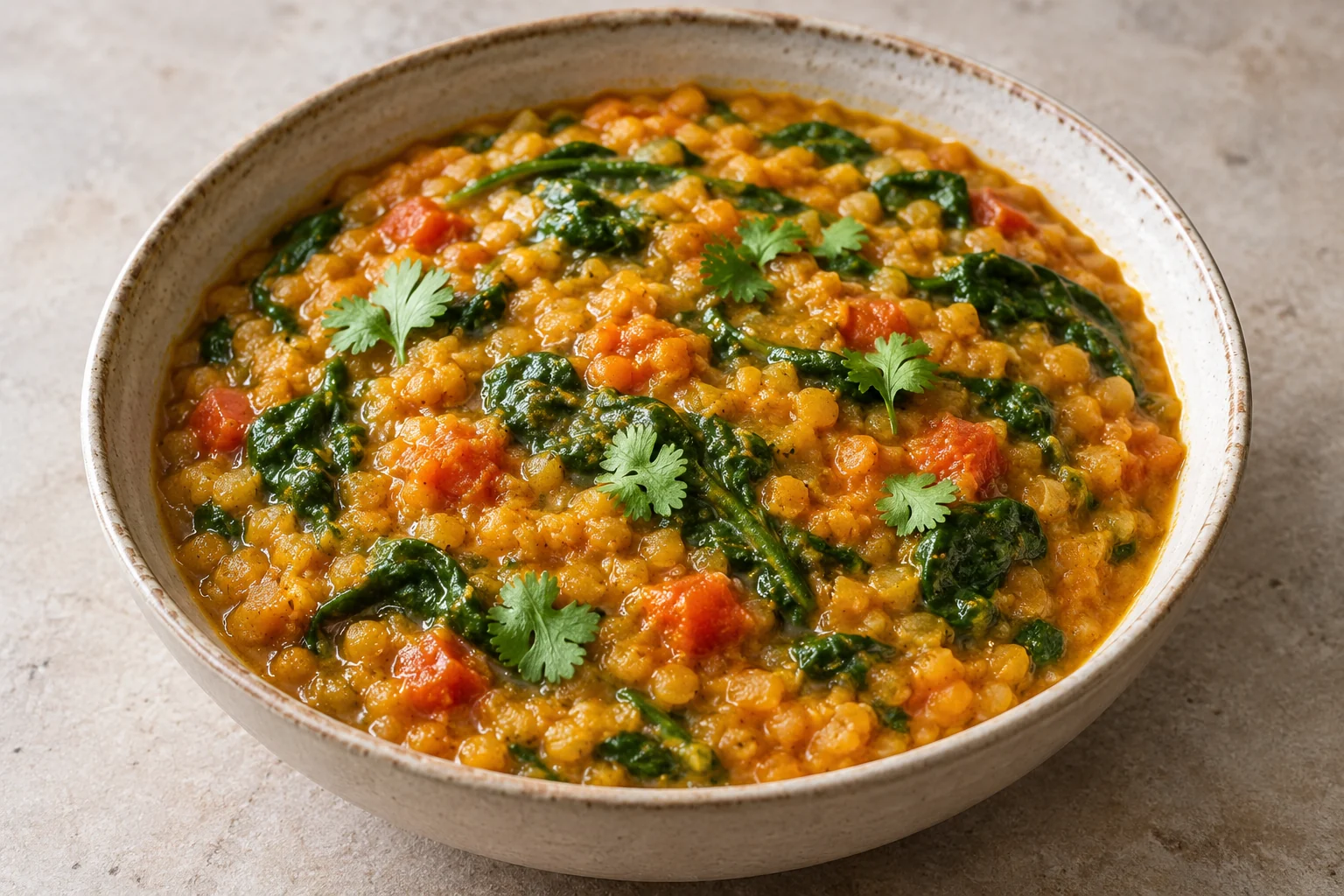
This dal is built around lentils that become completely tender and begin to break down. Tomato, spinach and a final lemon addition give it different textures without turning it into a chunky bean stew. Allow about 65 minutes, including the five-minute rest; active work is roughly 25 minutes. The full pot makes four portions.
Red lentil & spinach dal makes 4 servings, with 1 hr 5 min estimated total time. View the standalone recipe page.
Choose split red lentils and organize the small additions
Use 240 g dry split red lentils, picking through them before rinsing and draining. Split red lentils are appropriate for this soft texture; whole green or brown lentils are not a direct timing substitute. No soaking stage is included. Have the onion, ginger, garlic and diced tomatoes ready before heating the saucepan.
Measure the turmeric, cumin, coriander and cayenne together because they enter at the same moment. Keep the salt and lemon juice apart for their later additions. Start with 900 g water and keep up to 200 g more available separately. That extra water is a controlled adjustment, not an instruction to pour everything in immediately.
Build flavor before adding the cooking water
Soften the finely diced onion in the 20 g oil over medium heat for five to six minutes. Stir so the small pieces cook evenly rather than darkening on one side. Add the grated ginger and minced garlic for one minute. At this point the aim is softened aromatics, with no browned garlic taste.
Stir in the four ground spices for only 20 seconds, then add the 300 g tomatoes. Their moisture interrupts the brief dry spice cooking. Spend the next three minutes pressing some tomato pieces with the spoon so juice spreads through the pan. Keeping this sequence ready prevents the spices sitting over heat while you chop.
Simmer to tenderness and sweep the bottom
Add the drained lentils and 900 g water, bring to a boil, then reduce to a gentle simmer under a partially fitted lid. The specified simmer is 25–30 minutes. Occasional small bubbles are easier to manage than an aggressive boil that evaporates water quickly and throws thickening dal against the sides of the pan.
Stir regularly, reaching across the bottom rather than moving only the liquid on top. As the lentils soften, the mixture becomes more prone to catching. If it thickens before the lentils are tender, add some of the reserved extra water. Judge tenderness directly: softened, collapsing lentils matter more than stopping exactly when a timer rings.
Finish with spinach, lemon and a short rest
Add the 200 g chopped spinach and 4 g salt once the lentils have softened. Simmer for three to four minutes, distributing the leaves until wilted and the pot is hot throughout. The spinach initially looks bulky, so fold it through rather than pressing it into one dense clump at the center.
The finished dal should move slowly off a spoon. Use any remaining allowance of extra water a little at a time if needed. Remove the pot from the heat before stirring in 20 g lemon juice, then leave it for five minutes. This pause is part of the timing and lets you assess the final consistency.
Divide the full pot and preserve its texture
Stir before ladling so each of four bowls receives spinach as well as lentils. Divide the 10 g chopped cilantro over the bowls. The stated yield is one-quarter of the dal per person; bread and rice are not included. A thickened surface after standing does not mean the entire pot needs aggressive additional cooking.
For leftovers, use shallow containers rather than leaving the full saucepan to cool on the counter. Refrigerate promptly within the recipe's two-hour limit, or one hour above 90°F (32°C). Store at 40°F (4°C) or colder for three to four days, and reheat to 165°F (74°C), stirring so the dense dal heats evenly.
Common questions
Why are the lentils still firm when the dal is thick?
Liquid can evaporate before the lentils soften, especially with a wide pot or strong simmer. Reduce the heat, stir along the base and use the measured extra-water allowance. Continue until the lentils are completely tender rather than judging only by thickness.
Should I blend the dal until smooth?
Blending is not part of this recipe. Split red lentils soften and partly collapse during simmering, while spinach and tomato remain visible. Stirring and the final rest give the intended thick, spoonable consistency without a separate blending step.
Technique & food-safety references
These primary references support the technique, safety and storage guidance. The recipe and cooking explanations are original Recipe Pinboard content.