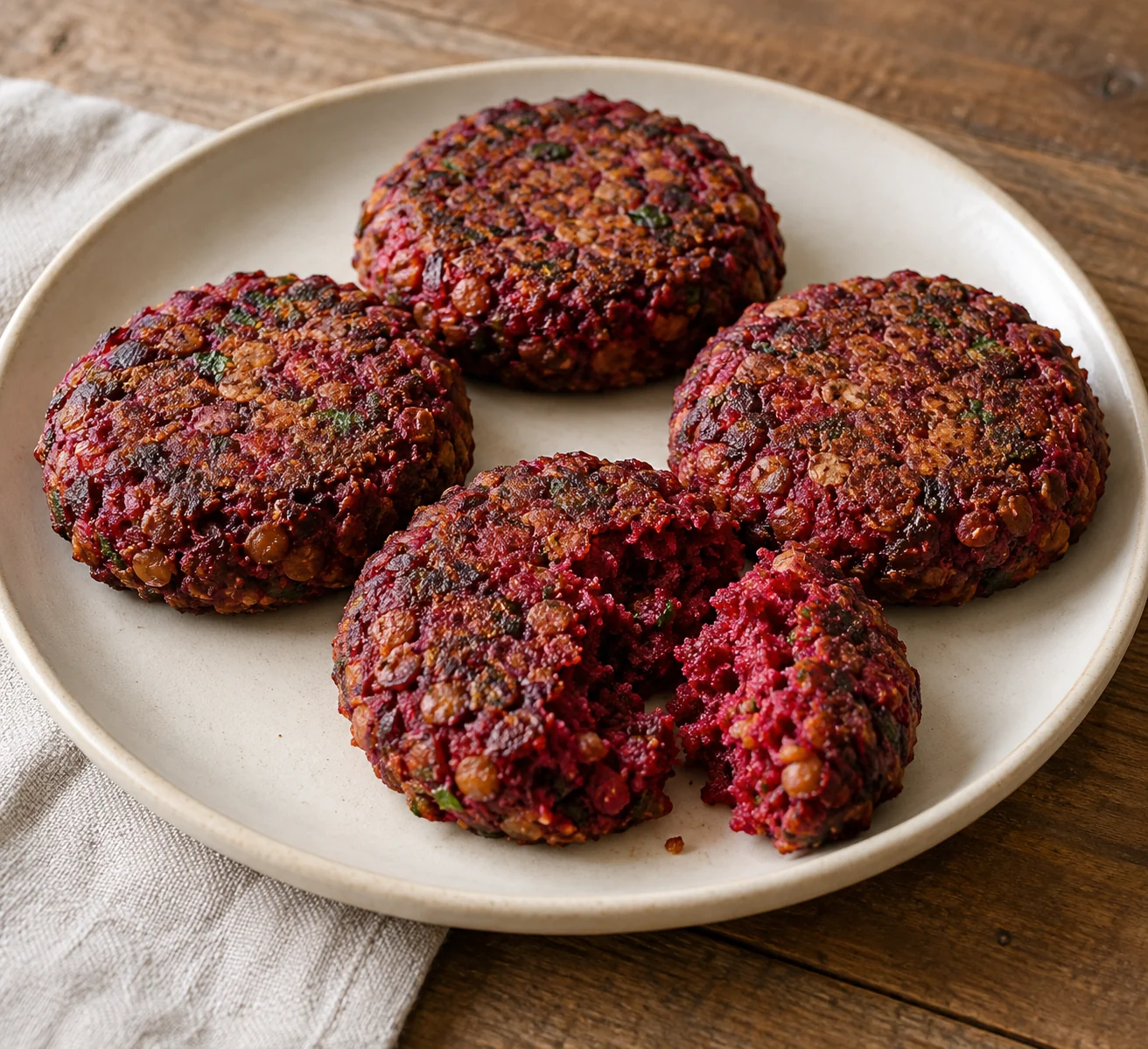
These patties get their deep color from roasted beetroot and their structure from partly mashed lentils, ground oats and egg. They are not intended to imitate the springy texture of meat. A good patty has a browned outer surface and a tender, visibly textured middle that stays together when lifted. The recipe includes cooking, cooling and chilling time because warm, wet ingredients are much harder to shape. Serve the eight patties as four portions without assuming an unlisted bun, dressing or side dish.
Roasted beet & lentil patties makes 4 servings, with 2 hr 20 min estimated total time. View the standalone recipe page.
Start with the stated food weights
Weigh the beetroot after peeling and before roasting. Cut it into small, even dice so it softens throughout rather than developing a dark exterior around a hard center. The lentil quantity is dry weight, not a scoop of already cooked lentils. Cook the entire measured batch and use all of it after draining. The estimate counts the dry lentil nutrients even though some soluble material may leave with the cooking water. No precise cooking-loss adjustment is claimed. Brown or green lentils retain useful texture; split red lentils would make a different mixture.
Remove excess moisture without drying everything out
Roasting concentrates the beetroot while the lentils simmer separately. Drain the lentils thoroughly, then let steam escape as directed. They should be tender enough to crush, without a puddle collecting underneath. Cook the onion in its measured oil until softened; adding it raw would leave sharp pieces and release moisture later. Cool these components before adding egg. Spreading them in a shallow layer speeds that step and prevents a hot center from remaining hidden beneath a cool-looking surface. Keep the total room-temperature handling time short.
Build a mixture with two textures
Mash roughly two thirds of the lentils and leave the rest recognizable. The mashed portion holds the small beet pieces together, while the whole lentils keep the center from becoming a uniform paste. Grind the full measured oats to a coarse flour so they can absorb moisture more evenly. Finely chop the roasted beetroot rather than leaving large cubes that create weak seams. Combine everything thoroughly, including the egg, seasonings and parsley. Scrape the bowl well so the measured ingredients are retained across the complete batch.
Chill before deciding the mixture is too loose
The twenty-minute refrigerator rest lets the oats hydrate and makes the mixture easier to handle. Do not immediately add extra oats to a soft warm mixture: that changes both texture and the calculated quantities. After chilling, press a small portion together. If it crumbles, mash a little more of the existing mixture and reincorporate it. If it smears, chill it longer and shape with gentle, firm pressure. Divide into eight equal portions and keep their thickness consistent. Thin edges dry before thick centers cook, making turning more difficult.
Bake, turn and let the crust settle
Brush both faces with the remaining measured oil and bake on parchment. Give the first side its full cooking time before turning; repeatedly lifting an unset patty can break it. Slide a broad thin spatula completely underneath, then turn in one controlled movement. Check the centers reach the card's 165°F endpoint and rest five minutes before serving. That rest allows the hot interior to settle. Refrigerate promptly and reheat leftovers to 165°F. Certified gluten-free oats and appropriate ingredient labels are necessary for the conditional gluten-free tag.
Common questions
Why do the patties fall apart?
Common causes are insufficiently mashed lentils, oversized beet pieces or skipping the chill. Fix those within the measured mixture before adding anything. Let the first side brown undisturbed and use a broad spatula rather than tongs.
Can I replace the egg with more oats?
That substitution is not covered by this formulation. The egg contributes binding and moisture as well as nutrients. Simply adding oats can make a dry patty that still cracks; a vegan version would need a separately developed ingredient balance.
Technique & food-safety references
These primary references support the technique, safety and storage guidance. The recipe and cooking explanations are original Recipe Pinboard content.


