Roasted beet and walnut spread has a striking color, but its success is mostly about moisture and texture. The beets need to be tender enough to blend, the nuts need to cool after toasting, and the processor should leave a little fine texture. This recipe uses no yogurt or cheese. Lemon, garlic and dill balance the sweet earthy beets, while the measured walnuts provide body.
Roasted beet & walnut spread makes 6 servings, with 1 hr 5 min estimated total time. View the standalone recipe page.
Trim and cut the beets before weighing
The 500 g beet amount refers to peeled, trimmed edible pieces. Weighing whole untrimmed beets and then removing their skins and ends would put less beet into the recipe. Cut pieces close to 2 cm so they soften at a similar rate. A few much larger chunks may remain firm after the small ones are already ready.
Toss the pieces with the measured roasting oil and spread them across a rimmed tray. Beets can stain utensils, towels and work surfaces, so choose tools that can be washed promptly and protect porous surfaces. This practical step does not change the cooking method; it simply makes cleanup easier when handling an intensely colored vegetable.
Roast until fully tender, then allow cooling
The recipe’s 30–40 minute roasting window assumes similarly sized pieces and a hot 425°F oven. Stir once so different sides contact the tray. Test a larger piece with the tip of a knife: it should be tender through the middle rather than merely browned on the outside. Firm pieces will leave gritty fragments in the final spread.
Let the roasted beets cool for ten minutes before processing. Their surface should no longer be giving off heavy steam. Do not seal very hot food into a closed blending vessel. A food processor should be used according to its hot-food instructions, and the cooling pause also gives you time to organize the other ingredients.
Toast the walnuts without scorching them
The walnuts are toasted separately in a dry skillet over medium-low heat. Stir frequently and transfer them to a plate as soon as they smell fragrant. Leaving them in the hot pan after switching off the burner can continue browning them. Dark bitter nuts cannot be corrected by blending them into sweet beets.
Cool the nuts before they meet the processor, and reserve the stated 10 g for the topping. The remaining 70 g becomes part of the body of the spread. If you accidentally process all the walnuts, adding another handful on top changes the written ingredient total and portion estimate. Keeping the reserved amount in a small separate dish prevents that easy mix-up.
Process to a spread, not a liquid purée
Add the cooled beets, remaining walnuts and oil, lemon juice, garlic, most of the dill, salt and pepper. Pulse and scrape until the ingredients form a thick, cohesive mixture. Fine walnut texture is intentional. There is no water addition in this recipe because tender roasted beets should provide enough moisture for the nuts and oil to bind with them.
A small processor may need scraping more often than a large one. If the blade spins underneath an unmoving mass, stop and redistribute the food instead of running the motor continuously. Do not assume that adding yogurt is a harmless texture fix: it changes the plant-based ingredient list and the flavor. This version is designed to stand on its own.
Finish, portion and refrigerate promptly
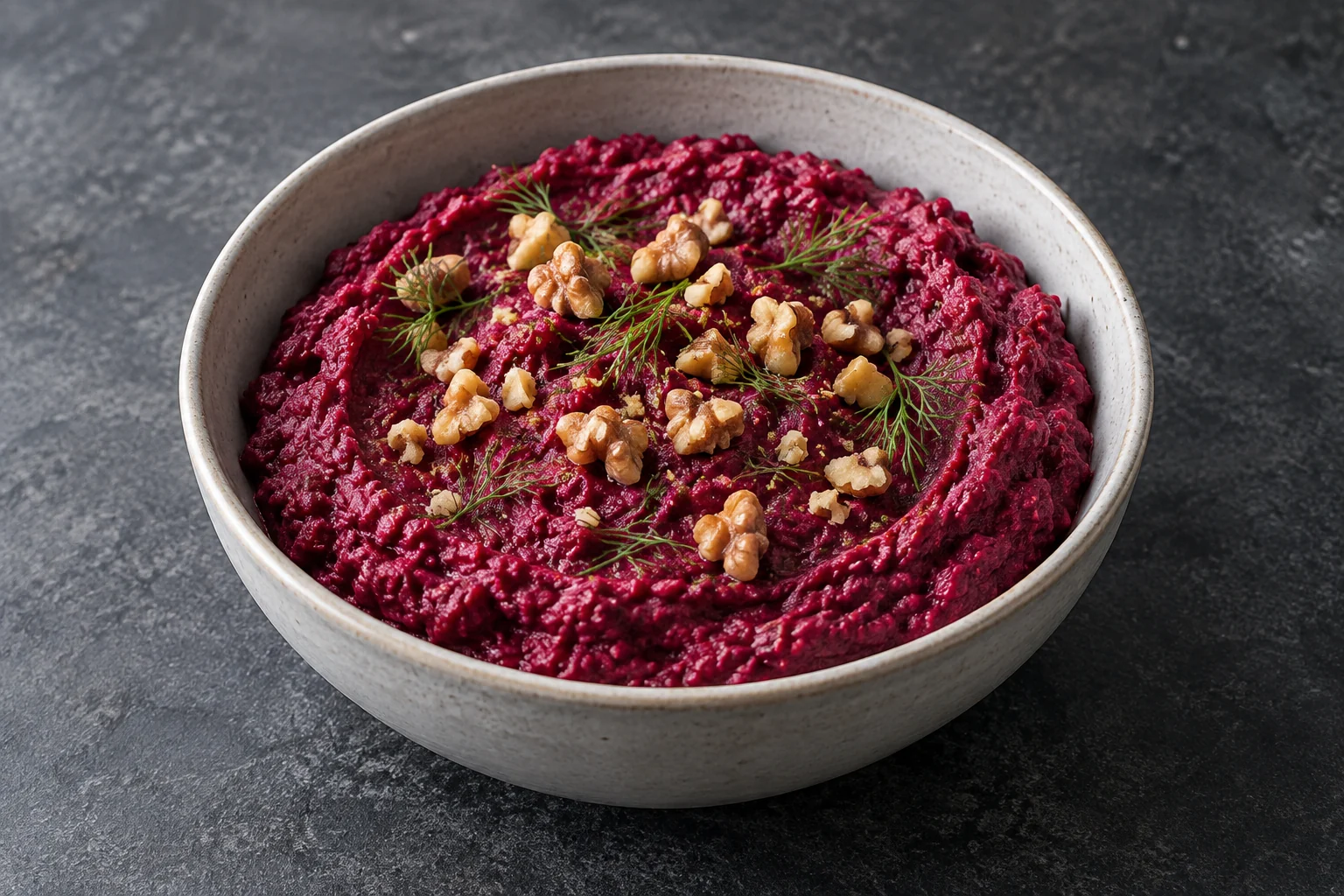
Spread the mixture into a shallow bowl and scatter the reserved chopped walnuts and dill across the top. The garnish provides contrast without introducing a new ingredient. Divide into six equal portions, roughly 95 g each. The image illustrates the dish; it does not measure how much is on the plate or establish a nutritional portion.
Keep leftovers in a shallow covered container in the refrigerator and follow the short storage period in the recipe. Bread, crackers or raw vegetables served with the spread need their own ingredient review. Walnuts remain an allergen even when finely blended, so neither its smooth texture nor a dietary badge should be mistaken for an allergy guarantee.
Common questions
Can I use cooked vacuum-packed beets?
They have a different moisture level and lack the roasted surface from this method. This recipe is written for raw trimmed beets roasted as directed. A prepared-beet version needs a separate texture and ingredient review, especially if its package includes vinegar or seasoning.
Why is my spread grainy?
The beets may not have softened fully, or the bowl may need scraping and another short processing interval. A fine walnut texture is normal, but hard beet pieces are not. Check tenderness before processing rather than trying to fix undercooked beets with extra oil.
Technique & food-safety references
These primary references support the technique, safety and storage guidance. The recipe and cooking explanations are original Recipe Pinboard content.