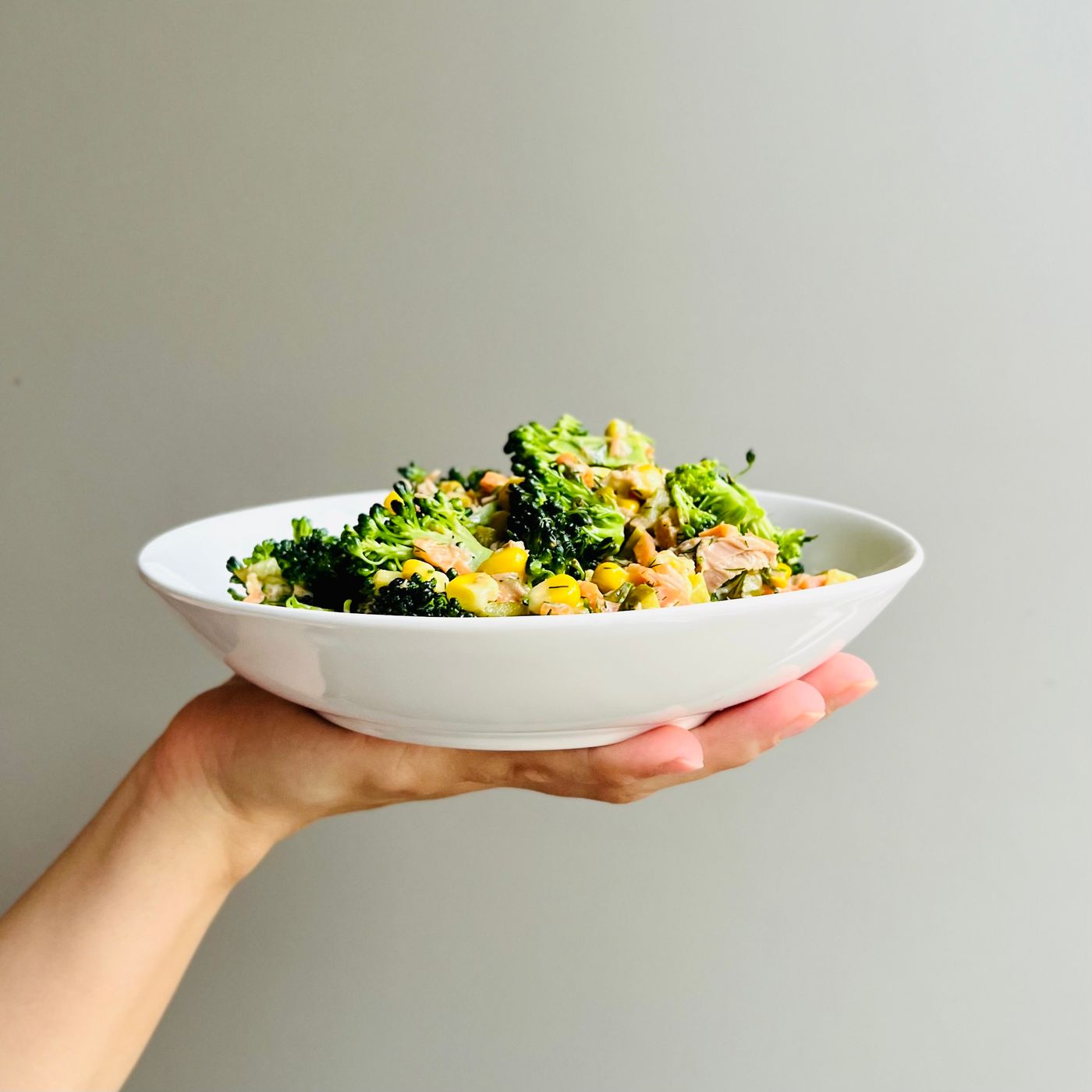
This warm salad uses one roasting tray and a dressing mixed directly in the serving bowl. Its goal is tender, lightly browned broccoli with warm chickpeas, rather than turning every ingredient into a dry crunchy snack. The key details are thinly sliced stems, dry chickpeas and a deliberate split between roasting oil and dressing oil.
Roasted Broccoli and Chickpea Salad makes 2 servings, with 35 min estimated total time. View the standalone recipe page.
Make the stems as approachable as the florets
The 400 g broccoli includes small florets and tender stem pieces. Cut stems thinly so they can become tender alongside the florets. A large, dense stem chunk needs a different amount of cooking from a delicate tip, even when both began on the same head. Trim away tough portions before measuring the prepared amount.
Use 240 g drained and rinsed canned chickpeas. The packing liquid is not part of that weight. Drain well and pat the beans dry so excess water does not collect on the tray. Spread broccoli and chickpeas over a large tray rather than placing the vegetables in a deep, crowded baking dish.
Measure the roasting share before tossing
The full recipe uses 25 g olive oil, but only 20 g goes on the roasting tray. Toss it with the broccoli, chickpeas, 2 g salt and the black pepper. Work through the whole mixture so little florets do not remain dry while one section holds most of the oil. Reserve the remaining oil and salt for the bowl.
Arrange a single layer with spaces where hot air can reach the tray surface. Small florets often roll into clusters around larger stems, so separate them before baking. If your tray is too small, use more space rather than squeezing everything into a mound and expecting the same browning. Extra tray space does not require extra oil.
Roast for tenderness as well as color
The oven setting is 425°F (220°C), with twenty to twenty-five minutes of roasting and one turn. At the turn, move pieces from the edges toward the center and loosen any crowded clusters. Check both broccoli tops and stem slices; the latter are useful indicators of whether the vegetable is tender through its thicker parts.
Lightly browned tips and tender stems are the intended finish. Dark tips with firm stems suggest uneven cutting or an overly exposed edge of the tray. Do not wait for every chickpea to become hard and crunchy, because the broccoli may overcook first. This is a warm roasted salad, not a long-dehydrated chickpea snack.
Whisk the dressing before adding warm vegetables
Combine the lemon juice and mustard in the serving bowl with the remaining 5 g oil and 1 g salt. Whisk until the liquid looks evenly combined rather than holding a separate oily patch. Preparing it while the tray is in the oven means the finished vegetables can be dressed without waiting through another preparation stage.
Add the warm broccoli and chickpeas and fold gently from the bottom so the dressing reaches the underside. Use a roomy bowl and a broad utensil instead of repeatedly pressing on the florets. You want recognizable broccoli pieces, not broken green crumbs suspended in lemon juice. The dressing should coat rather than pool around a small portion of the salad.
Finish with seeds and divide into two bowls
Scatter the 8 g black sesame seeds over the dressed mixture and divide the full batch between two bowls. The seeds are a small, distinct finish; adding an extra handful of nuts would change the specified dish and its estimated portion totals. Serve warm while the broccoli has its strongest contrast between browned tips and tender centers.
For advance planning, prepare the dressing separately and roast near mealtime. Refrigerate leftovers promptly in a covered shallow container and use within three to four days. A chilled version will have softer roasted edges. If reheating, heat thoroughly to 165°F (74°C) and expect the sesame and dressing to remain part of the reheated dish rather than a fresh garnish.
Common questions
Should the chickpeas be completely crunchy?
Not in this version. They warm and lightly roast alongside broccoli. Extending the bake solely to dry every chickpea can burn delicate florets before achieving snack-like crunch.
Why are the stems still firm?
They may be thicker than the florets can tolerate during the same roast. Slice the tender stems thinly at the start and check them when turning, rather than judging the whole tray by browned tips.
Technique & food-safety references
These primary references support the technique, safety and storage guidance. The recipe and cooking explanations are original Recipe Pinboard content.