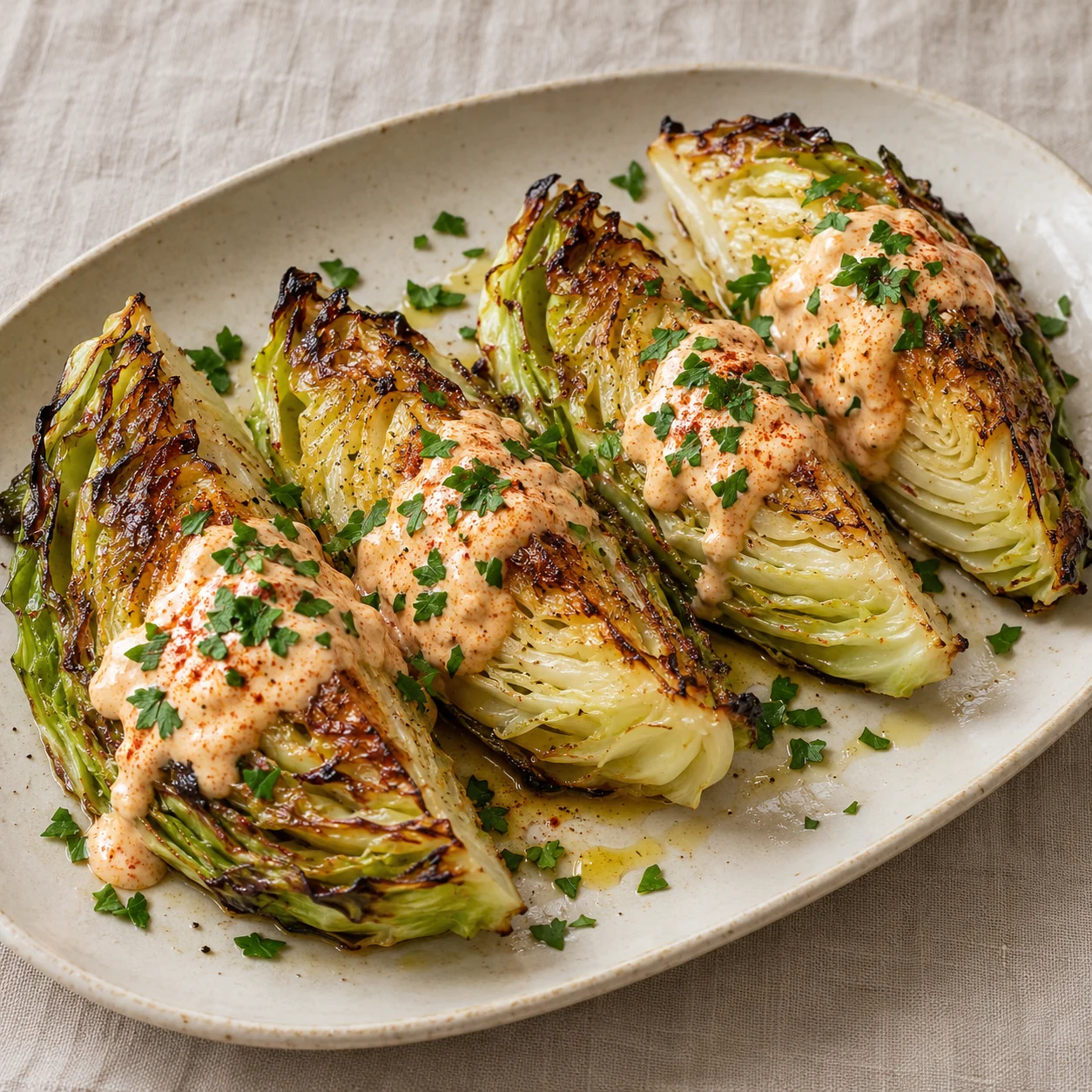
A cabbage wedge can have browned outer edges and tender inner leaves without falling into a loose pile. The core is useful here: a small section anchors the layers while they roast and turn. The full card above makes eight wedges with a cool paprika-yogurt sauce. The walkthrough helps you choose the cut, judge the inner leaves and keep the sauce fresh.
Roasted cabbage wedges with paprika yogurt makes 4 servings, with 1 hr estimated total time. View the standalone recipe page.
Make wedges that remain attached
Remove damaged outer leaves before weighing the cabbage. Cut through the stem end to create halves, then continue through the core until you have eight wedges. Each needs a narrow core connection rather than a broad, hard chunk. Cutting the core entirely away releases the layers, which then roast at different speeds and are difficult to turn. A small cabbage or a trimmed portion of a larger one can supply the stated weight. Keep wedge thickness reasonably similar so one portion does not remain firm while another collapses.
Coat cut surfaces rather than pooling oil
Lay the wedges flat on the tray and brush both cut faces with the measured oil. This reaches the broad surfaces that touch the hot metal. Pouring all the oil over the upper edges leaves some parts dry and makes a puddle beneath others. Separate the wedges with a little space so steam can escape. If your tray is too small, use two rather than packing the cabbage tightly. Season with the roasting portion of salt and the pepper; reserve the remaining salt for the yogurt.
Turn when the first side has browned
Leave the wedges alone during the first roasting stage, then slide a broad spatula beneath each. Support the layered end as you turn instead of lifting by one loose outer leaf. Some small leaves may detach; keep them alongside and remove them if they brown before the main wedges. The second side needs its own contact time. A properly roasted wedge can have dark golden patches, but extensive blackening creates a bitter taste that the yogurt cannot hide.
Test the thick inner leaves
Insert a small knife near the core through the thick leaves. It should slide in without the stiff resistance of raw cabbage, while the wedge still holds together. Color on the exposed tips is only one checkpoint. If the tips are becoming too dark while the center is firm, loosely shield them with foil and continue cooking the thicker part. Variation in cabbage size and leaf density explains why the recipe gives a timing range. Tenderness, not the earliest minute, is the stopping point.
Keep the yogurt cool until serving
Stir the plain yogurt with lemon, paprika, garlic and reserved salt while the cabbage roasts. Refrigerate it until needed. Spoon it over the hot wedges at the table and scatter the measured parsley across the servings. Adding it before roasting would make a different dish and could separate the yogurt. Give each portion two wedges and one-quarter of the sauce. For leftovers, separate storage makes reheating easier: warm the cabbage to the stated safe temperature, then add the cold sauce after heating.
Common questions
Can I use red cabbage?
It has a different color and can have denser leaves, so it may need different roasting time. This recipe and its image describe green cabbage, and the nutrition calculation uses that ingredient profile. Treat red cabbage as a deliberate variation rather than assuming the exact cooking cues and estimate remain identical.
Is the yogurt sauce dairy-free?
No. The specified whole-milk yogurt contains dairy, which is why this recipe does not carry a dairy-free tag. A plant-based replacement changes both the ingredient list and nutrition. Check the labels of yogurt and spice blends for any additions relevant to the dietary choices you need.
Technique & food-safety references
These primary references support the technique, safety and storage guidance. The recipe and cooking explanations are original Recipe Pinboard content.


