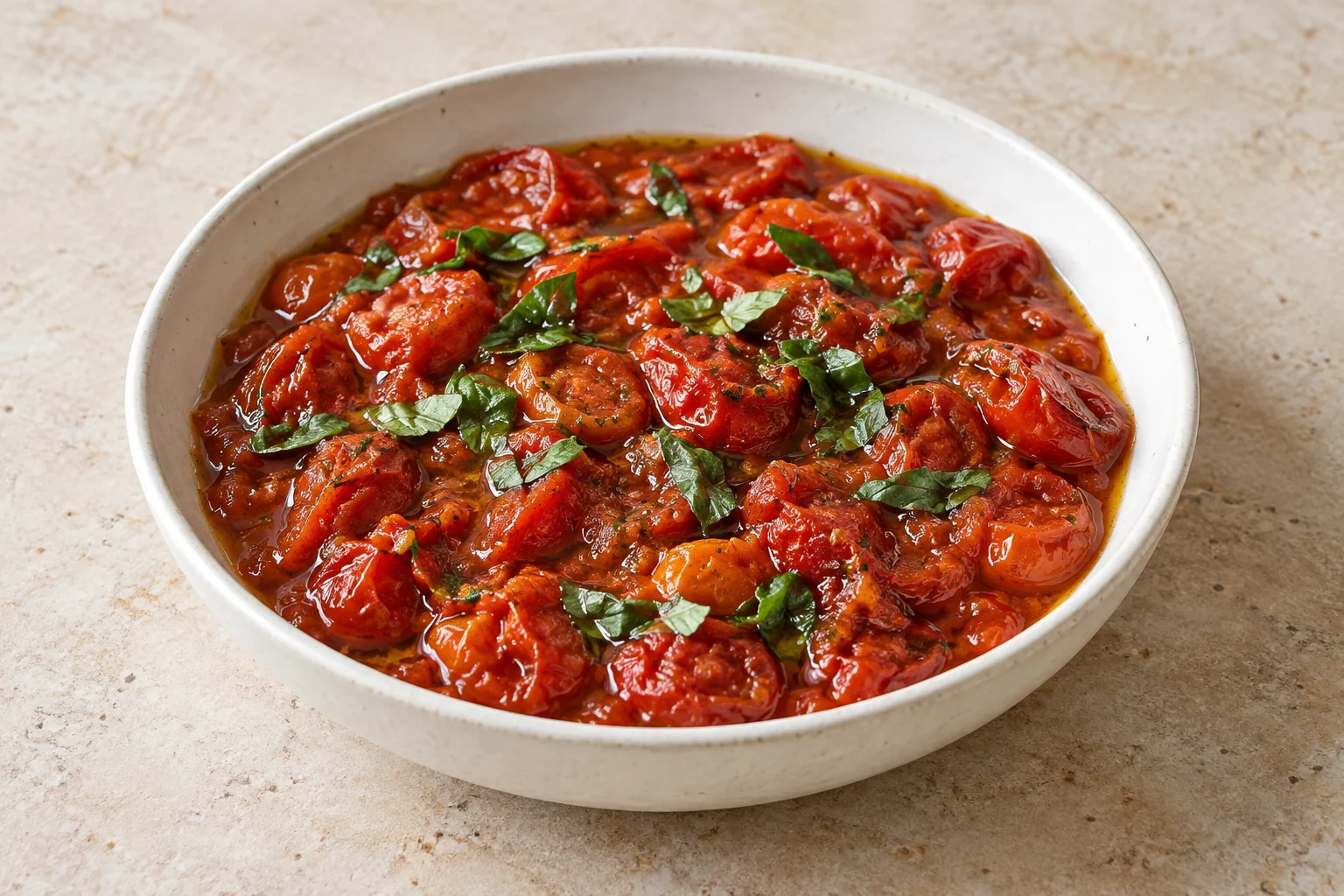
This roasted cherry tomato sauce uses the oven to concentrate the tomatoes before they meet a masher. It is a sauce recipe in its own right, with six portions and no pasta built into the yield. The useful choices are the size of the pan, how much liquid remains after roasting, and when the basil is added. Those choices determine whether you finish with a spoonable sauce or a watery mixture of hot tomatoes.
Roasted tomato & basil sauce makes 6 servings, with 55 min estimated total time. View the standalone recipe page.
Start with the right pan and a shallow layer
The recipe begins with 900 g cherry tomatoes, halved. Halving exposes the interior and gives moisture a route out while the skins soften. Leave the seeds and pulp in place: they belong to the sauce and bring both liquid and flavor. Cutting them away changes the yield and is unnecessary for this rustic preparation.
Use a large metal roasting pan with enough room to keep the tomatoes in a shallow layer. A deep crowded dish collects steam, while a very thin scattering on an oversized sheet can dry out before the garlic softens. Toss everything well with the measured oil so the garlic is coated rather than stranded on a dry patch of metal.
Roast for tenderness as well as color
The 425°F oven and 30–35 minute window are a starting point. Stir once to move the outer tomatoes toward the middle and expose different surfaces to the heat. The tomatoes should collapse and develop a few browned edges, and the whole garlic cloves should feel soft when pressed. If the garlic remains firm, keep roasting and check again.
A few darkened tomato edges are different from burnt pan residue. If a corner of the pan is drying too quickly, move its contents into the wetter area during the stir. Do not chase a deeply charred appearance: this sauce still needs enough moisture to bind together once mashed. Tomato ripeness and oven behavior affect the timing.
Choose a rustic texture without losing the juices
Leave the pan for five minutes after roasting, then mash the softened tomatoes and garlic together. A potato masher keeps identifiable pieces and avoids turning the sauce into a uniform purée. Work around the pan and scrape the flavorful liquid into the mixture rather than draining it off. The garlic should disappear into small soft fragments.
A food processor can make a somewhat smoother version, but follow its instructions for hot food and process briefly. Never seal steaming food in a closed blender. If the mixture is too loose for its intended use, a short uncovered simmer in a saucepan can reduce it further. Stir and stop once it coats a spoon; reduced sauce makes a smaller yield.
Add basil at the end and plan the portion
Tear the basil shortly before it goes into the warm sauce. Adding it after roasting preserves more of its fresh aroma than exposing it to the full oven time. The leaves will wilt in the residual heat. The listed black pepper and salt already season the batch, so taste only the finished cooked sauce before deciding whether your particular tomatoes need an adjustment.
Divide the finished sauce into six equal portions. The approximate 100–120 g portion range reflects evaporation; equal division is more useful than insisting on a fixed cooked weight. Pasta, bread, beans or grilled vegetables are separate serving suggestions. Adding one of those turns the sauce into a different meal and changes its overall nutrition and portions.
Cool and store it as a fresh sauce
This recipe is intended for immediate eating or short refrigerated storage. The tomato’s natural acidity and the brief roasting step do not make this a home-canning recipe. Divide leftovers into shallow covered containers and refrigerate promptly, using the time and temperature limits in the recipe. Reheat refrigerated sauce to 165°F (74°C).
Keep a portion label on the container if you plan to use it across several meals. A smaller container makes it easier to warm only what you need instead of repeatedly heating the whole batch. The fresh basil will darken during storage, which is expected, but appearance alone cannot establish whether food has been stored safely.
Common questions
Can I use large tomatoes?
The method is written for halved cherry tomatoes. Large tomatoes have different water content and a different cut surface. They can make a sauce, but they need their own roasting and yield judgment rather than an assumed identical cooking time.
Why is my sauce watery?
A crowded deep pan, especially juicy tomatoes or insufficient roasting can leave extra liquid. Mash first, then reduce briefly in a saucepan if needed. Do not discard the juices automatically, because that also removes flavor and changes the portion calculation.
Technique & food-safety references
These primary references support the technique, safety and storage guidance. The recipe and cooking explanations are original Recipe Pinboard content.