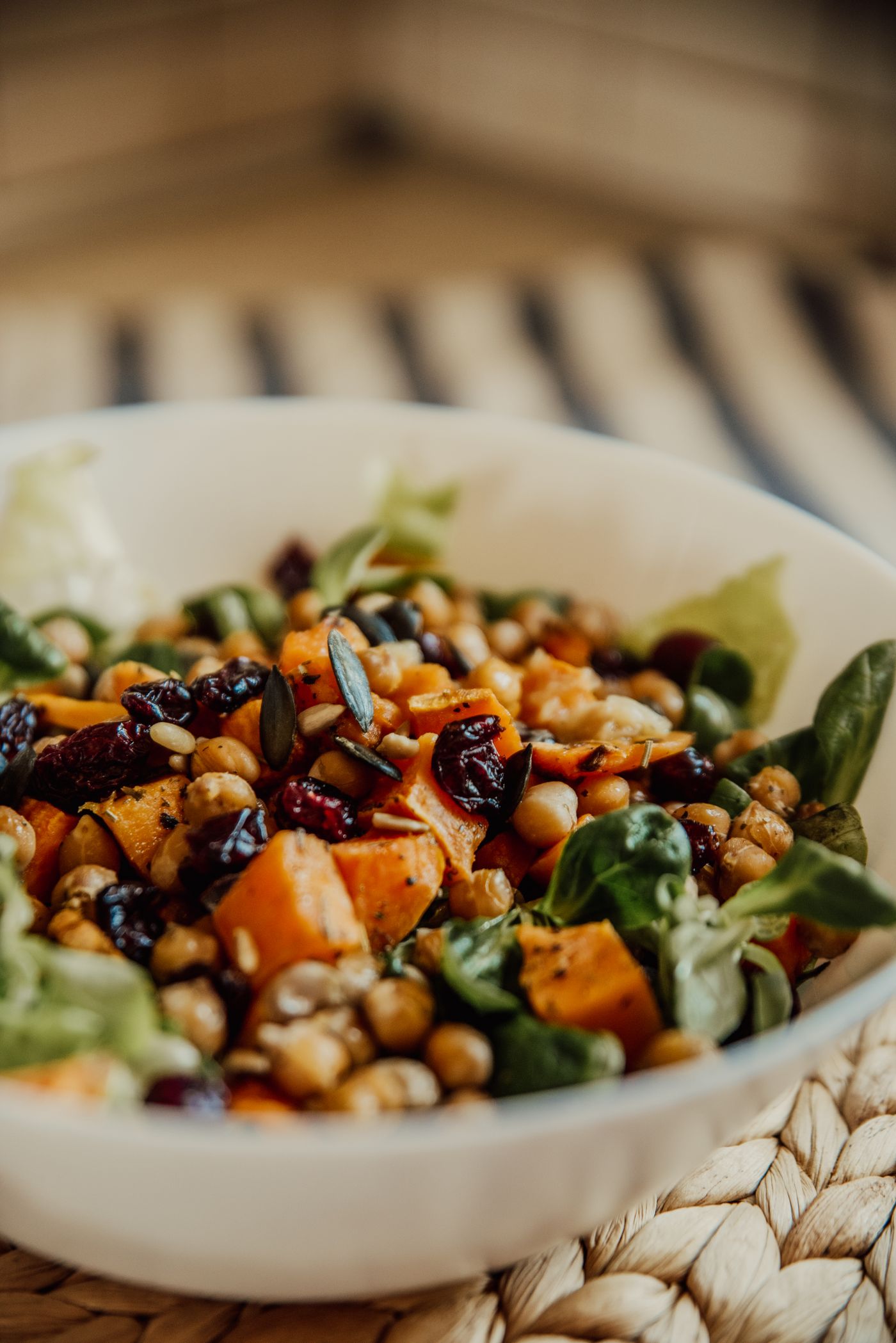
These harvest bowls combine warm chickpeas, sweet potato and red onion with fresh spinach, a lemon-tahini dressing and measured dried-fruit and seed toppings. The chickpeas should become golden while the potato centers soften. The recipe does not promise hard, snack-style crunch, particularly after the warm mixture meets leafy greens and dressing.
Roasted chickpea harvest bowls makes 4 servings, with 40 min estimated total time. View the standalone recipe page.
Dry the chickpeas and match the potato cuts
Drain and rinse both cans of chickpeas, then dry them well with a clean towel. Surface water has to evaporate before the outside can roast effectively, so this preparation step earns its place. Pat rather than crush; the bowls should contain recognizable chickpeas.
Cut the sweet potatoes into half-inch cubes and the red onion into wedges. Keep the potato pieces similar in size so the smaller ones do not collapse before the largest centers soften. Separate any oversized cluster of onion layers enough to give hot air access, without turning the entire onion into tiny slivers that can scorch early.
Use both baking sheets
Toss the chickpeas, potatoes and onion with the measured olive oil, cumin and salt, then spread them across two rimmed sheets. The second tray is functional: cramming the mixture into one deep layer holds escaping moisture around the vegetables. Leave space between clusters and keep potato cubes from sitting on top of one another.
Roast in the preheated 425°F (220°C) oven for the stated twenty-five to thirty minutes, turning halfway. Look at each tray rather than relying on a single timer; rack position and crowding can change browning. Test a larger sweet-potato cube for tenderness while also checking that the chickpeas are golden.
Whisk the dressing through its thick stage
Start with a well-stirred jar of tahini so the quarter cup contains both sesame solids and oil. Whisk in the two tablespoons lemon juice. The mixture may thicken abruptly at first; this is not a reason to discard it or keep adding lemon.
Add the recipe’s water a tablespoon at a time, whisking between additions. Work within the three-to-five-tablespoon range until the dressing pours from a spoon in a continuous ribbon rather than falling in heavy clumps. Tahini texture varies, so the visible result matters more than using every last tablespoon automatically.
Build the bowls while the roasted ingredients are warm
Divide the baby spinach among four bowls and add the warm roasted mixture. Some leaves will soften where they contact the hot vegetables; that is different from cooking the entire quantity of spinach on the roasting tray. Keep the arrangement loose so dressing can reach more than the top layer.
Drizzle the tahini mixture across the bowl, then distribute the unsweetened dried cranberries, pumpkin seeds and sunflower seeds. These additions belong at the finish, not in the high-heat roasting stage. Measure and divide them so one serving does not receive most of the seeds and another mostly cranberries.
Store components to preserve their differences
For an ahead-of-time meal, keep roasted ingredients, spinach, dressing and dry toppings separately until serving. Putting everything in one container immediately softens the chickpea surfaces and leaves, while the seeds lose some of their distinct texture against the dressing.
Refrigerate the cooked components promptly in shallow containers and use within three to four days. Reheat the chickpeas and vegetables to 165°F before building a warm leftover bowl. Stir the chilled dressing before using it, and add the fresh spinach and toppings after reheating rather than microwaving the entire assembled bowl.
Common questions
Why are the chickpeas soft instead of crisp?
Wet surfaces and crowded trays limit browning. This mixed-vegetable roast aims for golden chickpeas, however, and adding dressing will soften them; it is not a shelf-stable crunchy-snack method.
Why did the tahini turn stiff when I added lemon?
Tahini can thicken during the first mixing stage. Continue whisking while adding the listed water gradually; use the resulting pourability to decide where to stop.
Technique & food-safety references
These primary references support the technique, safety and storage guidance. The recipe and cooking explanations are original Recipe Pinboard content.