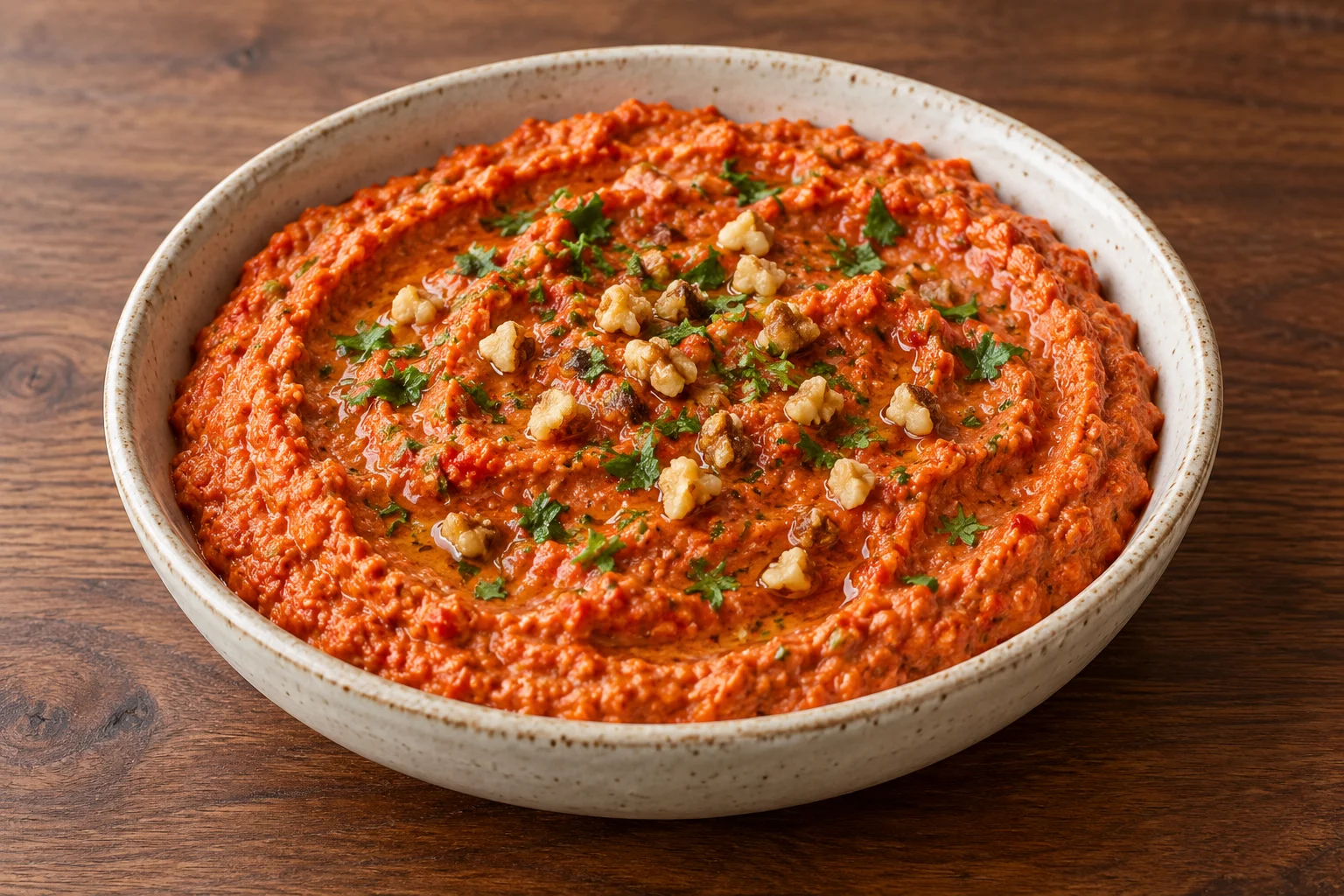
A thick pepper-walnut dip starts with managing moisture before the food processor turns on. Roasting softens the peppers, a covered pause loosens their skins, and draining removes watery liquid that would thin the finished bowl. This batch makes six snack portions in about 60 minutes, with 20 active minutes and overlapping pepper and walnut cooling stages.
Roasted red pepper & walnut dip makes 6 servings, with 1 hr estimated total time. View the standalone recipe page.
Weigh the trimmed peppers and arrange them cut-side down
The 600 g pepper quantity is edible weight after trimming, halving and deseeding. Start with enough whole red bell peppers to reach that amount after preparation. Rub the halves with 5 g of the oil and place cut-side down on a foil-lined rimmed baking sheet. Exposing the skins helps you assess blistering during roasting.
Heat the oven to 450°F (230°C) and roast for 25–30 minutes until the skins blister and darken and the flesh is soft. The skin color and flesh texture work together as cues. A few dark spots on otherwise firm peppers do not mean they are ready to become a spreadable dip.
Use the covered pause to make peeling easier
Transfer roasted peppers to a heatproof bowl, cover and leave for ten minutes. This stage loosens the skins while the peppers begin cooling. Use care moving the soft halves and lifting the cover, which can release hot steam. The bowl needs to be suitable for hot food rather than a container chosen only for storage.
When cool enough to handle, peel away loose charred skins and drain watery liquid. Do not rinse the peeled peppers; that adds water just when you are trying to control it. A few small stubborn skin fragments are different from leaving whole sheets of charred peel, which would disrupt the intended fine texture.
Toast the walnuts while the peppers roast
Put the 90 g walnuts in a dry skillet over medium-low heat for four to six minutes, stirring often until fragrant. Stay with the pan: nuts can darken unevenly if left motionless. You are developing a toasted flavor, not trying to make every ridged surface the same deep color before removing them.
Transfer the walnuts to a plate and cool for at least ten minutes. Leaving them in the hot skillet continues their exposure to heat. Set aside 10 g and chop for the topping, keeping 80 g for the processor. This division gives the finished dip both a fine internal texture and recognizable nut pieces above.
Pulse the measured mixture rather than making nut butter
Place the drained peeled peppers, 80 g walnuts, remaining 20 g oil, lemon juice, garlic, paprika, cumin and salt in the food processor. Short pulses let you inspect the mixture between bursts. Scrape down the bowl as needed so large pieces near the wall return to the blade instead of remaining outside the working mixture.
Stop when the dip is thick and spreadable with some fine nut texture. Continuous processing is not the goal; the recipe specifically avoids an oily nut-butter consistency. If the mixture looks loose, consider whether the peppers were drained adequately before adding more ingredients. Extra walnuts or breadcrumbs would change the measured recipe rather than simply correct technique.
Finish the bowl and distinguish dip from accompaniments
Spoon into a shallow bowl and top with the reserved 10 g chopped walnuts and 5 g parsley. There is no separate finishing oil beyond the measured amount already used. Divide the whole dip into six equal snack portions. Crackers, bread or vegetables may accompany it, but they are optional and outside this recipe's portions.
Refrigerate promptly at 40°F (4°C) or colder and use within three to four days. Discard dip left at room temperature longer than two hours, or one hour above 90°F (32°C). For a leisurely snack, put out the amount needed and keep the rest cold instead of repeatedly leaving the whole bowl on the counter.
Common questions
Why is my dip watery?
Roasted peppers can release liquid during their covered rest. Drain that watery liquid after peeling, and do not rinse the peppers. The texture depends on this preparation step; running the processor longer does not remove the extra water.
Should the dip be completely smooth?
No. Stop at a thick, spreadable texture with fine walnut pieces. Scrape the processor bowl and use short pulses to deal with larger pieces, rather than blending continuously until the nuts turn the mixture oily.
Technique & food-safety references
These primary references support the technique, safety and storage guidance. The recipe and cooking explanations are original Recipe Pinboard content.