This tomato salsa gets its lightly smoky flavor from a dry skillet rather than added smoked seasoning. The twenty-minute recipe serves six with 500 g ripe tomatoes, onion, chili and garlic, followed by lime and cilantro. Short pulses keep the finished salsa coarse enough to scoop. Because tomato size and ripeness vary, use the roasting time as a guide and look for softened vegetables as well as patches of color.
Tomato salsa with tortilla chips makes 6 servings, with 20 min estimated total time. View the standalone recipe page.
Prepare the vegetables and plan the heat level
Wash the tomatoes, chili, cilantro and lime before preparing them. Measure the 75 g white onion and keep the two garlic cloves unpeeled for roasting. The skins protect the cloves during this stage and are removed afterward. Keep the 1 tbsp lime juice, 15 g cilantro and ½ tsp kosher salt ready for blending.
The recipe allows seeding the small chili for less heat. Handle chili carefully, avoid touching your eyes and wash hands and equipment afterward; food-safe gloves can be helpful. Chili varieties differ substantially in heat, so the word small does not guarantee mildness. Remove seeds if desired, but still treat the flesh and inner ribs as potentially hot.
Dry-roast for softness and scattered char
Heat a dry skillet over medium-high heat and add the tomatoes, onion, chili and unpeeled garlic. Turn occasionally over eight to ten minutes, watching the pieces individually. You want softened vegetables with lightly charred patches rather than a uniformly black exterior. A heavy skillet makes this easier to manage, but check the cookware’s instructions for dry heating.
Smaller garlic cloves or thin chili pieces can finish before large tomatoes. Move ingredients around or take a finished piece off the heat while the rest softens. If the pan is smoking heavily and surfaces are blackening before the vegetables yield, reduce the heat. The char supplies flavor, but burning is not a substitute for cooking the interior.
Cool before peeling and processing
Let the roasted vegetables cool until safe to handle. Peel off the garlic’s papery skins and remove the chili stem. Check for loose charred scraps and discard pieces that are fully burnt and bitter. Keep the tomatoes and their useful juices together rather than automatically draining away all the liquid that will help form the salsa.
Put the prepared vegetables in the processor or blender only once they are suitable for that appliance. Do not seal very hot vegetables in a small blending cup; follow the manufacturer’s rules for warm ingredients. Cooling is already part of this recipe, so there is no reason to rush a hot mixture directly from the skillet into a tightly closed container.
Pulse to a coarse, spoonable consistency
Add the lime juice, cilantro and salt, then pulse briefly, pausing to inspect the texture. Stop while small vegetable pieces remain visible. Continuous blending can quickly turn the mixture into a smooth sauce and incorporate more air. Scrape the sides with the machine off if larger pieces are staying above the blades.
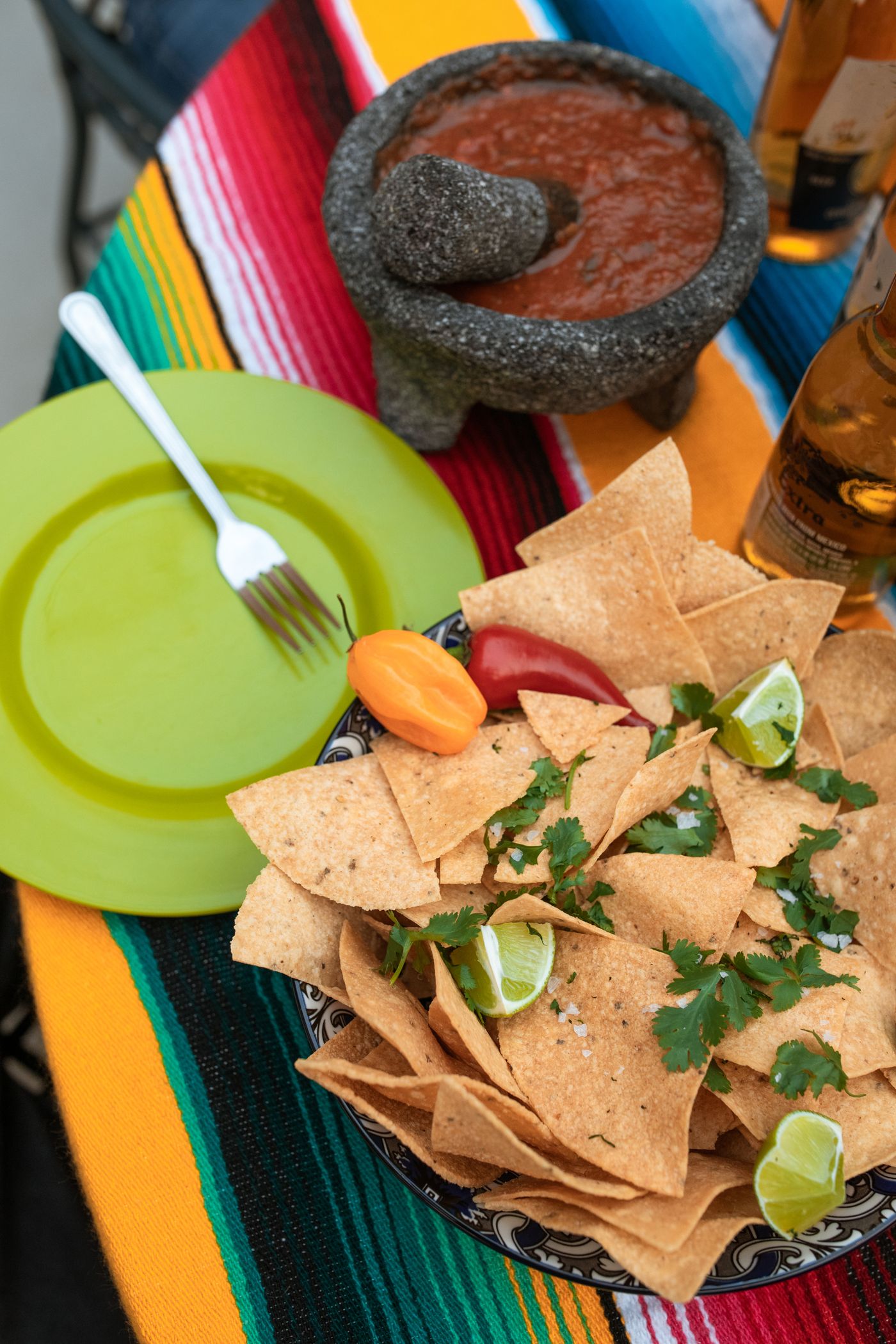
If the salsa is very thick, the recipe method allows a spoonful of water. Check first: ripe tomatoes may already supply enough liquid. Add only what is needed to make it easy to spoon onto a chip rather than thin enough to run straight off. Taste with a tortilla chip, because the chip’s salt changes the impression of the finished snack.
Serve fresh and treat it as a refrigerated salsa
Transfer to a bowl and serve alongside the 150 g tortilla chips and the lime cut into wedges. Keep the chips out of the salsa until eating so they remain crisp. This batch makes six snack portions; extra chips or additional toppings would be separate accompaniments rather than uncounted parts of the recipe.
Refrigerate leftovers promptly in a shallow covered container and use within three to four days. This is a fresh refrigerated salsa, not a shelf-stable preserving formula. Do not can it or infer safe preservation from the presence of tomatoes and lime. The National Center for Home Food Preservation requires a specifically validated recipe and process for home-canned salsa, including controlled ingredient proportions and acidity.
Common questions
Can I use this salsa recipe for canning?
No. Its ingredients and brief skillet method have not been established as a safe canning process. Keep it refrigerated for short-term use. For shelf-stable jars, choose a separate research-tested canning recipe and follow that recipe’s exact instructions.
Why does my salsa taste burnt instead of smoky?
The pan may have been too hot or ingredients may have sat against it too long. Look for scattered char and softened flesh, turning pieces as they cook. Remove fully burnt scraps before blending; extra lime cannot reliably correct a strongly scorched batch.
Technique & food-safety references
These primary references support the technique, safety and storage guidance. The recipe and cooking explanations are original Recipe Pinboard content.