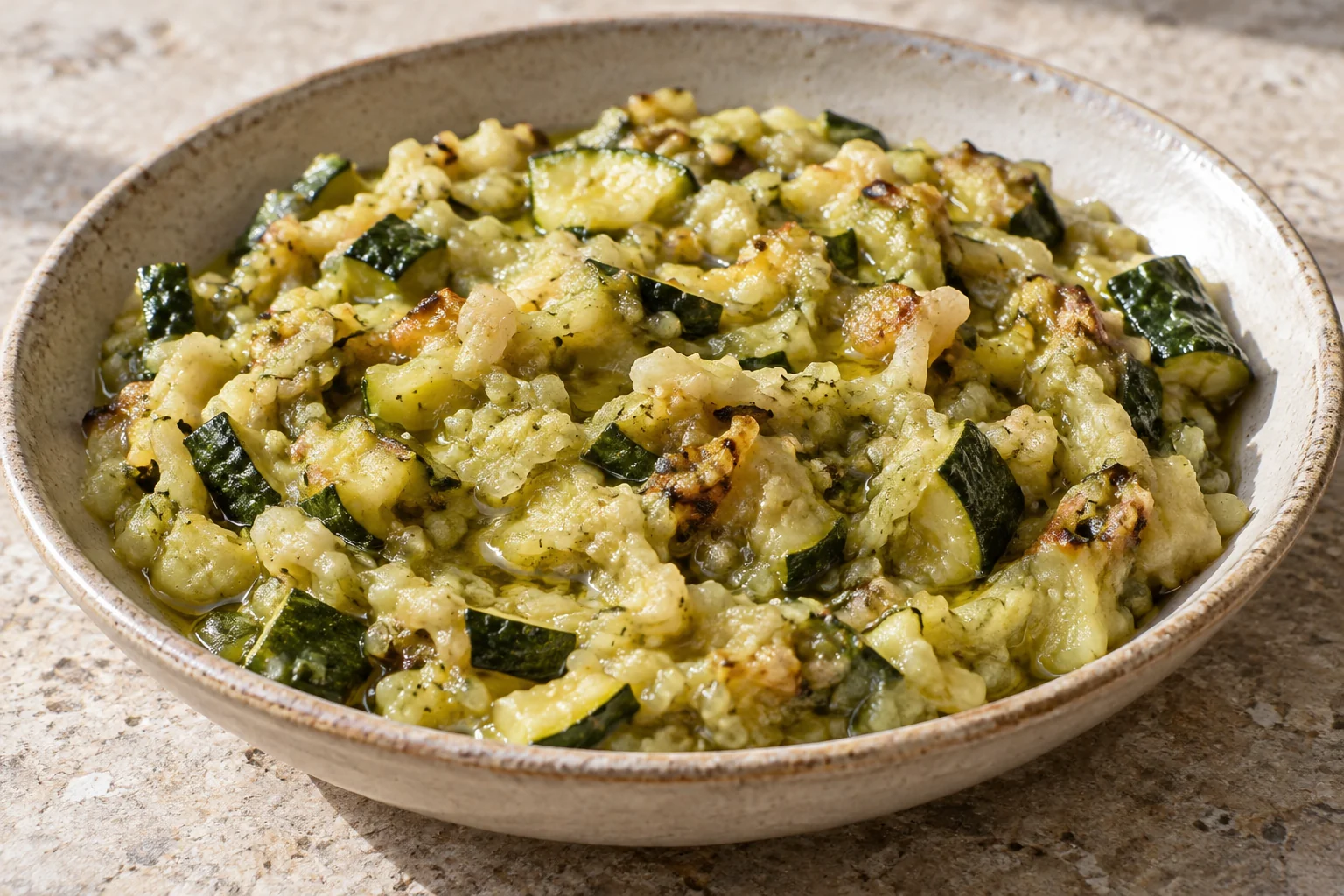
Roasting gives zucchini a different character from a raw cucumber dip or a smooth bean puree. The soft flesh, edible skin and golden edges are mashed together with garlic and lemon, leaving a deliberately coarse texture. All tray juices remain in the spread. The goal is to reduce excess moisture through cooking rather than drain part of the vegetable away after measuring it.
Roasted zucchini & garlic spread makes 6 servings, with 1 hr 5 min estimated total time. View the standalone recipe page.
Prepare similar pieces with skin
Trim the zucchini before weighing its edible portion, then cut it into evenly thick half-moons. Leave the skin on because it is part of both the recipe and the ingredient profile. Similar thickness helps the pieces soften together; very thin slices can scorch while thicker ones remain firm. Use a large rimmed metal tray so the vegetables have room to spread. If the tray is too small for a single layer, use two and rotate them during roasting rather than building a deep wet pile.
Distribute the measured oil
Toss the zucchini with all the oil and salt before spreading it out. Every piece should have a light coating, but there is no need for a visible pool beneath it. The estimate includes all the measured oil, including what may remain on the tray. Do not add an unrecorded decorative drizzle later. Metal conducts heat effectively to the undersides, encouraging golden edges. A crowded baking dish behaves differently and can leave the vegetables steaming in their own liquid instead of developing the intended roasted flavor.
Add garlic after the first stage
The zucchini gets a head start before the peeled garlic enters. Whole cloves need to soften, but small exposed garlic pieces can burn before the larger vegetable pieces finish. Turn the zucchini, coat the cloves in the tray oil and continue roasting until both are tender. Check a garlic clove with a fork; it should mash easily without a hard center. The zucchini can have golden edges without becoming black. If one corner cooks faster, rotate the tray rather than accepting a mixture of burnt and underdone pieces.
Mash the cooled vegetables
Scrape everything into a shallow bowl, including the oil and released juices. Allow the ten-minute cooling interval before mashing. Crush the garlic thoroughly first so there are no unexpectedly strong chunks, then work through the zucchini with a fork. Stir in the lemon juice after the roasted mixture has cooled slightly. This spread should retain small skin pieces and a rustic texture. A blender would make a different, more uniform result, but it is not needed to make the vegetables spreadable.
Keep portions and storage clear
Divide the full batch into six equal shares. Roasting changes the final weight through evaporation, so the yield is a fraction of the batch rather than a fixed cup measurement. Refrigerate within two hours and use within three to four days. Stir before serving if a little liquid settles around the edges; that liquid is retained in the recipe, not an instruction to drain the spread. Serve chilled or briefly tempered for eating, and keep any bread or crackers separate from the stated nutrition.
Common questions
Why is my spread watery?
The zucchini may have been crowded or cut too thickly. Give it adequate tray space and roast until tender with some golden edges. Keep the specified juices in this recipe rather than changing the measured batch through straining.
Should I peel large zucchini?
This formula uses edible skin-on zucchini. Very mature specimens can have a tough texture and large seeds, so choose smaller firm vegetables for a more predictable result. Weigh the trimmed usable quantity and do not silently change to a peeled profile.
Technique & food-safety references
These primary references support the technique, safety and storage guidance. The recipe and cooking explanations are original Recipe Pinboard content.


