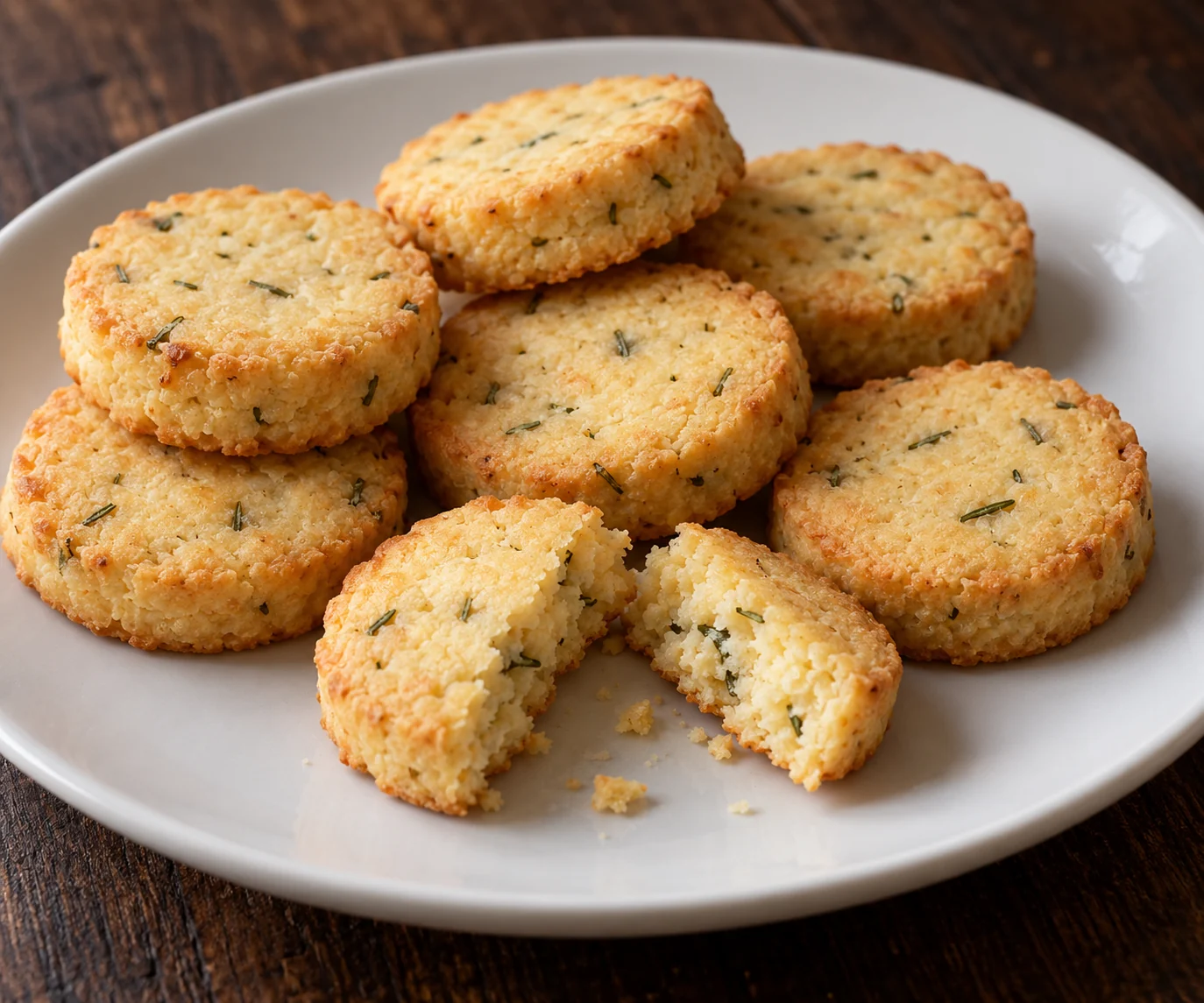
These savory crackers use a short dough: enough butter to make the baked texture tender and crumbly, with no yeast or baking powder. Finely grated cheese and very small rosemary pieces distribute flavor throughout the dough. The method forms one chilled log, then slices it into rounds, so there are no rolled-sheet offcuts to discard. The full schedule includes softening the butter before mixing as well as firming the dough afterward.
Rosemary & Parmesan shortbread crackers makes 8 servings, with 2 hr 50 min estimated total time. View the standalone recipe page.
Soften butter without turning it liquid
Cutting the butter into small cubes helps it soften more evenly during the planned thirty-minute pause. It should give when pressed but still hold its shape. Melted butter is not a shortcut, because it makes the dough behave differently and can encourage spreading. A cold kitchen may require more time. Meanwhile, grate the cheese finely and chop the rosemary leaves very small. Long needles are awkward in a small cracker and interfere with clean slices.
Bring the crumbs together with minimal work
Mix butter and cheese first so the flour does not need prolonged working to distribute them later. Add the measured flour, rosemary and water, then press until the mixture holds together. It may look crumbly before it becomes a dough. Do not treat it like bread or keep kneading in pursuit of elasticity. All ten grams of water belong in this formulation. Extra flour on the counter would alter the balance, so shape on parchment instead of a dusted work surface.
Compress the log and chill it properly
Press the dough into a compact log with no obvious internal gaps. An air pocket can cause a slice to break apart even when the outside looks firm. Use the parchment to help roll and even out the shape, then wrap and refrigerate for the full chilling period. The purpose is to make the butter firm enough for slicing. A log that is still soft in the middle will squash under the knife and produce thick and thin rounds.
Slice equal portions and keep every piece
Marking the log into quarters first can help you cut six rounds from each section. Turn the log occasionally so repeated downward pressure does not flatten one side. If an edge chips, press the fragment back into that round before baking. The recipe assumes all dough becomes twenty-four crackers. Space them on the tray rather than pressing their sides together. If your tray requires two batches, allow the additional oven time rather than crowding all the rounds onto one surface.
Let cooling finish the texture
Look for lightly golden edges and set centers, not deep browning across every surface. The cheese can color quickly near the tray, so inspect the lower edges toward the end. Hot shortbread is fragile; use the initial tray rest before moving the rounds to a rack. The complete cooling period lets the butter-rich crumb firm. Do not seal warm crackers in a container, where trapped steam can soften them. Three crackers make one portion, with no separate topping or dip included.
Common questions
Why did the crackers spread instead of staying round?
The butter or sliced dough may have been too warm, or the ingredients may not have been weighed as specified. Keep the dough chilled before baking and avoid melted butter during mixing. A hot tray from an earlier batch can also soften the next slices before they enter the oven.
Can I use large Parmesan shreds or dried rosemary?
Large shreds can leave uneven pockets in this small dough, so grate the cheese finely. Dried rosemary has a different concentration and texture from the weighed fresh leaves. This recipe and its estimate use fresh rosemary; substitutions need their own measured adjustment.
Technique & food-safety references
These primary references support the technique, safety and storage guidance. The recipe and cooking explanations are original Recipe Pinboard content.


