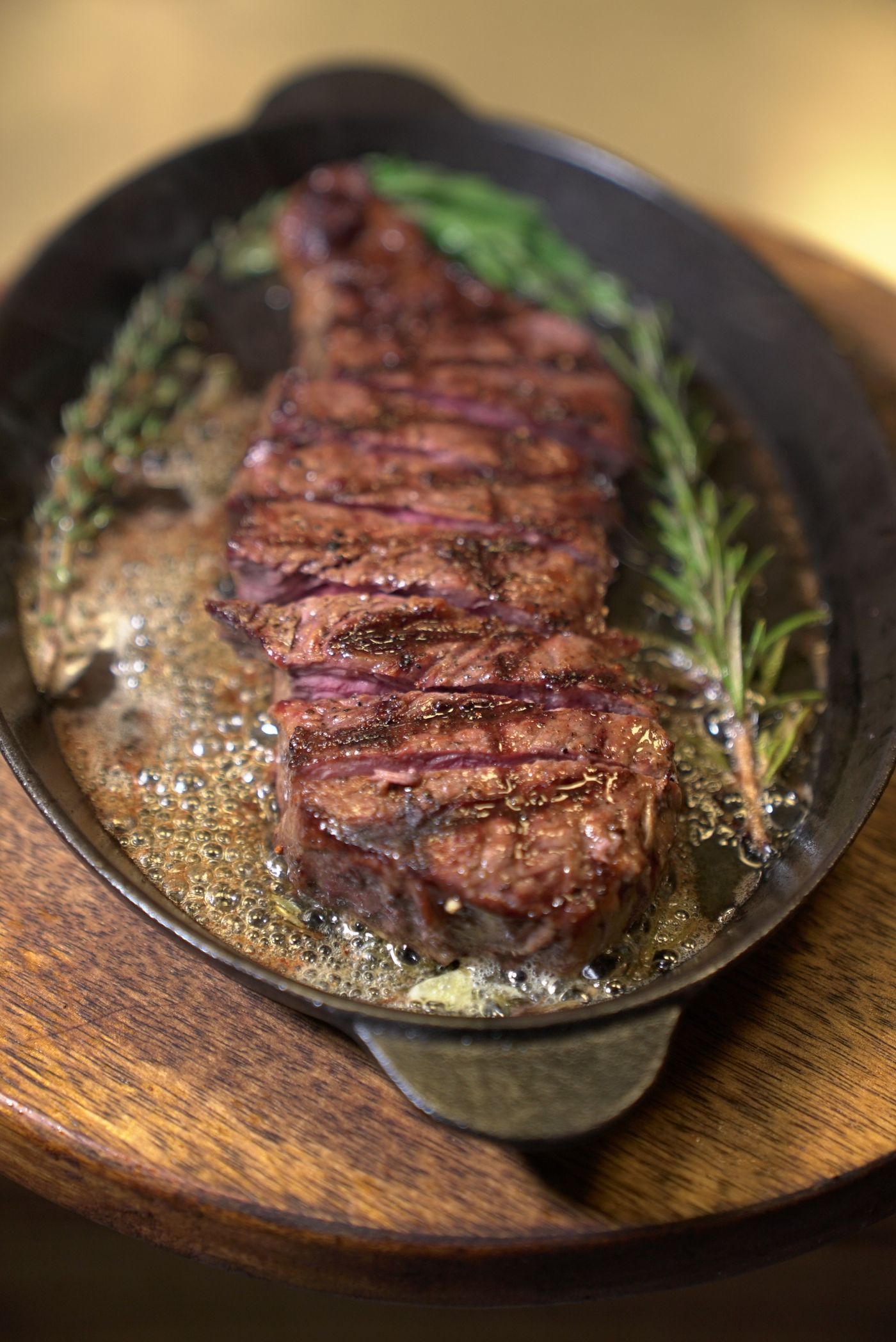
Butter basting works best as a short finishing stage after the crust has formed. In this 30-minute recipe, one 450 g strip steak serves two and receives 25 g butter scented with fresh rosemary. The steak is about 2.5 cm thick, with the fat trimmed to 3 mm. Keep the thermometer, clean resting plate and oven gloves ready before the pan becomes hot.
Rosemary Butter-Basted Strip Steak makes 2 servings, with 30 min estimated total time. View the standalone recipe page.
Dry the surface and prepare the finishing option
Pat the steak very dry on both faces and along its fat edge, then season with the salt and coarsely ground pepper. Surface moisture delays browning, so drying is useful even when the steak will receive oil. Choose a heavy cast-iron or ridged ovenproof pan that can hold the steak without bending it.
Heat the pan over medium-high for 3–4 minutes and preheat the oven to 400°F / 200°C in case the center needs extra cooking. The oven is a controlled finishing option already built into this method. Check that the pan and its handle are oven-safe before you rely on that option halfway through cooking.
Establish the crust with oil
Add the 10 g olive oil to the hot pan and lay in the steak carefully. Sear for 3–4 minutes on each side, giving the surface steady contact with the pan. Keep the steak centered on the heated area instead of moving it constantly. Use tongs to turn it without piercing the meat repeatedly.
Briefly hold the steak on its fat edge for about 1 minute. Support it securely with the tongs rather than balancing it unattended. The crust should become deeply browned, but a smoking, blackened pan means the heat needs attention. Building flavor does not require keeping the burner at its highest possible setting.
Lower the heat before the butter enters
Reduce the burner to medium-low, then add the butter and 6 g rosemary sprigs. Allow the butter to melt and foam. A heavy pan holds heat, so watch what the butter is actually doing rather than assuming the dial change cools the metal instantly. If it races toward burning, move the pan off the burner briefly.
Tilt the pan carefully to gather the butter at one edge and spoon it over the steak for 2–3 minutes. Keep a secure grip on the handle and the hot fat away from your body. The purpose is repeated coating with aromatic butter, not submerging the steak or pouring in a large additional quantity of fat.
Measure the center and finish as needed
Check the thickest center with a thermometer. Continue cooking, or use the preheated oven for a few minutes if needed, until the steak reaches 145°F / 63°C before removing it from the heat. Keep the probe away from a thick fat seam or the pan itself. Different steak shapes can reach this point at different times.
Transfer to a clean warm plate and rest for at least 3 minutes. Do not plan to remove the steak below the stated temperature and rely on an assumed rise during resting. The required temperature and rest are both part of this recipe. A golden butter coating cannot establish what is happening in the center.
Serve the rosemary butter without scorching it
If necessary, warm the pan butter briefly over low heat while the steak rests. It needs only to become fluid enough to spoon, not to resume aggressive frying. Inspect it before serving: pleasantly browned butter is different from blackened solids with an acrid smell. Control the basting heat to avoid that problem in the first place.
Divide the rested steak between two people and spoon over the rosemary butter. If slicing for serving, use a sharp knife and cut across the muscle fibers. Treat an oven-used handle as hot throughout plating, and place any hot serving pan on a suitable trivet. The small amount of sauce is meant to accompany the steak rather than form a deep pool.
Common questions
Why did the butter burn as soon as I added it?
The pan may still have held too much searing heat. Lower the burner before adding butter and watch the foam; briefly move a very hot pan off the heat when necessary.
Must I use the oven?
No. It is available if the center needs more cooking after the sear and baste. Whether finishing on the stove or in the oven, reach 145°F / 63°C and rest at least 3 minutes.
Technique & food-safety references
These primary references support the technique, safety and storage guidance. The recipe and cooking explanations are original Recipe Pinboard content.