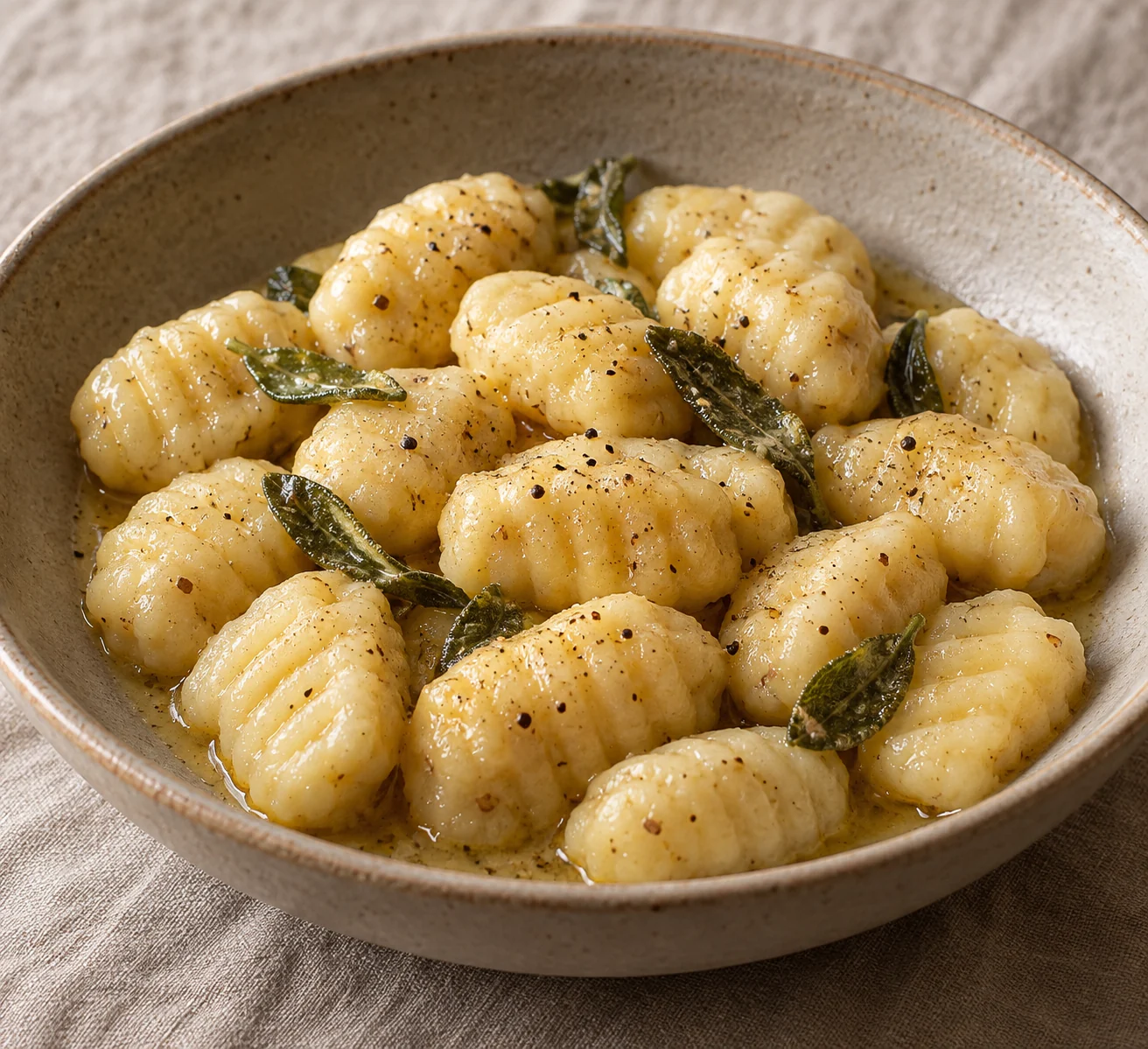
These gnocchi begin with steamed skin-on russet potatoes rather than a package of prepared dumplings. The skins remain as fine flecks, giving the dough a rustic appearance. The important sequence is to cook the potato fully, release steam, cool it briefly and then combine it with the measured flour and egg. The card allows time for shaping and three cooking batches. Sage butter is made at the end so the cooked dumplings can go straight into a warm coating without a long wait.
Hand-rolled potato gnocchi with sage butter makes 4 servings, with 1 hr 45 min estimated total time. View the standalone recipe page.
Steam above the water and mash thoroughly
Keep the potato basket above the simmering water and replace the lid while the cubes cook. A knife should pass through the largest piece easily before you stop. Let visible steam escape, then mash by hand. Break up every firm lump now; trying to remove it after flour is added means more handling of the dough. If any skins remain in broad strips, lift those pieces out, chop them finely and return every bit to the mash. Nothing edible is deliberately discarded.
Cool the potato before mixing the egg
Spread the mash over a plate instead of leaving a deep hot mound in the saucepan. The stated cooling interval helps moisture escape and brings the potato to barely warm. Egg added to a very hot spot can set unevenly before it joins the dough. Once cooled, fold in the egg, salt and dough flour until the mixture comes together. This is not bread dough: repeated stretching and kneading are unnecessary. Stop when no loose flour pockets remain and the mass can be divided.
Make the reserved flour last through shaping
The separate twenty grams of flour is a measured allowance for hands, board and tray. Dust lightly and keep some back for later ropes rather than covering the whole work surface at once. The estimate counts all of it, even though a little may remain behind. Use a light rolling motion and avoid pressing hard enough to flatten the rope. Divide each rope into similar pieces. Their exact number is less important than similar size and dividing the finished batch evenly among four servings.
Add shallow ridges without crushing the center
Roll each cut piece gently against the tines of a fork. A light impression provides grooves for the butter while preserving a plump center. Deep pressure can make a thin flap that tears during boiling. Keep shaped pieces separated on the lightly dusted tray while the water heats. The dough contains raw flour and egg, so do not taste it to check seasoning. A cooked sample is the appropriate way to assess both texture and doneness before serving the rest.
Cook gently and finish in the measured sauce
Use an uncrowded pot and a gentle boil, dividing the batch as directed. Floating is the start of the final cooking interval, not the only doneness check. Cut a sample open and verify a set center without raw paste, alongside the temperature guidance. Lift with a slotted spoon instead of tipping fragile pieces into a colander. Warm the sage in butter only until lightly golden and fragrant, then add the measured sauce water carefully. Fold the gnocchi through with a broad spoon; vigorous tossing can damage them.
Common questions
Will a potato ricer make these smoother?
A ricer may trap and discard the skins, changing this specific skin-on formula. Hand-mash thoroughly and finely chop any larger skin pieces before returning them. The intended result has small flecks rather than perfectly uniform white dough.
Why should I avoid adding flour until the dough feels firm?
Gnocchi dough is meant to be soft. Repeated extra handfuls can make a dense result and change the recipe quantities. First manage potato moisture and cooling, then use the measured dough and shaping flour rather than chasing a bread-like firmness.
Technique & food-safety references
These primary references support the technique, safety and storage guidance. The recipe and cooking explanations are original Recipe Pinboard content.


