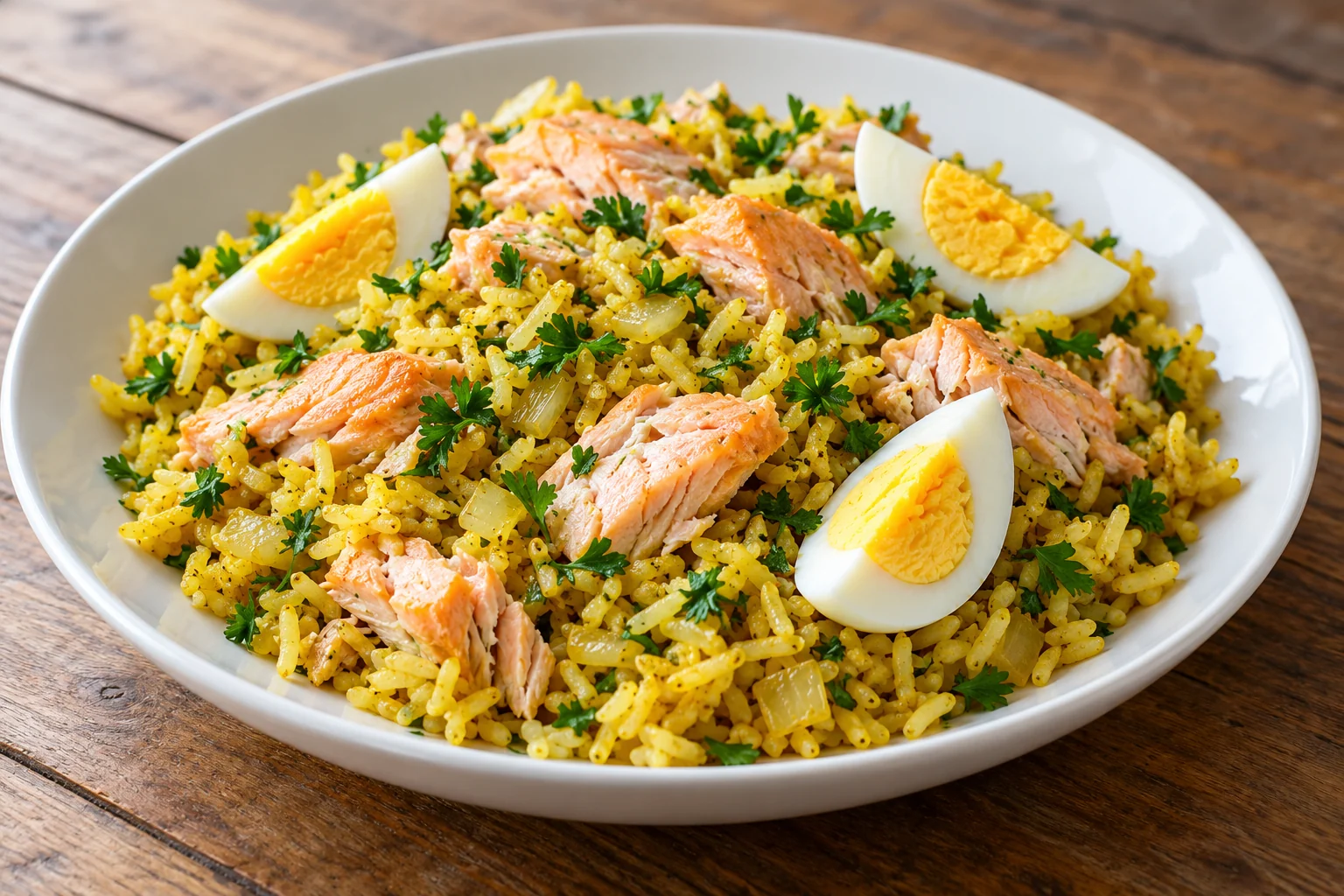
This fresh-salmon version brings together three separately cooked components: gently spiced rice, roasted fish and firm boiled eggs. Keeping those tasks separate gives each ingredient the cooking time it needs. The final folding step should combine the flavors without shredding the salmon or turning the rice into a sticky mass. Have a wide serving spoon ready before bringing everything together.
Salmon and egg kedgeree makes 4 servings, with 1 hr 5 min estimated total time. View the standalone recipe page.
Start the rice with softened onion
Cut the onion finely so it softens evenly in the measured butter. Give it the full gentle cooking interval before adding the spices; crunchy onion is difficult to disguise among tender rice grains. Briefly heating curry powder and turmeric releases their aroma, but prolonged frying can scorch them. Stir the dry rice through that mixture, then add the measured water. This recipe uses enriched long-grain rice without rinsing or draining, matching its ingredient-input calculation. A different rice type can require a different liquid ratio and cooking interval.
Keep the lid on during the rest
Once the water boils, reduce the heat so the covered pan simmers quietly. Fierce heat can dry the bottom before the upper grains soften. Check near the end of the range rather than repeatedly lifting the lid throughout cooking. When the rice is tender and the liquid absorbed, move the pot off the burner and leave it covered for ten minutes. That interval is part of the recipe, not spare time to remove from the schedule. Fluff gently afterward, reaching toward the bottom without scraping aggressively.
Roast the salmon and retain its juices
Use the specified raw skinless, boneless fish weight and check carefully for stray bones. A small lined dish catches the juices so they can join the rice later. Roast until the thickest section reaches 145°F, then separate the fish into large flakes. Do not continue cooking simply to make every surface look dry. Different fillet thicknesses finish at different times, so a thermometer is more useful than relying on the maximum time alone. This recipe uses fresh farmed Atlantic salmon rather than smoked fish or an unspecified leftover portion.
Make the eggs firm and fold lightly
Boil the eggs until both whites and yolks are fully set, then cool them under running water just enough to peel safely. Quarter them after removing the shells. Fold fish, juices, lemon and parsley through the rested hot rice using a broad spoon or spatula. Lift and turn instead of stirring in tight circles. Add the egg quarters after portioning so their edges remain recognizable. Four servings each receive one egg and a quarter of the entire rice and salmon mixture; the photograph is a dish illustration, not a measured portion.
Plan rice leftovers before serving
Serve the finished dish promptly. If keeping some, divide it into shallow containers and cool quickly, ideally within one hour, rather than leaving a deep warm pan on the counter. Refrigerate at 40°F or below and use within twenty-four hours. Reheat only once, reaching 165°F throughout; check the middle of the portion, not just its hot edges. Cooling promptly is especially important for rice, and reheating is not a way to repair prolonged warm storage. Reserve only what can be handled within that short storage schedule.
Common questions
Why is my kedgeree rice sticky?
Too much stirring, a poorly fitting lid or a different rice variety can change the result. Use the specified long-grain rice, measured water and covered rest, then fold gently rather than repeatedly mixing.
Can I use smoked salmon instead?
Smoked salmon has a different food state, salt content and cooking behavior. This recipe and estimate are for raw fresh salmon cooked to its safe endpoint. A smoked-fish version needs its own ingredient calculation.
Technique & food-safety references
These primary references support the technique, safety and storage guidance. The recipe and cooking explanations are original Recipe Pinboard content.


