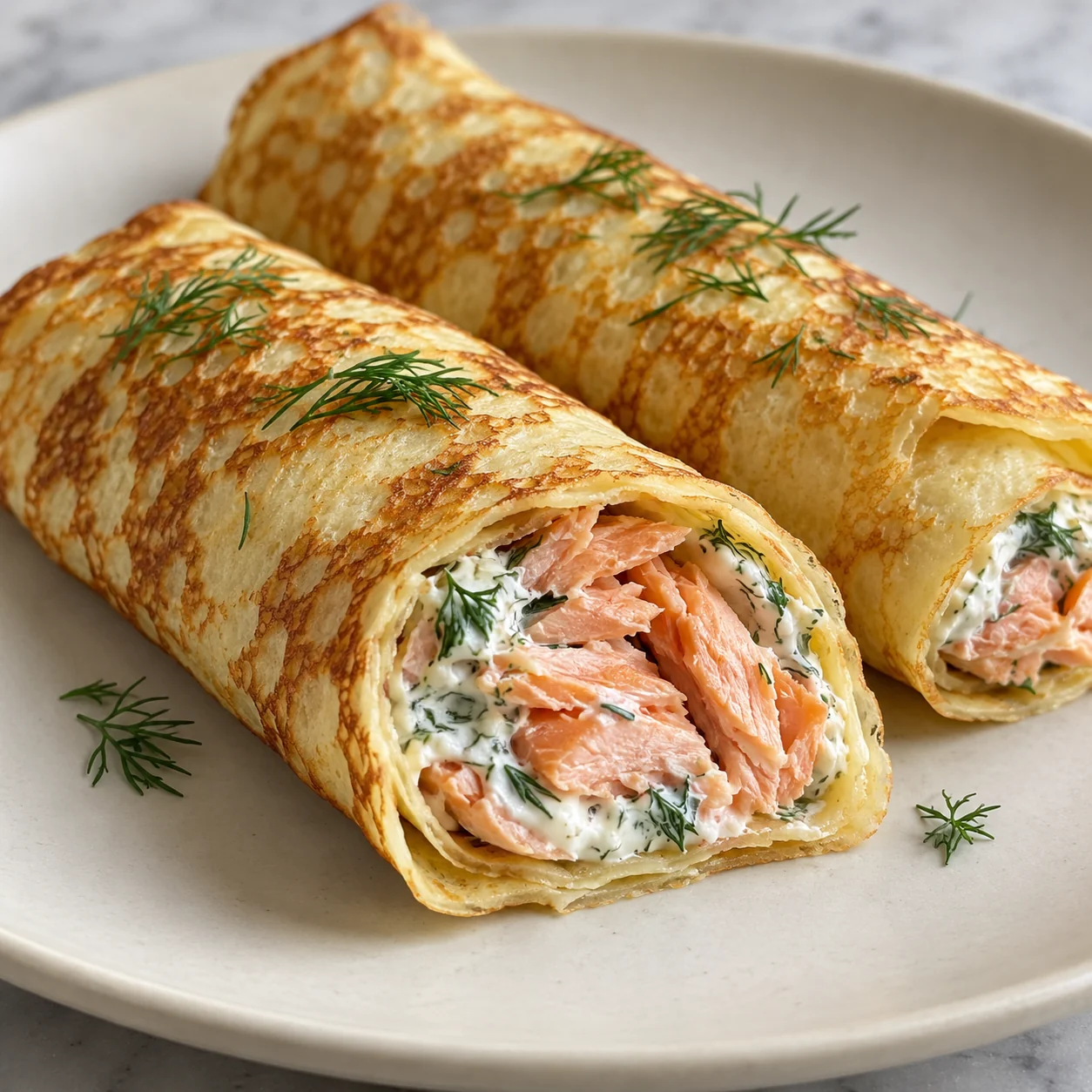
These savory crepes combine three separate preparations: a thin batter, baked salmon and a cool yogurt sauce. Keeping those stages organized makes the final rolling straightforward. Start with the batter so its refrigerated rest overlaps the fish preparation, then cook the crepes while the salmon rests. The full recipe card makes eight crepes, with two forming a serving. A small pan matters here because the measured batter is designed to cover eight modest circles rather than several oversized pancakes.
Salmon & dill savory crepes makes 4 servings, with 1 hr 30 min estimated total time. View the standalone recipe page.
Mix a smooth batter before its rest
Add the milk gradually to the flour while whisking, rather than pouring everything into a deep flour-filled bowl at once. Once the mixture is smooth, incorporate the eggs and measured melted butter. Scrape flour from the bowl sides so it becomes part of the batter. Cover and refrigerate for the full thirty minutes. This pause gives the flour time to hydrate; it also gives you a useful window to prepare the salmon. Stir gently before portioning, without whipping a new layer of foam into the mixture.
Bake the fish separately from the wrapper
Check the salmon for stray pin bones and use the edible weight specified in the card. Keep pieces of similar thickness together in the baking dish so they finish at roughly the same time. Check the thickest area with a thermometer rather than relying on a pink color change. After reaching 145 degrees Fahrenheit, give the fish its short rest and break it into manageable flakes. Keep the baking juices with those flakes: draining them would remove part of the moisture intended for this filling.
Use the first crepe to judge pan heat
Spread the allocated pan butter in a thin film. Pour one eighth of the batter into the center of the warm eight-inch skillet and immediately tilt it in a circle. The batter should reach the sides before it sets. If it locks into a thick central patch, lower the heat slightly before the next crepe. Wait for the edges to release before sliding a thin spatula underneath. Flip close to the pan surface instead of lifting the delicate pancake high into the air.
Stack first, then fill evenly
Set cooked crepes in a loose stack so they remain flexible while the remaining portions cook. Prepare the yogurt with the measured lemon juice and most of the dill, reserving the final small amount for the top. Divide the salmon and sauce among all eight crepes before rolling any of them; this makes it easier to correct an uneven portion. Place the filling in a broad line across each crepe, leaving a little space at the ends. Roll loosely enough to avoid squeezing sauce through the edges.
Serve promptly and plan leftovers
The warm fish and cool sauce create the intended contrast, so assembly belongs close to serving time. Avoid holding the finished rolls on a very hot skillet, which can dry their undersides. Put leftovers into shallow covered containers promptly. Yogurt can separate when reheated, so the sauce may look less smooth the next day even when handled correctly. Reheat leftovers thoroughly to the temperature in the card. These contain fish, wheat, eggs and dairy; a delicate texture does not make them suitable for those ingredient restrictions.
Common questions
Why does a crepe tear when I flip it?
It may still be wet underneath, or the spatula may be lifting only a narrow corner. Let the edges release, support more of the pancake and keep the second side brief so the wrapper stays flexible.
Can I substitute smoked salmon?
That changes the salt level, food state and nutrition estimate. This card uses raw salmon baked to a measured endpoint. Keep that preparation for the stated quantities and nutrition rather than swapping in a differently processed product.
Technique & food-safety references
These primary references support the technique, safety and storage guidance. The recipe and cooking explanations are original Recipe Pinboard content.


