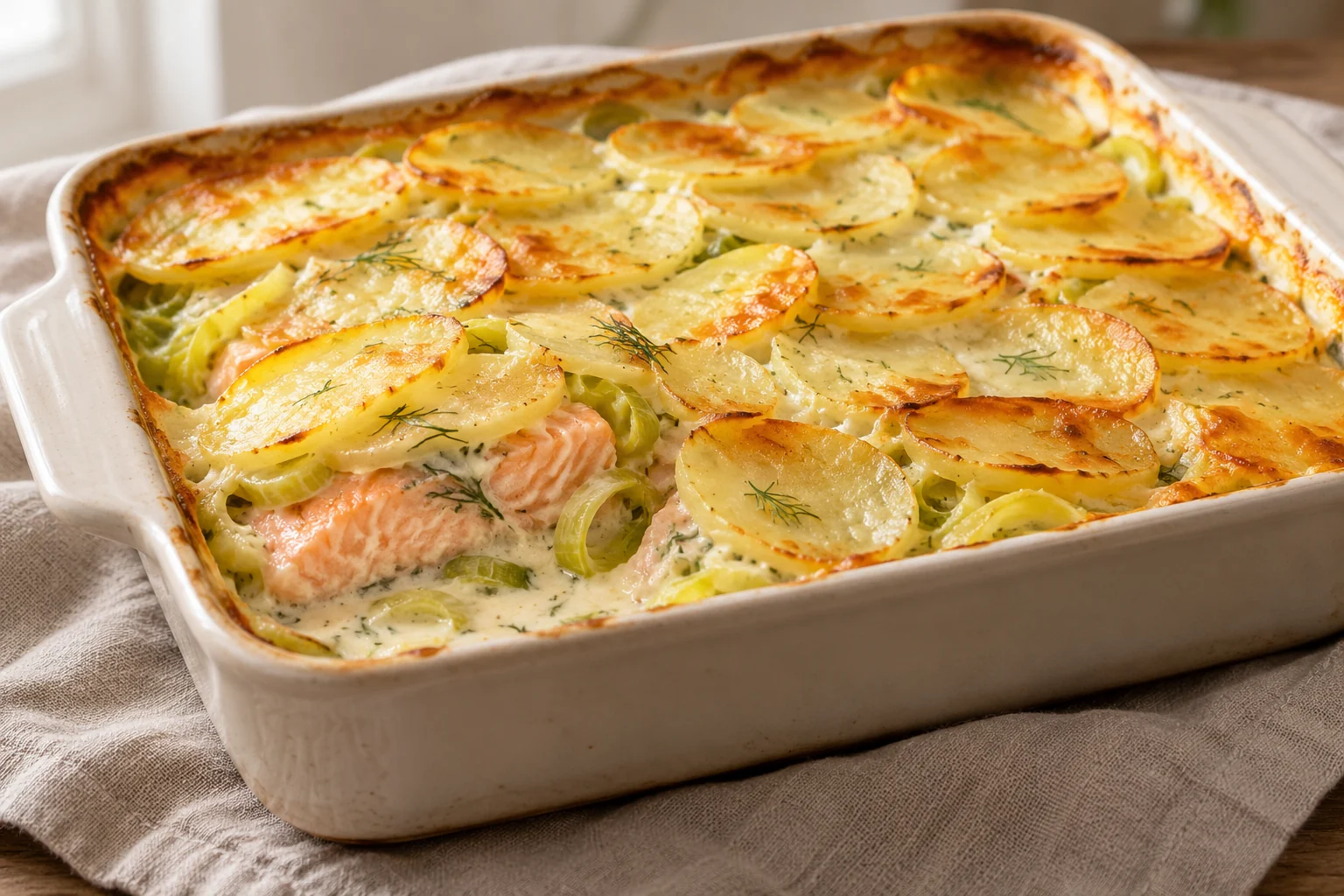
This gratin cooks the potato slices almost to tenderness before the salmon goes into the baking dish. That sequence gives the fish a shorter oven stage while the potatoes finish in the retained dairy sauce. Leeks add soft layers between the slices, and dill runs through the sauce rather than appearing as an extra garnish. Allow one hundred minutes for preparation, gentle stovetop cooking, assembly, baking and the ten-minute rest. The recipe serves four from the complete dish, including all its sauce.
Salmon, leek and potato gratin makes 4 servings, with 1 hr 40 min estimated total time. View the standalone recipe page.
Wash leeks and slice potatoes evenly
Trim the leeks, split them lengthwise and rinse between the layers before weighing the usable portion. Grit can hide where the pale leaves begin to separate. Slice them fairly evenly so they soften together. Scrub the potatoes and retain their skins, removing any damaged or green areas before weighing the edible amount. Aim for slices around one eighth inch thick. A few thick pieces buried in a stack can stay firm after their neighbors soften, so consistency matters more than making the top look perfectly patterned.
Simmer the potatoes in the measured dairy
Soften the leeks in butter before adding garlic, milk, cream and potatoes. Keep the saucepan at a gentle simmer and lift the slices carefully with a broad spoon so those near the bottom do not catch. The dairy will not necessarily submerge every slice at once; turning the mixture distributes the heat. Partly covering the pan helps the upper slices cook. Look for potatoes that bend and are almost tender when pierced. Do not drain the mixture, because the milk, cream and released potato starch belong in the finished sauce.
Build an even layer around the salmon
Use the specified raw skinless, boneless farmed Atlantic salmon and cut it into similar pieces. Check for pin bones before assembly. Spread half the potato mixture across the baking dish, distribute salmon without piling it in one corner, then cover with the remaining potatoes and every spoonful of sauce. A broad dish keeps the center from becoming an excessively deep mound. The measured recipe has no cheese or breadcrumb topping, so its browning comes from exposed potato edges and the dairy at the surface.
Measure the casserole center
During baking, watch both the potato tenderness and the internal temperature. The top can brown before the middle is ready, especially if the dish went into the oven with cold fish. Insert a thermometer into the central portion, including a thick salmon piece, without touching the baking dish. This is a casserole, so the card uses a 165°F center endpoint rather than the lower temperature used for a standalone fish fillet. If the top colors too quickly, shield it loosely and continue until the center and potatoes are ready.
Rest and distribute the complete sauce
Let the gratin stand for ten minutes before serving. The pause helps the layers settle and makes it easier to lift portions without sending sauce over the edge of the plate. Divide fish and potatoes as evenly as possible, then spoon the remaining sauce across all four servings. The estimate counts the full raw salmon and dairy inputs; it does not subtract expressed fish protein or baking juices. Refrigerate leftovers in shallow containers within two hours, use within three days and reheat the middle of each portion to 165°F.
Common questions
Why are some potatoes still firm?
Unevenly thick slices or insufficient stovetop cooking are common causes. Check several pieces before assembling, especially slices that stayed near the top of the saucepan. The oven stage should finish nearly tender potatoes rather than cook thick raw chunks from scratch.
Why did the sauce look grainy?
Hard boiling can disturb a dairy sauce, while visible fish protein may also appear during baking. Keep the stovetop simmer gentle and avoid unnecessary prolonged cooking once the casserole reaches its endpoint. Do not pour away sauce to create a falsely adjusted nutrient estimate.
Technique & food-safety references
These primary references support the technique, safety and storage guidance. The recipe and cooking explanations are original Recipe Pinboard content.


