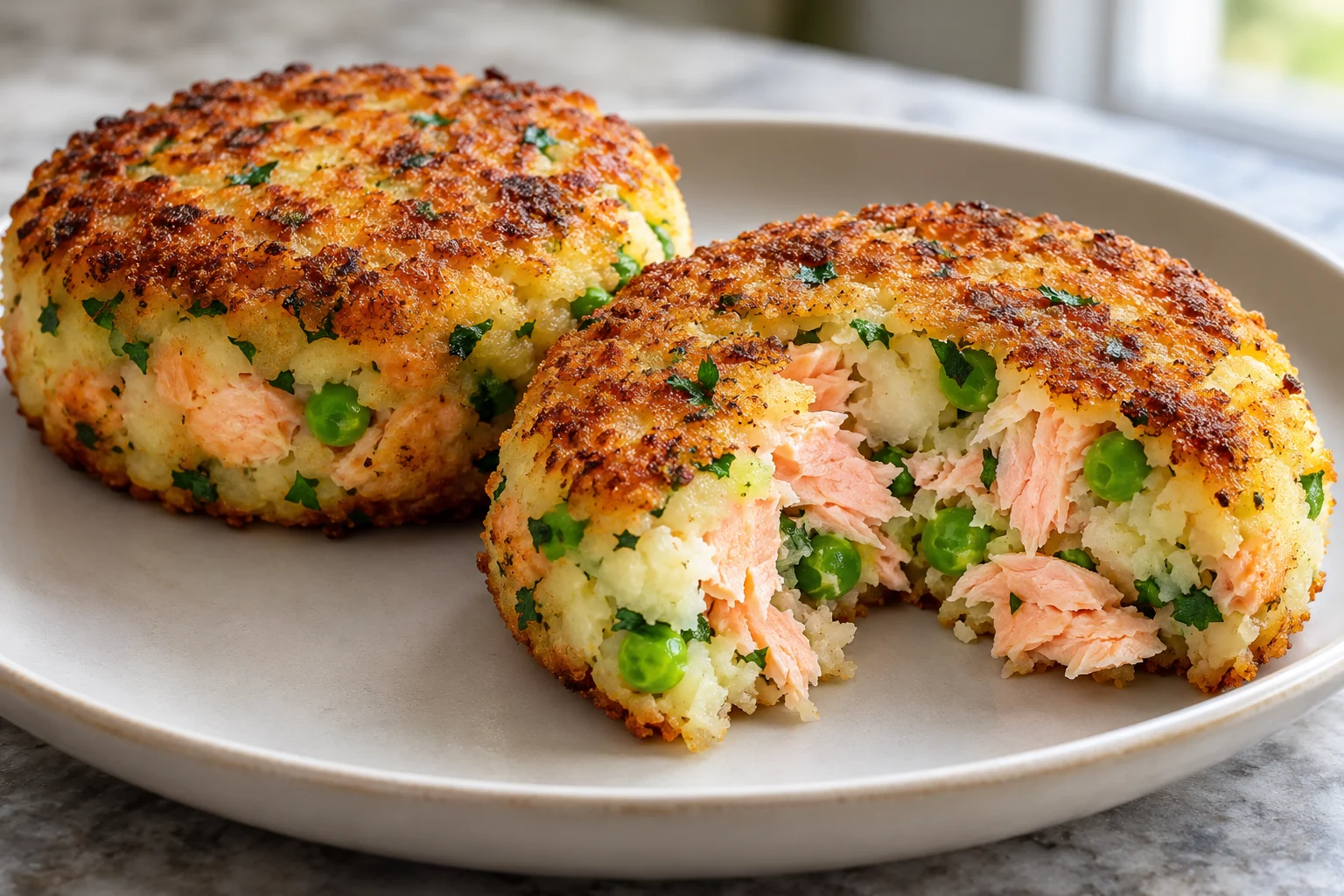
These baked cakes use cooked salmon and steamed potato, with peas for texture and egg and crumbs to help them hold together. Their structure develops in stages, so skipping the cooling and chilling intervals can make shaping frustrating. The full recipe above includes those waits in the total time. This guide explains how to keep the mixture cohesive without packing it into dense dry patties.
Oven-baked salmon, pea & potato cakes makes 4 servings, with 1 hr 50 min estimated total time. View the standalone recipe page.
Cook the fish and potato separately
The salmon and potato need different doneness checks. Cook the raw fish to 145°F (63°C), then flake it carefully and check for bones even when the package says boneless. Retain the edible juices with the fish. Steam the potato until a fork crushes a piece easily; a firm center will remain as a hard lump inside the finished cake. Add peas near the end and follow their package cooking requirement rather than assuming a brief thaw is sufficient.
Remove steam before adding the egg
Mash the potato and crush the peas roughly, leaving some green pieces visible. Spread the mixture and flaked fish in a shallow bowl for the specified cooling interval. A deep heap stays warm longer and retains more steam. The goal is to lose excess surface moisture and cool enough that the egg mixes evenly, not to leave cooked food out for hours. Keep the cooling and shaping workflow moving, and refrigerate if preparation is interrupted.
Fold a mixture that still shows fish
Add the beaten egg, breadcrumbs, lemon and parsley after the first cooling stage. Fold gently so salmon flakes remain visible instead of being worked into a uniform paste. The potato should bind the mixture, while the crumbs take up some free moisture. Divide the entire batch into eight equal portions before shaping. Similar cake thickness matters more than perfectly round edges, because thick centers take longer to heat than thin ones.
Chill the shaped cakes briefly
Arrange the eight cakes on a tray and chill for fifteen minutes. This short rest makes them easier to lift and lets the crumb mixture hydrate. It does not replace cooking or make an undercooked filling safe. Use the specified remaining oil across both sides of the cakes; do not pour it all onto the baking sheet beneath them. A thin coating helps browning while keeping the nutrition estimate tied to the measured quantity.
Turn once and verify the center
Bake through the first interval, then slide a broad spatula fully under each cake. Support the whole patty while turning rather than lifting only an edge. A little cracking can be pressed gently back together with the spatula. Finish baking until the centers reach 165°F (74°C), because this assembled dish contains cooked fish and newly added egg. Let the cakes rest briefly before serving two per portion. Refrigerate leftovers promptly and reheat to the stated safe temperature.
Common questions
Why do the cakes fall apart?
Check whether the potato was fully tender, the mixture was still hot, or the cakes were too thick to support when turned. Cooling, the short chill and a wide spatula are part of the method, not optional decoration.
Can I replace the salmon with canned fish?
That changes the ingredient state, salt and nutrition profile. Use drained edible weight and a matching source calculation before retaining the panel. The current recipe and photograph describe baked raw Atlantic salmon folded into potato, not a canned-fish substitution.
Technique & food-safety references
These primary references support the technique, safety and storage guidance. The recipe and cooking explanations are original Recipe Pinboard content.


