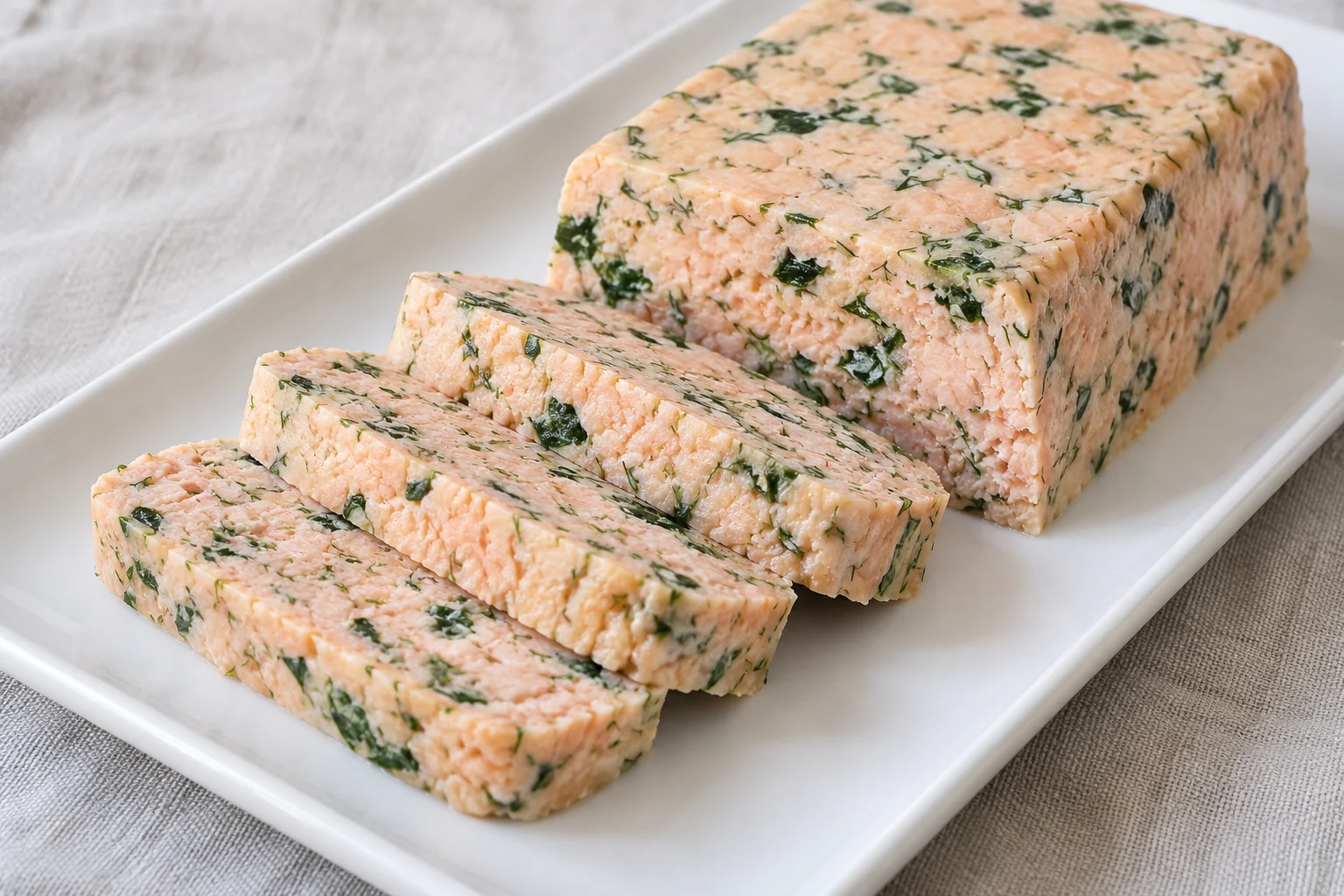
This terrine turns fresh salmon into a chilled loaf that can be portioned neatly without pastry or a smoked-fish wrapper. Eggs bind the mixture, cream softens its texture and finely chopped spinach adds green flecks throughout. The important work happens before slicing: remove excess spinach moisture, keep the fish mixture cold, bake gently and allow enough refrigerator time. The seven-hour schedule includes at least five hours of chilling. A terrine that has not cooled to the stated temperature is not ready for cold service, even if the clock says otherwise.
Salmon & spinach terrine makes 6 servings, with 7 hr estimated total time. View the standalone recipe page.
Prepare the spinach without discarding a wet handful
Wash and dry the spinach before weighing it. Wilt it in a nonstick pan without additional oil, stirring until the liquid released by the leaves evaporates. This recipe retains the entire spinach batch rather than squeezing away an unknown amount of juice. Spread it out and refrigerate briefly before chopping. Long strands can catch on the knife when the finished loaf is sliced, so chop finely in several directions. Warm spinach would also heat the raw fish mixture unnecessarily; cool it before combining the ingredients.
Blend cold ingredients only until smooth
Remove skin and bones before weighing the salmon, then check the flesh again with clean fingertips. Cut it into similar pieces so the processor does not leave one large chunk while overworking everything else. Keep the cream and salmon refrigerated until needed. Blend with the measured eggs, lemon juice and seasoning just until the mixture is evenly smooth, stopping to scrape the bowl. Fold in the spinach and dill afterward. Do not add bread crumbs to correct a soft-looking mixture: the eggs will set during baking, and extra ingredients change the formulation.
Use the small pan and a controlled water bath
Line the specified metal loaf pan with parchment and leave lifting tabs that will help later. The size matters because a deeper loaf takes longer both to cook and to chill. Smooth the mixture without packing it aggressively. Put the filled pan inside the roasting pan on the oven rack before adding hot water to the outer pan. This avoids carrying a heavy, sloshing water bath across the kitchen. Keep water out of the terrine and cover loosely with foil so the surface does not dry into a tough skin.
Measure the center instead of judging its color
The fish mixture can remain pale pink after it is fully cooked. Color alone is therefore an unreliable endpoint. Probe the center without touching the metal pan and follow the recipe's 165°F target for the assembled egg-and-fish dish. The water bath moderates heat around the edges while the center sets. Remove the loaf pan with dry mitts and let the water bath cool before moving it. A little moisture around the loaf is possible; this is not a reason to keep baking until every surface looks dry.
Chill fully before lifting and slicing
After the brief twenty-minute rack cooling, refrigerate the terrine promptly in its small pan. Leave space around it for cold air to circulate and cover loosely until cold. Do not leave it on the counter until it reaches room temperature. Allow at least five hours and check the center is 40°F or colder before unmolding. Lift with the parchment, peel it away gently and cut twelve equal slices with a clean sharp knife. Divide two slices per serving and keep the remaining loaf refrigerated. The nutrition estimate excludes bread, mayonnaise and salad.
Common questions
Why does the terrine crumble when I cut it?
It may still be warm, contain long spinach strands or have been cut with a dull knife. Chill it completely, then use a clean slicing motion. Avoid sawing repeatedly through one soft slice or pulling it away before the cut reaches the board.
Can I make it the day before?
Yes. Keep it refrigerated at 40°F or below and use within three days. The longer schedule is useful for planning, but it does not replace the center-temperature check or prompt refrigeration after baking.
Technique & food-safety references
These primary references support the technique, safety and storage guidance. The recipe and cooking explanations are original Recipe Pinboard content.


