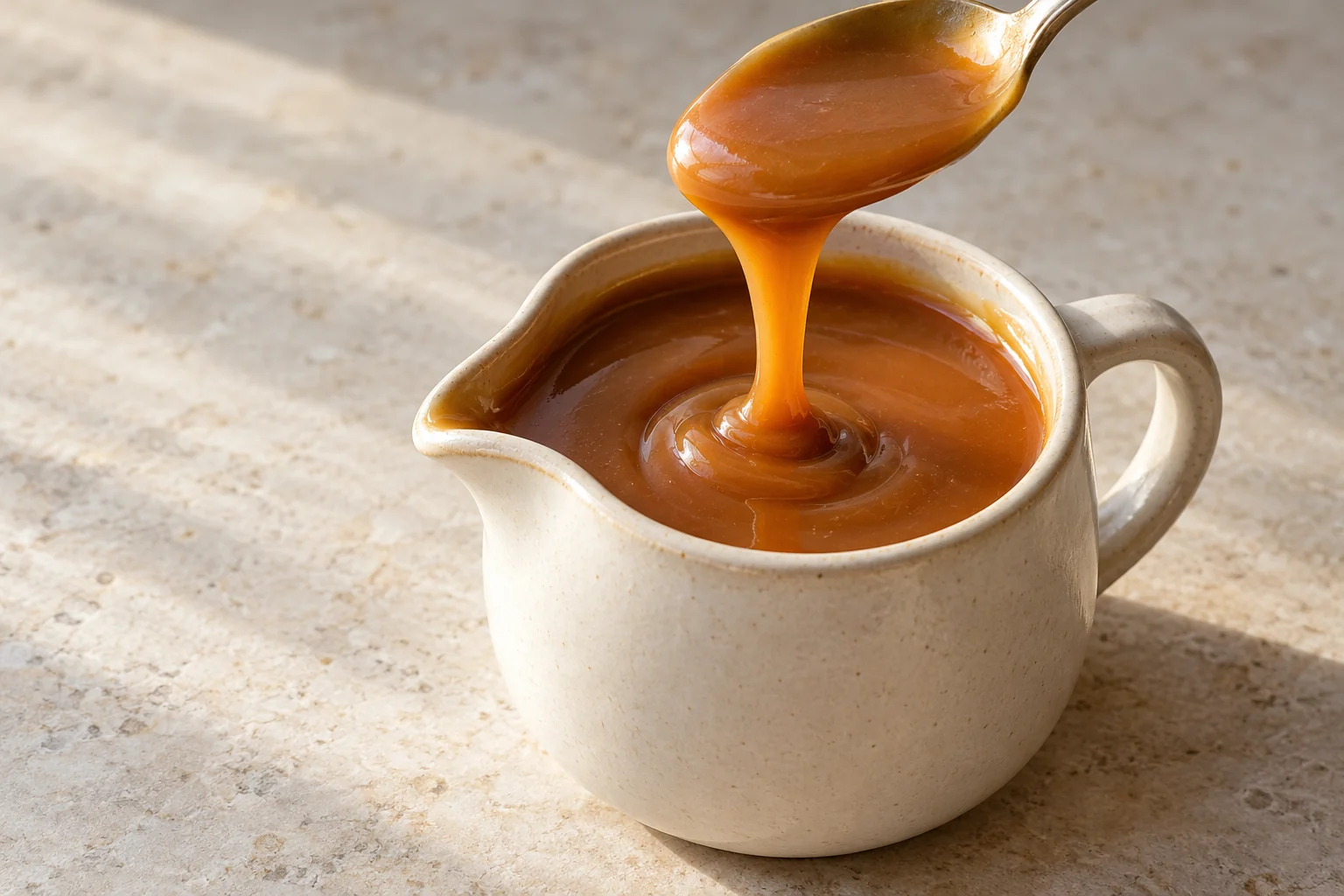
Caramel is a color-changing cooking process, so a clock alone cannot tell you when this sauce is ready. The sugar first dissolves, the water boils away, and the syrup finally turns amber before the dairy goes in. This version uses measured water to start the syrup and finishes with cream, butter and fine salt. The cooling period is part of the recipe: a glossy sauce that looks inviting can still be far too hot to handle.
Salted caramel sauce makes 12 servings, with 1 hr 5 min estimated total time. View the standalone recipe page.
Prepare a clear workspace
Choose a deep saucepan with a pale interior so the syrup color is visible. A shallow frying pan gives the foam too little room when cream is added. Put the measured ingredients beside the stove, keep the handle turned inward and clear the area of anything that could catch on your whisk. Warm the cream separately before beginning the color change. This is a short, attention-heavy stage of cooking; leave other chopping or washing until the caramel is safely cooling.
Watch the syrup, not just the timer
The initial mixture will look cloudy and then become clearer as the sugar dissolves. Once it is bubbling, stop stirring with a utensil. If one area colors before another, a gentle swirl redistributes the syrup. A medium amber gives the finished dairy sauce a recognizable caramel flavor; a very dark, smoking pan is already beyond the intended result. Remove the pan from the burner promptly at the target color. The heavy metal continues transferring heat after the flame is switched off.
Add dairy with space for steam
Keep your face back and add the warm cream slowly in several additions. It may swell and hiss dramatically even though the pan is off the heat. A long-handled whisk helps keep your hand farther from the foam. Do not pour in the entire jug at once. Once the bubbling settles, incorporate the butter and salt. The brief return to low heat is for smoothing the mixture, not for driving off enough water to make chewy candy.
Judge thickness after cooling
Freshly finished caramel flows more readily than the cooled sauce. Trying to make the hot liquid as thick as the final serving texture can produce an overly firm result. Allow the scheduled cooling time in the saucepan before transferring it to a heat-safe container. A chilled spoonful will also feel thicker than a comfortably warm one. Portion the complete batch into twelve equal shares rather than assuming a particular cup yield; pan size and cooking duration change the amount of water remaining.
Store a sauce, not a preserve
This recipe has not been formulated for canning or room-temperature storage. Once safely transferred, refrigerate it within the stated two-hour limit and use it within three to four days. Use a clean spoon each time and warm a small portion instead of repeatedly heating the whole batch. The nutrition estimate includes all starting sugar, butter and cream. Evaporating water does not remove those measured ingredients, and serving it over another dessert adds that dessert's ingredients separately.
Common questions
Why did my caramel turn grainy?
Crystals can develop when undissolved sugar or dried syrup enters the boiling mixture. Start with clean equipment and dissolve the sugar before the vigorous bubbling stage. Avoid scraping dried crystals from the upper pan walls into the finished sauce. A burned or persistently grainy batch should not be disguised with extra dairy.
Can I use brown sugar or milk instead?
Those changes create a different sauce. Brown sugar brings molasses, while milk has much less fat and more water than heavy cream. Follow the listed ingredients for this formulation rather than treating either substitution as nutritionally or technically equivalent.
Technique & food-safety references
These primary references support the technique, safety and storage guidance. The recipe and cooking explanations are original Recipe Pinboard content.


