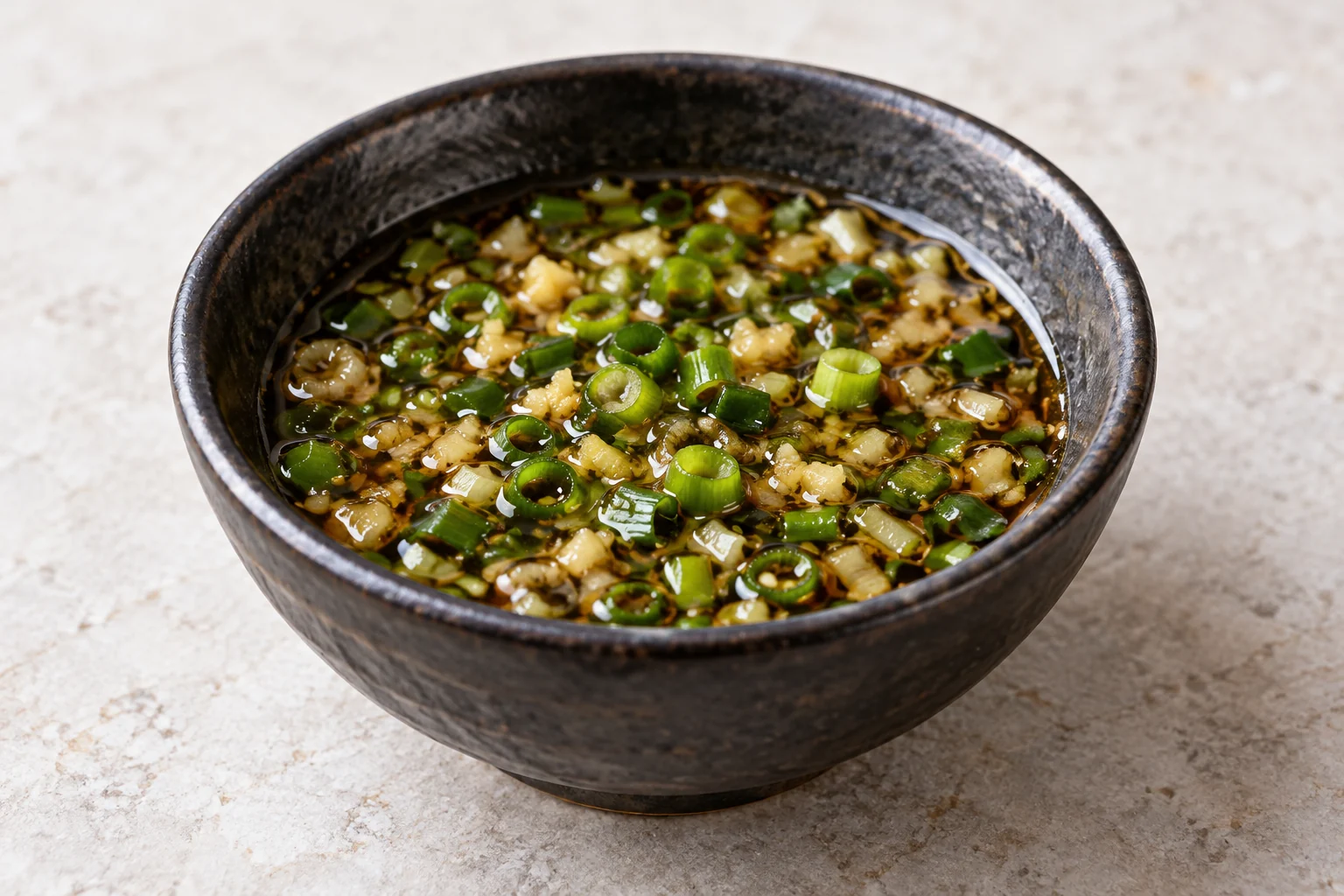
This sauce is built from small pieces of scallion and ginger rather than a blended puree. Each spoonful should carry tender green slices, mild onion flavor and a little bright liquid. The important decisions happen before the pan gets hot: how finely to cut the ginger, which scallion sections go in first and how to distribute a modest amount of oil.
Scallion, ginger & lime sauce makes 8 servings, with 20 min estimated total time. View the standalone recipe page.
Cut ginger across its fibers
Peel only the papery skin, then slice the ginger thinly across the visible fibers before cutting those slices into tiny strips and cubes. Long shreds can remain stringy even after heating. A coarse grater produces a wetter paste and a different texture, so use a sharp knife for this version. Keep the ginger pieces smaller than the scallion rings; a large cube can dominate an otherwise balanced spoonful. Weigh the prepared peeled ginger rather than a whole untrimmed root.
Separate the scallion sections
Trim the roots and any damaged outer leaves, wash between the layers and dry before slicing. Keep white and pale-green pieces in one pile and dark-green pieces in another. The firmer sections get a head start in the oil, while the green sections need only a brief simmer. This staging prevents the entire mixture from becoming dull and limp before the white slices soften. Thin, reasonably even rings matter more than an exact decorative knife cut.
Soften without frying hard
Use a small saucepan so the measured oil can contact the chopped ingredients. Medium-low heat should produce a gentle sizzle, not rapid browning or smoke. Stir often, especially near the edge of the pan. If the ginger begins catching, lower the heat promptly; a dark bitter patch cannot be removed by adding lime. The water goes in after the initial softening stage and helps the final green slices cook through. Never use this recipe as an instruction to pour smoking oil over a bowl of wet vegetables.
Recognize the intended separation
There is no emulsifier or starch thickener here. A little oil may collect above the soy-lime liquid when the bowl sits, and that is expected. Stir from the bottom just before dividing or serving so one portion does not receive mostly oil and another mostly scallions. The sauce should fall from a spoon with visible chopped solids. Blending it would change the texture and color, while adding extra oil would also change the published nutrition estimate.
Choose a small storage container
Transfer the finished sauce to a container only a little larger than the batch so it is easy to stir thoroughly. Divide the complete amount into eight equal condiment portions; rice, noodles and protein served with it are separate foods. Refrigerate promptly and use within three to four days. Lime and soy do not make the mixture a room-temperature preserve. Regular soy sauce contains wheat, so this version is not assigned the gluten-free tag; a substitute product requires its own label and nutrition review.
Common questions
Why is the ginger still chewy?
Pieces may have been cut along the fibers or left too large. Mince across the fibers before cooking and keep the initial heat gentle enough to soften them. Longer high-heat frying mainly risks browning the scallions.
Can I use only the green scallion tops?
That changes the balance of firm, sweet white sections and tender green sections. It can produce another useful sauce, but the published weight, staged cooking method and estimate describe trimmed whole scallions.
Technique & food-safety references
These primary references support the technique, safety and storage guidance. The recipe and cooking explanations are original Recipe Pinboard content.


